EasyManua.ls Logo

Nibe VVM 320 - User Manual

Nibe VVM 320
92 pages
Print Icon
To Next Page IconTo Next Page
Loading...
UHB EN 1834-6
231330
USER MANUAL
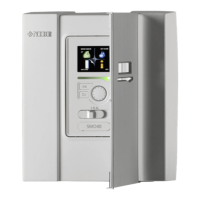
Indoor module
NIBE VVM 320 UK 1x230V

Table of Contents

Other manuals for Nibe VVM 320

Questions and Answers

  • P
    Patricia RochaJul 27, 2025
    What happens if Nibe Water Heater shows sensor fault BT2?
    • C
      Connie MooreJul 27, 2025
      If your Nibe Water Heater shows a sensor fault BT2, it means the heating medium supply sensor is either not connected or defective. The system will then use BT3 if it's available. If BT3 isn't available, BT63 will be used instead.
  • N
    Nicole GriffinAug 2, 2025
    What does sensor fault BT63 mean on a Nibe Water Heater?
    • R
      Regina SuttonAug 2, 2025
      If your Nibe Water Heater displays a sensor fault BT63, it indicates that the sensor is either not connected or defective. When this occurs, the internal electrical addition will be blocked.
  • M
    Melinda MartinezAug 8, 2025
    Why does my Nibe Water Heater show sensor fault EP30 - BT53?
    • J
      Joe MooreAug 8, 2025
      If your Nibe Water Heater displays sensor fault EP30 - BT53, it indicates that the solar panel sensor is either not connected or defective. As a result, the solar function will be switched off.
  • M
    Mrs. Lisa Smith MDAug 13, 2025
    What does sensor fault EP30 - BT54 mean on Nibe Water Heater?
    • U
      uhartAug 14, 2025
      If your Nibe Water Heater displays sensor fault EP30 - BT54, it means that the solar coil sensor is either not connected or defective, which will cause the solar function to switch off.
  • J
    Joshua BarnesAug 20, 2025
    What causes sensor fault BT25 on a Nibe Water Heater?
    • S
      Sherri HendersonAug 20, 2025
      If you're experiencing a sensor fault BT25 on your Nibe Water Heater, it indicates that the heating medium flow sensor (external) is either not connected or defective. The system will automatically reset.

Summary

Quick Guide to NIBE VVM 320 Operation

Navigation Controls

Describes buttons, knob, and display interaction for basic operation.

Setting Indoor Climate

Instructions for adjusting the indoor temperature and comfort settings.

Increasing Hot Water Volume

Method for temporarily boosting hot water supply.

Important Information and Installation Data

Safety Information and Warnings

Appliance Usage Safety

Guidelines for safe use, supervision, and modifications.

NIBE VVM 320: An Excellent Choice

Key Features and Benefits

Highlights the product's main capabilities and advantages.

Installation Function Explained

Air;Water Heat Pump Operation

Describes the operational principle of the air/water heat pump.

Display Unit Overview and Controls

Display Screen Functions

Explains the display content, menus, and navigation.

Status Lamp Functionality

Detailed explanation of status lamp indications for different modes.

VVM 320 Control Interface Details

OK and Back Button Usage

Describes the functions of the OK and Back buttons.

Control Knob and Switch Operations

Explains how to use the control knob and the main switch.

Navigating the Menu System

Menu 1: Indoor Climate Settings

Covers temperature and scheduling for indoor climate.

Menu 2: Hot Water Management

Settings related to hot water production and comfort.

Basic Operation and Menu Selection

Selecting Menu Items

Step-by-step guide on how to navigate and select options within menus.

Setting Values and Parameters

Maintenance and Regular Checks

Routine Installation Checks

General procedures for regular inspection of the installation.

Safety Valve Maintenance

Specific steps for checking the water heater's safety valve.

Energy Saving Tips and Consumption

Tips for Reducing Energy Use

Advice on optimizing energy consumption, including thermostat and holiday settings.

3 VVM 320 - At Your Service

Setting the Indoor Climate

Indoor Climate Overview

Introduction to the sub-menus for climate control.

Adjusting Indoor Temperature Settings

Temperature with Room Sensors

Setting temperature when room sensors are installed and active.

Temperature without Room Sensors

Setting temperature via heating curve offset.

Scheduling Heating Periods

Scheduling Cooling Periods

Advanced System Settings

Heating and Cooling Curve Management

Understanding Heating Curves

Explains how heating curves determine supply temperature based on outdoor conditions.

Curve Coefficients and Offsets Explained

Selecting a Heating;Cooling Curve

External Adjustment and Minimum Flow Temperature Settings

Room Sensor Settings Configuration

Cooling Settings Configuration

Advanced Cooling Operation Settings

Cooling Transition and Temperature Thresholds

Cooling Operation Modes and Timings

Custom Curves and Point Offsets

Night Cooling Settings

3 Set the Hot Water Capacity

Temporary Hot Water Lux Increase

Hot Water Comfort Modes

Scheduling Hot Water Comfort

Advanced Hot Water Settings

Accessing System Information

Service and Compressor Information

Additional Heat and Alarm Logging

Adjust the Indoor Module Settings

MY SYSTEM Configuration Overview

Pool Heating and Internet Connectivity

NIBE Uplink Connection Management

TCP;IP Network Configuration

SG Ready Function Settings

Smart Price Adaptation Configuration

Smart Home Integration

Smart Energy Source Management

Solar Electricity Integration

Operating Mode Selection

Language and Holiday Settings

Configuring Holiday Settings

Setting reduced comfort levels for vacation periods.

Advanced Settings: Operational Prioritisation

Auto Mode Settings for Heating and Cooling

Degree Minutes and Factory Reset

Schedule Blocking of Operations

Schedule Silent Mode Operation

4 Disturbances in Comfort

Info-Menu for Diagnostics

Understanding and Resetting Alarms

How to interpret alarms and attempt to reset them.

Troubleshooting Common Issues

Basic Troubleshooting Actions

Initial checks for common issues like switch position and fuses.

Resolving Low Hot Water Issues

Steps to diagnose and fix problems with hot water supply.

Troubleshooting Temperature and Pressure Issues

Resolving Low Room Temperature

Steps to diagnose and fix low room temperatures.

Resolving High Room Temperature

Steps to diagnose and fix high room temperatures.

Addressing Low System Pressure

Actions to take if the heating system has low pressure.

Troubleshooting Compressor Start Issues

Nibe VVM 320 Specifications

General IconGeneral
Dimensions (HxWxD)1800 x 600 x 615 mm
Power Supply230 V
Frequency50 Hz
Protection classIP21
Compatible withNibe heat pumps
DisplayTouch display
Smart Home IntegrationYes, via NIBE Uplink
Operating temperature0°C to +45°C
Relative humidityMax. 95 %
TypeControl unit for heat pumps

Related product manuals