Leaf User Manual
P/N: 97-4000, Revision 08, Release date: 2020-11-10 Page 78 of 85
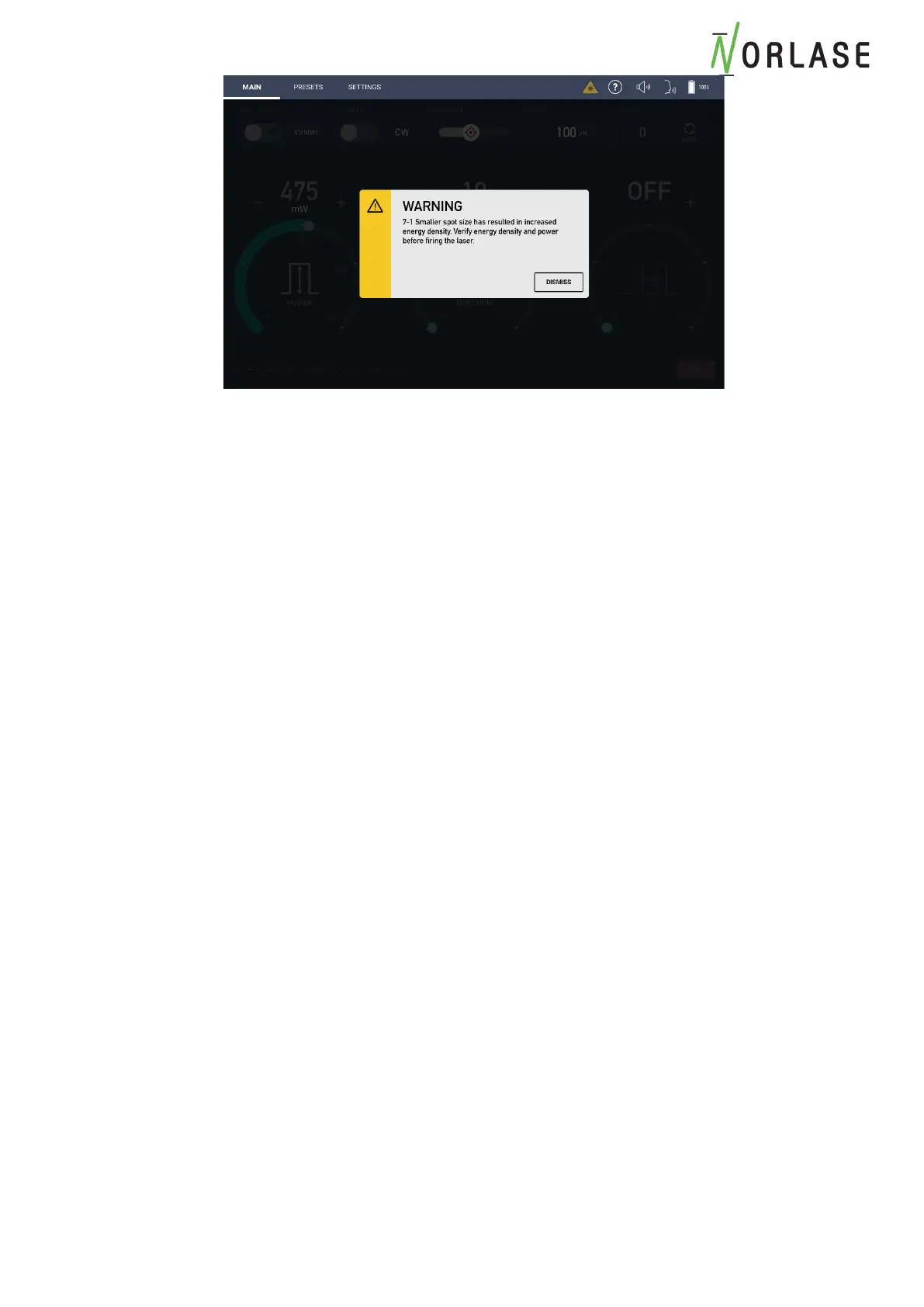
It is recommended to reduce power significantly and repeat titration at the new spot
size to redetermine the desired endpoint. See the “Changing Spot Diameter”
section of this manual for additional information.
• Photocoagulation of pigmented tissue
The Norlase Leaf 520 nm wavelength is highly absorbed by melanin.
Pigmented tissue that contains melanin may be coagulated at lower
power levels than tissue that does not contain melanin. It is
recommended that each treatment begin with titration to set the desired
clinical endpoint by starting at a low power level and gradually increase to
the desired level. Please note that melanin is not evenly distributed
through the target tissue and variable uptake may be experienced even in
adjacent spots.
• Photocoagulation through opaque tissue
Laser absorption or light scattering through opacities such as cataracts,
corneal scars, pigment, blood, and other debris may occur and cause
undesirable thermal damage to the opaque tissue or may cause light
scattering that may cause damage to unintended regions. Use caution
when treating through opacities and visualization and transmission of
laser energy may be compromised.
• Treatment of vascular structures
Direct treatment of vascular structures may result in intraocular bleeding
that may impair the patient’s vision and/or prevent further laser treatment.
Vascular structures should be treated with caution with parameters
appropriate with the individual clinical problem.
• Patient Movement
Patient movement during photocoagulation could result in the exposure of
unintended tissues to laser therapy. If patient movement inhibits clear
viewing of target tissue, consider necessary restraints to ensure patient
compliance or discontinue laser treatment. If the system Interval setting is
used, longer Interval settings will aid in proper tissue targeting and allow
adequate physician response time in case of patient movement.


 To Next Page