Using the BayStack 410-24T 10BASE-T Switch
1-36
309985-B Rev 00
IEEE 802.1Q VLAN Workgroups
BayStack 410-24T switches support up to 64 VLANs with 802.1Q tagging
available per port. Ports are grouped into broadcast domains by assigning them to
the same VLAN. Frames received in one VLAN can only be forwarded within
that VLAN, and IP Multicast frames and unknown unicast frames are flooded
only to ports in the same VLAN.
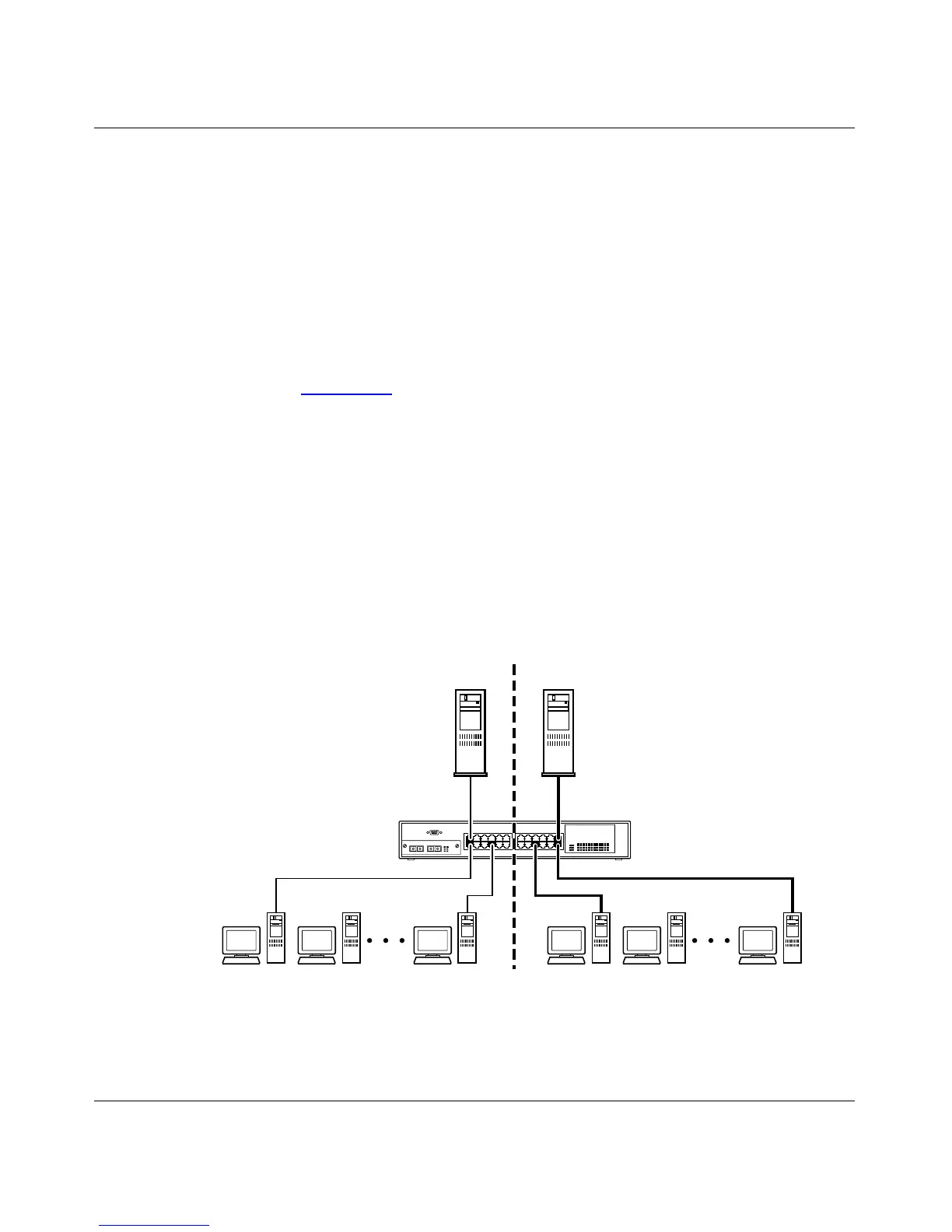
Setting up virtual LANs (VLANs) is a way to segment networks to increase
network capacity and performance without changing the physical network
topology (Figure 1-15
). With network segmentation, each switch port connects to
a segment that is a single broadcast domain. When a switch port is configured to
be a member of a VLAN, it is added to a group of ports (workgroup) that belong
to one broadcast domain.
The BayStack 410-24T switch allows you to assign ports to VLANs using the
console, TELNET, or any generic SNMP-based network management software.
You can assign different ports (and therefore the devices attached to these ports) to
different broadcast domains. This feature allows network flexibility because you
can reassign VLANs to accommodate network moves, additions, and changes,
eliminating the need to change physical cabling.
Figure 1-15. Port-Based VLAN Example
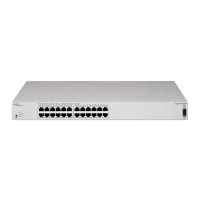
BayStack 410-24T
switch
VLAN 1 VLAN 2
BS41014A





 To Next Page