EasyManua.ls Logo

Parker K Series - User Manual

Parker K Series
66 pages
Print Icon
To Next Page IconTo Next Page
Loading...
1 - PVD 3674_GB_K Series_CE-November 2016.Docx
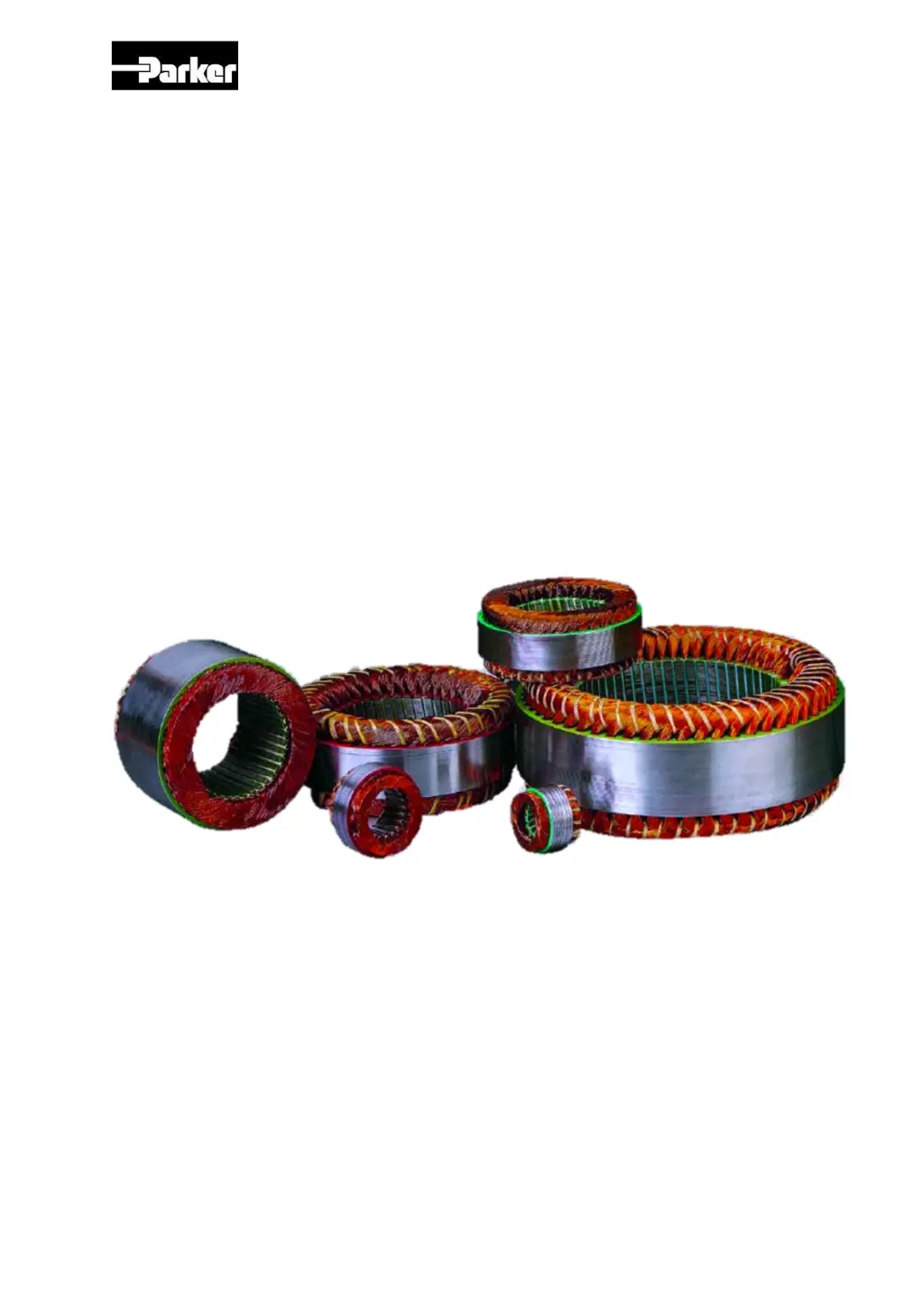
Servomotors
K Series Kit - CE Certified
Technical Manual
PVD 3674_GB

Table of Contents

Questions and Answers

  • L
    Laura BradleyJul 27, 2025
    Why is my Parker Servo Drives motor becoming unusually hot?
    • R
      Richard PrestonJul 27, 2025
      Your Parker Servo Drives motor might be overheating due to several reasons. It may be overloaded, or the rotation speed could be too low. Check the current and the operating cycle of the torque motor. Also, verify if the mounting surface is sufficient and not acting as a heat source. High friction in the machine may also be the cause, so test the motor current with and without a load and check that the motor does not have thermal insulation.
  • J
    Jorge LambertJul 31, 2025
    How to fix motor speed drifting on Parker Servo Drives?
    • G
      Gary CampbellJul 31, 2025
      To correct motor speed drifting on Parker Servo Drives, reset the offset of the servoamplifier after giving a zero instruction to the speed setpoint input.
  • G
    George JacksonAug 5, 2025
    How to stop vibrations in Parker K Series?
    • M
      michelle37Aug 5, 2025
      To address vibrations in your Parker Servo Drives system, check the encoder and tachometer connections, the earth connections, and the earthing of the earth wire. Also, review the setting of the servo drive speed loop, tachometer screening and filtering. Ensure the stability of the secondary voltages and verify the rigidity of the frame and motor support.
  • J
    John WebsterAug 9, 2025
    What to do if I have difficulty starting my Parker K Series motor?
    • B
      bmcdowellAug 9, 2025
      If you're having trouble starting your Parker Servo Drives motor, check the fuses, the voltage at the terminals, and the load current. Also, check the power supply to the brake (+ 24 V ± 10 %) and its polarity. Verify any thermal protection, its connection, and how it is set in the drive. Finally, check the servomotor insulation. The minimum insulation resistance value measured under a max. 50V DC is 50 MΩ between the phase and the casing, between the thermal protection and the casing, between the brake coil and the casing, and between the resolver coils and the casing. The issue could also be due to an overload or jammed bearings.
  • E
    erica83Aug 13, 2025
    Why is my Parker K Series motor racing?
    • P
      Priscilla MartinAug 13, 2025
      If your Parker Servo Drives motor is racing, check the speed set-point of the servo drive. Also, ensure that you are in speed regulation and not in torque regulation. Verify the encoder setting and the servomotor phase order: U, V, W.
  • Q
    qlittleAug 17, 2025
    Why is my Parker Servo Drives motor too noisy?
    • A
      Angelica JimenezAug 18, 2025
      The noise in your Parker Servo Drives motor could stem from several mechanical issues, such as unsatisfactory mechanical balancing, friction from the brake, a defective coupling, or loosening of several pieces. Also, check rotation in open loop if there is poor adjustment of servo drive or position loop.
  • P
    Paul DavisAug 22, 2025
    What to do if Parker K Series Servo Drives motor does not turn by hand?
    • N
      Natalie LivingstonAug 22, 2025
      If your Parker Servo Drives motor does not turn by hand when not connected to the drive, check that there is no mechanical blockage or if the motor terminals are not short-circuited. Also, check the power supply to the brake.

Summary

EU Declaration of Conformity

Introduction to Parker Servomotors

Purpose and Intended Audience

Manual content and intended user.

Safety Guidelines

Safety principles and rules for operation.

Product Description

Quick URL for Information

Web address for further information.

Overview of K Series Kits

General description of K Series Kit features and benefits.

K Series Kit Applications

List of typical applications for the servomotors.

Motor Description and Design

Detailed features and design of the servomotors.

General Technical Data

Core technical specifications and parameters of the motors.

Product Code Structure

Explanation of the product code structure and options.

Technical Data and Specifications

Kit Selection Guide

Guidelines for selecting the appropriate motor kit based on requirements.

K Characteristics: Torque, Speed, Current, Power

Detailed performance characteristics including torque, speed, and current.

Dimension Drawings

Mechanical drawings and dimensions for various motor sizes.

Motor Mounting Recommendations

Guidelines and warnings for motor installation and mounting.

Dielectric Test Requirements

Requirements for performing dielectric tests on motors.

Ground Continuity Compliance

Standards for ensuring ground circuit continuity.

Protection Rating

Information on motor protection ratings (IP00).

Natural Cooled Motor Operation

Flange Dimensions for Performance

Required aluminum flange dimensions for optimal motor performance.

Power Electrical Connections

Wire Sizes Selection

Recommendations for selecting appropriate wire sizes based on current.

Wire Size Conversion Table

Conversion table for wire sizes (AWG, kcmil, mm²).

Motor Cable Length Considerations

Considerations for motor cable length and potential impact.

Ground Connection Safety

Safety requirements for connecting the motor to ground.

Motor Cable Properties and Precautions

Cable properties, current density, and wiring precautions.

Motor Lead Cross Section

Table detailing motor lead cross-section by motor size and winding.

Feedback System Options

Commutation Hall Effect Sensor

Details on Hall effect sensors for commutation and signal timing.

Resolver Overview

Introduction to resolvers as angular position sensors.

Resolver Characteristics

Technical specifications and electrical properties of resolvers.

Resolver Cables and Connectors

Associated cables, connectors, and part numbers for resolvers.

Resolver Setting Procedure

Procedure and conditions for setting up resolvers.

Encoder Information

Information on available encoder types for position sensing.

Commissioning, Use, and Maintenance

Equipment Delivery Verification

Procedures for verifying kit condition upon delivery.

Handling Precautions

Precautions for handling motor kits, especially rotors.

Storage Guidelines

Guidelines for storing the motor kits to prevent damage.

General Integration Warnings

General safety and responsibility warnings for kit integration.

Tightening Torque Specifications

Recommended tightening torques for screws and bolts.

Electrical Connections Safety

Safety and wiring guidelines for electrical connections.

Power Application Precautions

Checks before applying power and ground cable connection.

Commutation Sensor Cable Handling

Handling precautions for commutation sensor cables.

Recommended Tests

Recommended tests for motor safety and compliance.

Troubleshooting Motor Issues

Motor Not Turning

Checks for issues when the motor does not turn by hand.

Starting Difficulties

Troubleshooting steps for problems starting or running the motor.

Speed Drifting Causes

Causes and solutions for motor speed drifting.

Motor Racing Troubleshooting

Possible causes and checks when the motor is racing.

Vibration Causes and Checks

Checks for causes of motor vibrations.

Motor Overheating Solutions

Troubleshooting steps for motors becoming unusually hot.

Motor Noise Explanations

Possible explanations for excessive motor noise.

Parker K Series Specifications

General IconGeneral
Drive TypeServo Drive
SeriesK Series
Control ModesTorque, Velocity, Position
FeedbackResolver, Encoder
CommunicationEtherCAT, CANopen
SafetySTO (Safe Torque Off)
Protection FeaturesOvercurrent, Overvoltage, Undervoltage, Overtemperature

Related product manuals