21
Characteristics of Microwaves
What are microwaves?
Before understanding the microwaves, we need to
know what waves are. Physics describes a wave as a
disturbance that spreads in a medium (space or mass).
When a stone is tossed into a lake or body of water, we
can observe the waves that spread from the point
where the stone hits the water. This is a very clear
example of waves.
The waves may be classified as mechanical or electromagnetic. The mechanical waves are those that
need a medium to spread such as waves on a rope or sound waves. The electromagnetic waves are
those that do not need a medium to spread, they can spread through a vacuum or certain kind of
materials. A fewer examples of electromagnetic waves are sunlight, radio waves, microwaves, x-rays,
and many others.
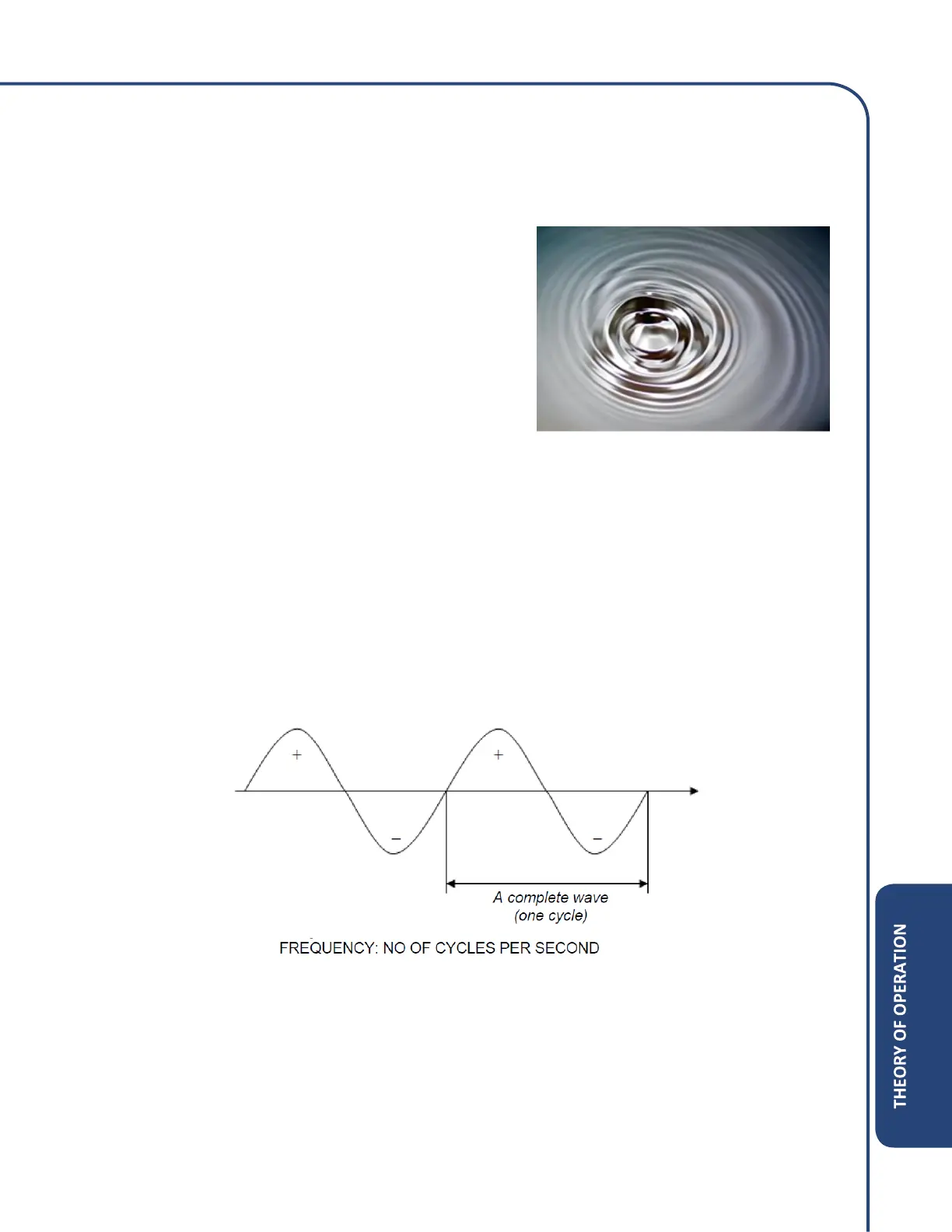
The waves may be represented by a solenoid similar like the picture below. The wave changes from
positive to negative and returns to neutral, performing a complete cycle. The number of times this
cycle repeats in one second determines the frequency of the wave.
The size of the cycle of a wave determines its length. The waves differ for their length and frequency
but they have the same speed which equals 300.000 km/s. Since all of these waves have the same
speed, the smaller the length, the greater its frequency will be as provided by the example from next
picture.



 To Next Page