11-01
680 High Clearance Sprayer - Operation Instructions
Section B
4
Section B
A “Flooded” condition is when the centrifugal pump is
completely full of fluid and no pockets of air are present
in the pump. In order to get maximum pump efficiency
the mounting and plumbing must meet the guidelines
stated below.
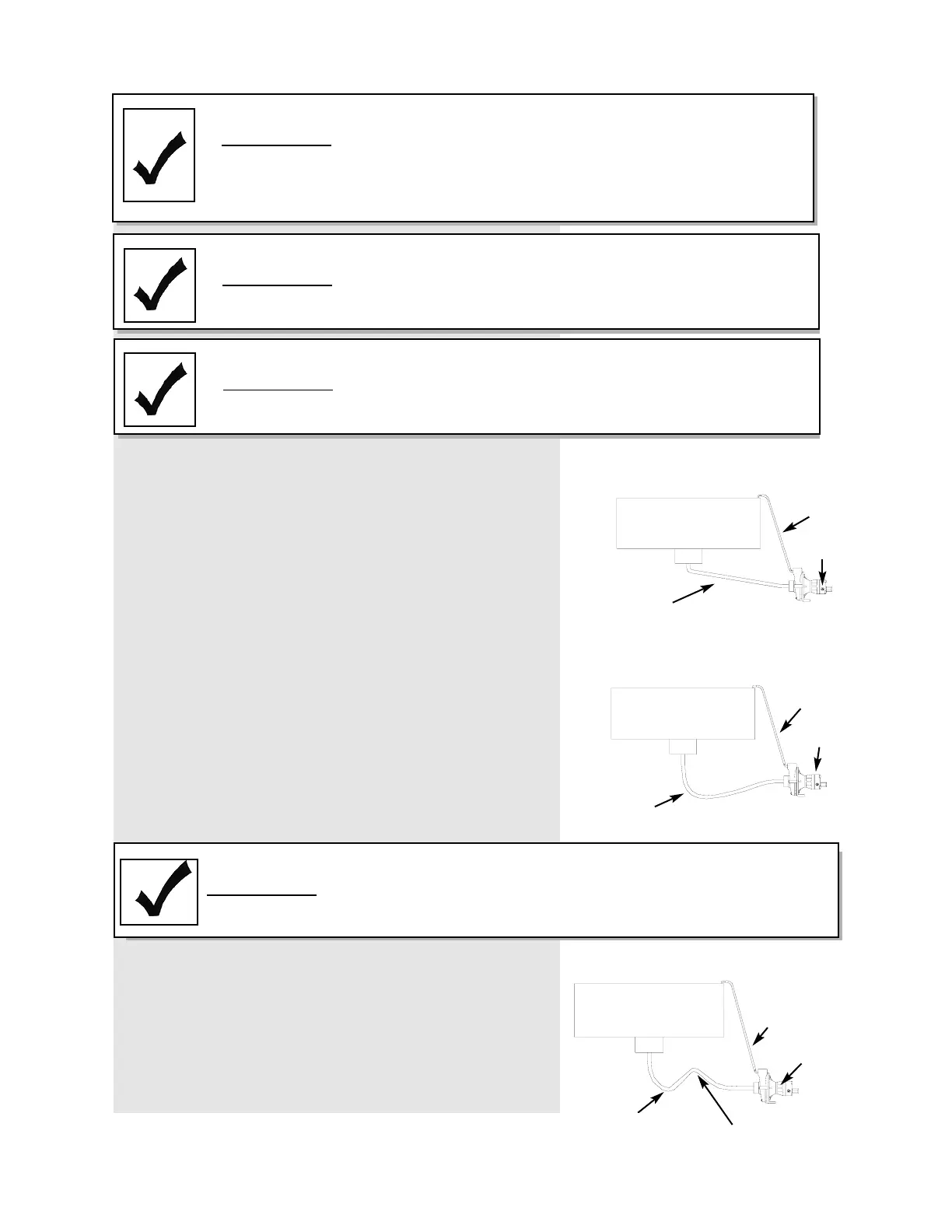
1. The pump inlet must be mounted below the product
tank(s) sump to allow gravity to naturally fill the
pump with liquid. See Figures 1 - 3.
2. The suction line must have a continual rise from the
pump inlet to the tank sump.
3. The pump must have the vent line plumbed to it.
It is very important that the proper oil flow is supplied to
the hydraulic motor which powers the pump. Excessive
flow will over-speed the motor and cause motor damage.
To regulate the correct oil flow to the pump motor
see the pump manufacturer’s manual.
Hydraulically Driven Diaphram Pump
Follow the pump manufacturer’s instructions for opera-
tion.
Product Tank
Vent
Line
Suction Line
Acceptable
Pump
Figure 2
Product Tank
Vent
Line
Air Trap Point
Pump
Figure 3
Suction Line
Not Acceptable
IMPORTANT
There are two basic rules to follow when operating a hydrauli-
cally driven centrifugal pump:
1. Never run the pump in a “Non-Flooded” condition.
2. Always have the correct oil flow to the pump motor.
Always read and follow the pump manufacturer’s opera-
tional instructions.
IMPORTANT
The Vent Line is designed to prevent air lock by bleeding off
trapped air. This allows the pump to prime and keeps some
fresh solution circulating by the seal.
IMPORTANT
For proper venting, the vent line must continually rise from the
pump to the top of the tank. Any drop or downward routing
will significantly depreciate its venting capabilities and render it
useless for its intended purpose.
IMPORTANT
Turn off a hydraulically driven centrifugal pump using the “float” posi-
tion of the tractor’s hydraulic valve. This allows the motor to stop
slowly helping to protect the motor and motor seals.
Product Tank
Vent
Line
Suction Line
Ideal
Pump
Figure 1



 To Next Page