DRIVING ADVICE, ECO-DRIVING
3
204 - Driving
Heating levels
It is normal to notice an increase in the
vehicle's fuel consumption when using
theheating(particularlywhentheout
side temperature drops below zero) or
air conditioning.
Behaviour
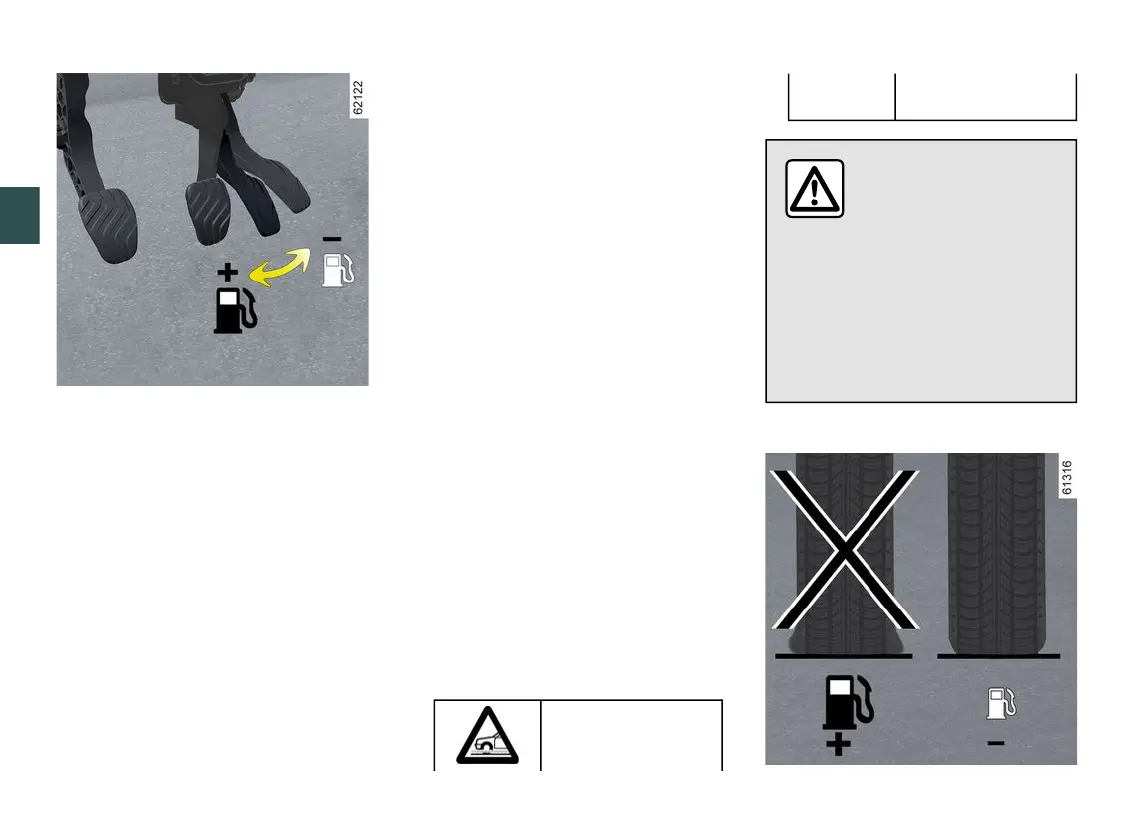
On the driver's side, only
use mats suitable for the
vehicle, attached with
theprefittedcompo
nents,andcheckthefittingregu
larly.
Donotlayonematontopofan
other.
There is a risk of wedging the
pedals.
Tyres
Drive carefully until the engine
reachesitsnormaloperatingtem
perature, rather than let it warm up
while the vehicle is stationary.
–
High speeds significantly affect the
vehicle's fuel consumption.
Examples (at a steady speed):
–
reducing the speed from 80
mph (130 km/h) to 68 mph
(110 km/h) approximately
savesupto20%offuelap
proximately;
–
reducing the speed from 56
mph (90 km/h) to 50 mph (80
km/h) approximately saves up
to 10% of fuel approximately.
–
Dynamic driving involving heavy
andfrequentaccelerationandbrak
ingisexpensiveonfuelincompari
son to the time saved.
–
Donotoverrevtheengineinthein
termediategears.Youshouldal
ways use the highest gear possible.
–
Avoid sudden acceleration.
–
Brakeaslittleaspossible.Ifyouan
ticipateanobstacleorbendinad
vance, you may then simply release
the accelerator pedal.
–
Do not try to maintain the same
speed up a hill; accelerate no more
than you would on the level. Keep
your foot in the same position on
the accelerator pedal.
–
Doubledeclutchingandaccelerat
ing before switching off the engine
areunnecessaryinmodernvehi
cles.
–
Bad weather, flooded roads:
Do not drive through
water if it is higher
–
than the lower edge
of the wheel rim.





 To Next Page