DRIVING ADVICE, ECO-DRIVING
3
Driving - 205
– An underinflated tyre increases fuel
consumption.
– To optimise fuel consumption, set
the highest speed tyre pressure or the
recommended pressure indicated on
the edge of the driver's door 🡺329.
– The use of non-recommended tyres
can increase fuel consumption.
Advice on use
– Opt for Eco mode.
– Electricity is fuel: switch off all the
electrical components when they are
not genuinely needed. However(safe
ty first), keep your lights on when the
visibility is bad ("see and be seen").
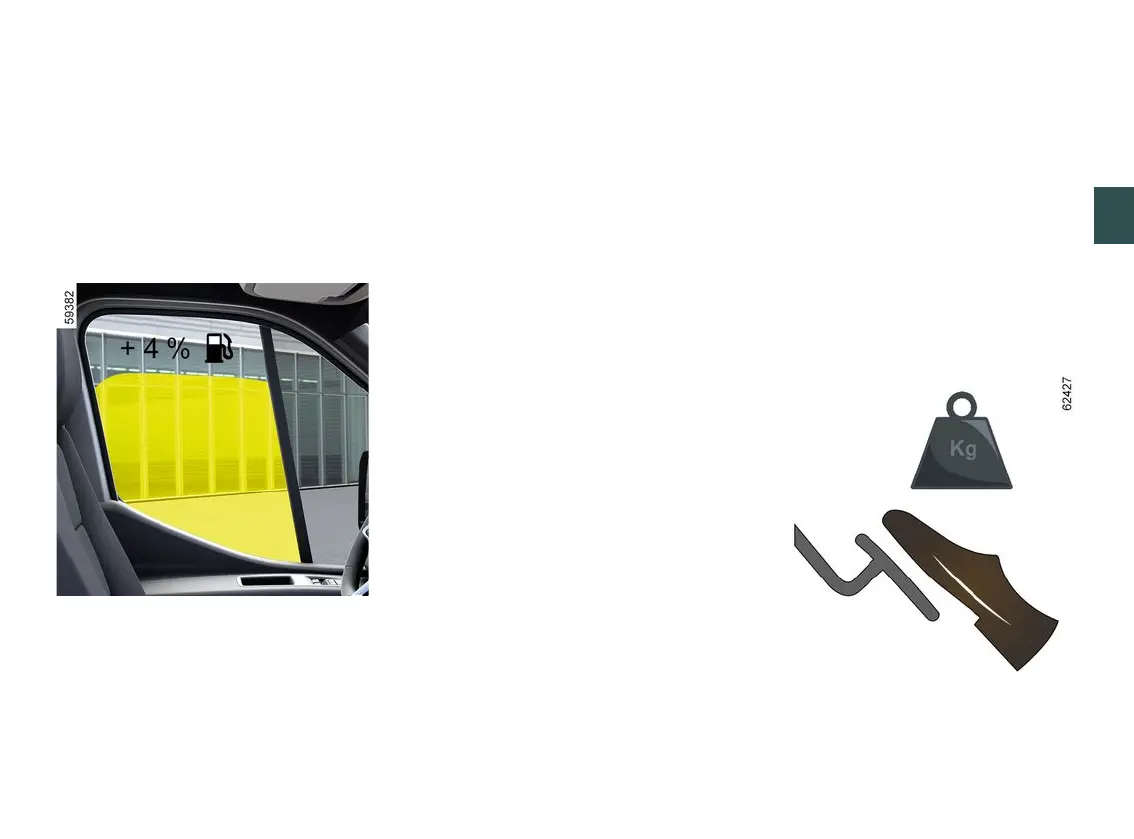
– Use the air vents. Driving with the
windows open at 62 mph (100 km/h)
will increase fuel consumption by 4%.
– Never fill the fuel tank right to the
brim to avoid overflow.
– On vehicles equipped with non-
automatic air conditioning, switch off
theairconditioningwhenitisnotre
quired.
Recommendations for reducing
consumption and therefore helping
to preserve the environment:
If the vehicle has been parked in the
sun,openthedoorsforafewmo
ments to let the hot air escape before
starting the engine.
– Donotleaveanemptyroofrackfit
ted to the vehicle.
– Itisbettertofitatrailerforbulkyob
jects.
– When towing a caravan, fit a wind
deflector and adjust it carefully.
– Avoid using the vehicle for "door-to-
door" calls (short journeys with long
waits in between) because in such
conditions the engine never reaches
its optimal operating temperature.
Vehicle range: advice
(Electric version)
In real usage, the range of an electric
vehicle may vary depending on several
factors over which you have partial
control,whichmaymakeaconsider
able difference to the vehicle range.
These factors are:
– speed and driving style;
– road type;
– heating level;
– tyres;
– use of electrical accessories;
– vehicle loading.
Furthermore,activatingmodeEcoen
ables the vehicle to automatically take
chargeofallenergyconsumers(en
ginepoweretc.)toreducetheircon
sumptiontothefullestpossibleex
tent🡺200.
Speed and driving style
Driving at high speed will significantly
reduce your vehicle's range.
Examples (at a steady speed):





 To Next Page