SRT55D Off-Highway Truck
5-1
Safety, Operation and Maintenance Manual
Fig. 5-2
5 WORKING THE TRUCK
5.1 Working the Truck
Off-Highway trucks are used on a variety of
hauling jobs, from mine overburden removal
to dam building. Every truck operation,
regardless of the type of job, can be divided
into four phases; loading, hauling, dumping
and the empty return.
Note:
After coming to a stop for loading or
unloading the truck, the Parking-Emergency
brake button can be pushed in to hold the
brakes in the applied position as though the
foot brake is depressed.
5.2 Loading
The most common methods of loading trucks
are with hydraulic excavators, rope shovels,
and front end loaders. For maximum material
movement, the truck operator must help the
loading machine operator hold loading time to
a minimum. The fewer manoeuvres the truck
must make to get into loading position, the
sooner loading can start. And the shorter the
distance the loading unit bucket must travel
between the cut, or stockpile and the truck
body, the more passes it can make in a given
period of time and the quicker the truck can be
loaded.
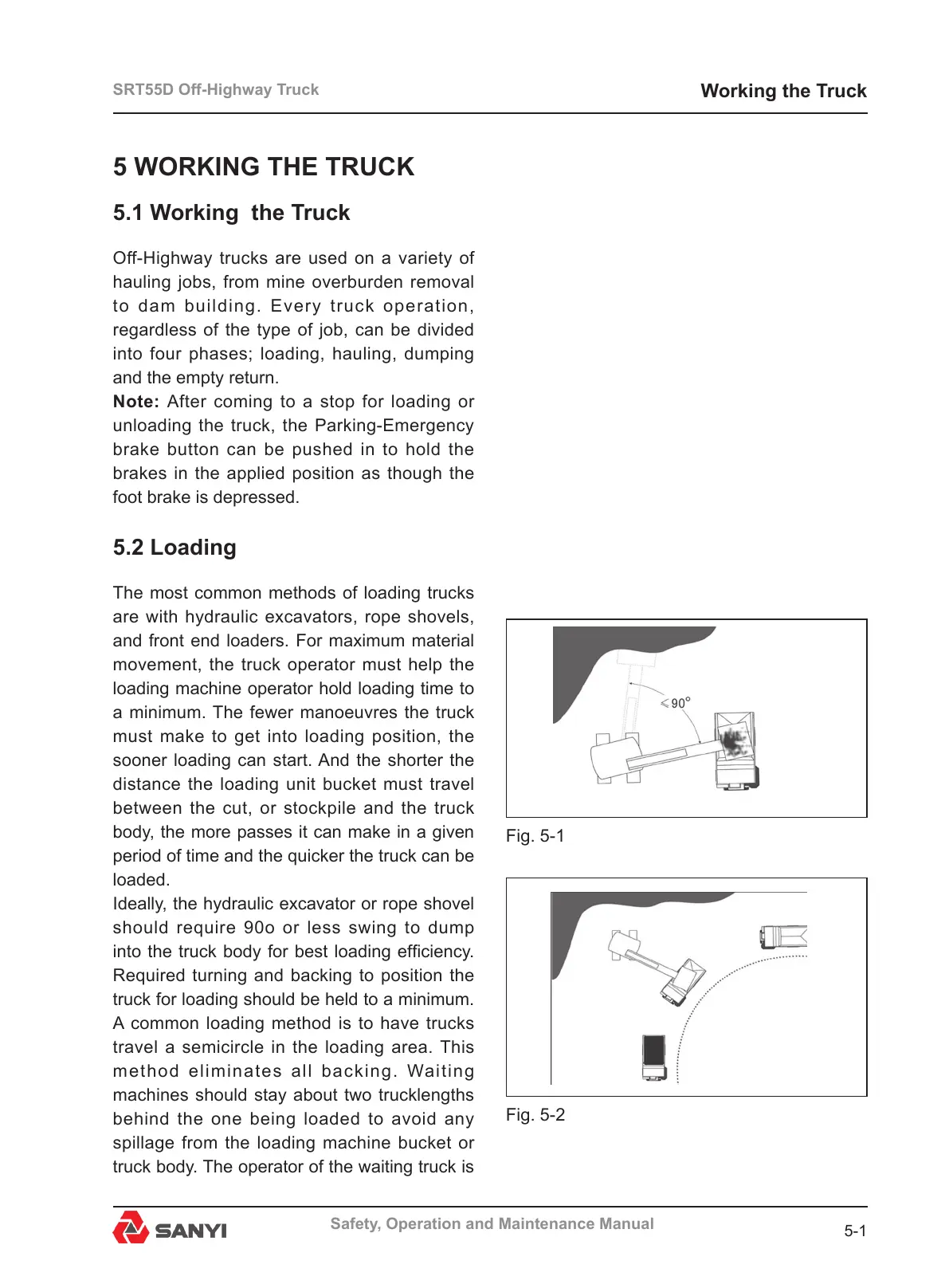
Ideally, the hydraulic excavator or rope shovel
should require 90o or less swing to dump
into the truck body for best loading efciency.
Required turning and backing to position the
truck for loading should be held to a minimum.
A common loading method is to have trucks
travel a semicircle in the loading area. This
method eliminates all backing. Waiting
machines should stay about two trucklengths
behind the one being loaded to avoid any
spillage from the loading machine bucket or
truck body. The operator of the waiting truck is
Fig. 5-1
Working the Truck


 To Next Page