Operation
Startup 250:Users:Danny:Desktop:Operation manuals:line pumps:maverick
(P305):pHseriesOPERATION.fm
35
Operation Manual - SP 305
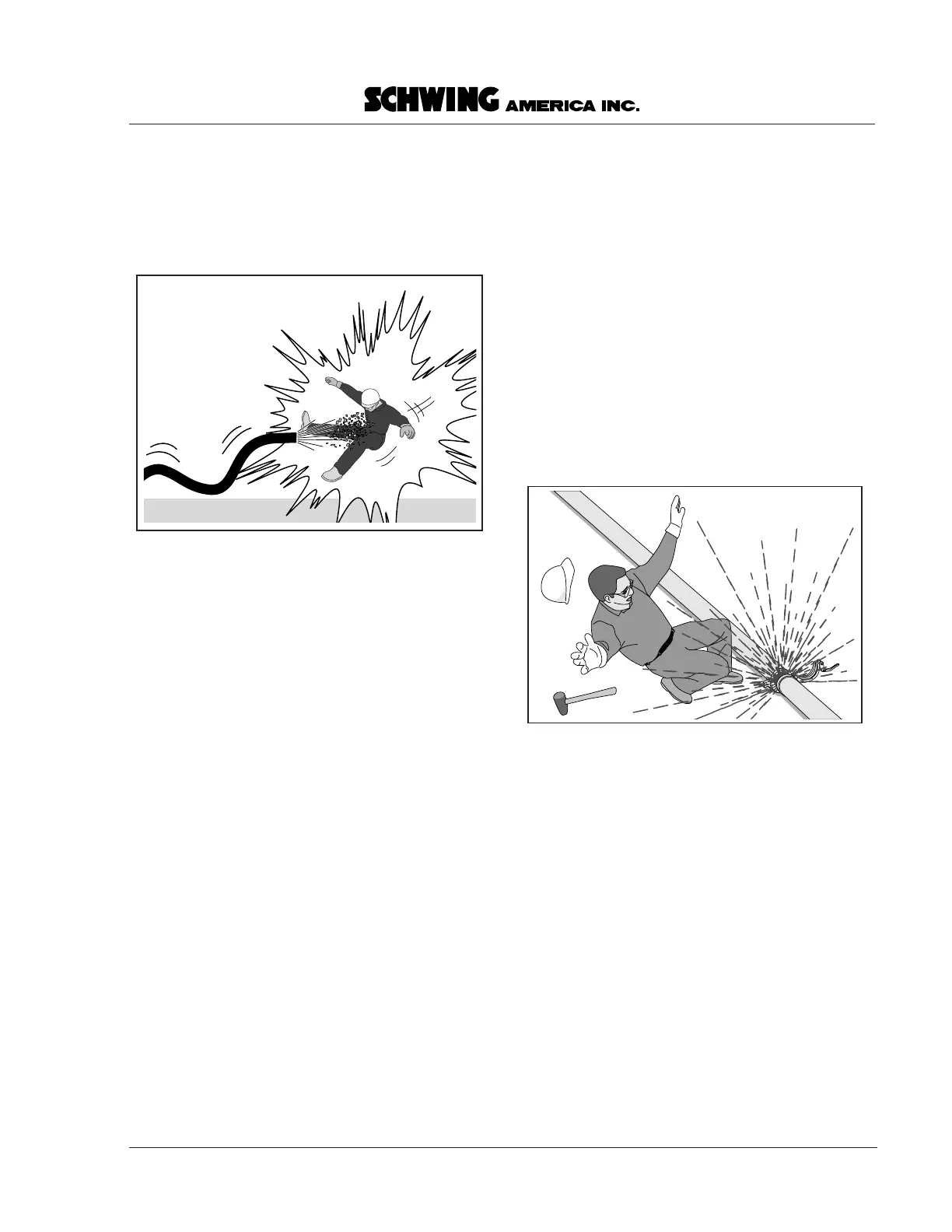
WARNING! Release of stored energy hazard
(Figure 26). If you are successful at rocking the plug
loose, air will be introduced into the line at the delivery
end. If a blockage would then form in front of the air,
the air would become compressed when you switch
back to forward pumping. Clear the discharge area of
personnel before rocking the plug.
To rock the plug: When the unit stops pumping,
immediately put the pump forward - reverse switch
into the reverse position. Pump in reverse for two
strokes. Put it back in forward and pump for two more
strokes. Put it in reverse for two strokes, then to
forward, etc. Sometimes this method dislodges the
plug. It is less likely that reversing the pump will help
dislodge a blockage in a longer pipeline, because the
suction you create at the pump doesn’t have enough
power to move a long horizontal line of concrete.
3. Remove the plug manually. If the above step
didn’t help, you will have to locate the plug and
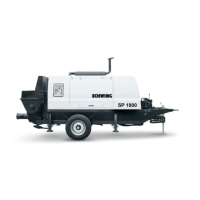
remove it manually. Never open a delivery
system line that is pressurized! First, relieve
the pressure in the line by pumping in reverse
for at least two strokes. Locate the plug by
tapping on the line with a hammer. (NOTE! TAP
is the key word. If you hit the line too hard it will
dent. A dented line wears out at the dent
quickly.) When pressure is removed from the
line, it has a hollow sound, except for the plug,
which sounds solid. Reducers, elbows, and
rubber hoses are most susceptible to plugs, so
start by checking them. If you cannot locate the
plug by tapping, break the line at about the
halfway point. Clear the discharge area of
personnel, then try pumping in forward again. If
the machine still stops, the plug is in the half of
the line that is still connected to the pump. If
concrete comes out of the line where you
disconnected it, then the plug is in the half of the
line that was disconnected. Remember to
relieve the pressure on the line again before
breaking the line anywhere else! You can
locate the plug by the process of elimination if
you keep breaking the line in different spots and
trying to push concrete to the disconnected point.
When you locate the plug, remove it.
Reassemble the line, including the clamp
gaskets. NOTE: Air is introduced into the line
when you break it apart, so remember to clear the
discharge area of personnel before starting again.
Lower the volume control to stroke slowly until
concrete is running steadily.
Cold weather pumping
Keep these things in mind if you must pump at
temperatures below 32° F (0° C):
• Water freezes below 32°F, so cleanout must be
done with heated water.
• If concrete sits for too long, it freezes. When it
freezes, setting action stops. To prevent this, the
engineer will probably order the concrete with
calcium chloride or a similar chemical intended to
make the concrete set before it can freeze. This can
work against you if you take too long to clean out
or if you have to wait during the pour. Speed up the
cleanout process as much as possible without
taking risks.
Figure 26
Successfully rocking a plug loose
introduces air into the line
explode2.eps
Figure 27
Never open a pressurized delivery line


 To Next Page