Maintenance
44
8/4/11
Operation Manual - SP 305
General Maintenance Tips
Torque specifications
When performing maintenance that requires removal
and replacement of bolts, it is very important to adhere
to the torque specifications that apply to that bolt
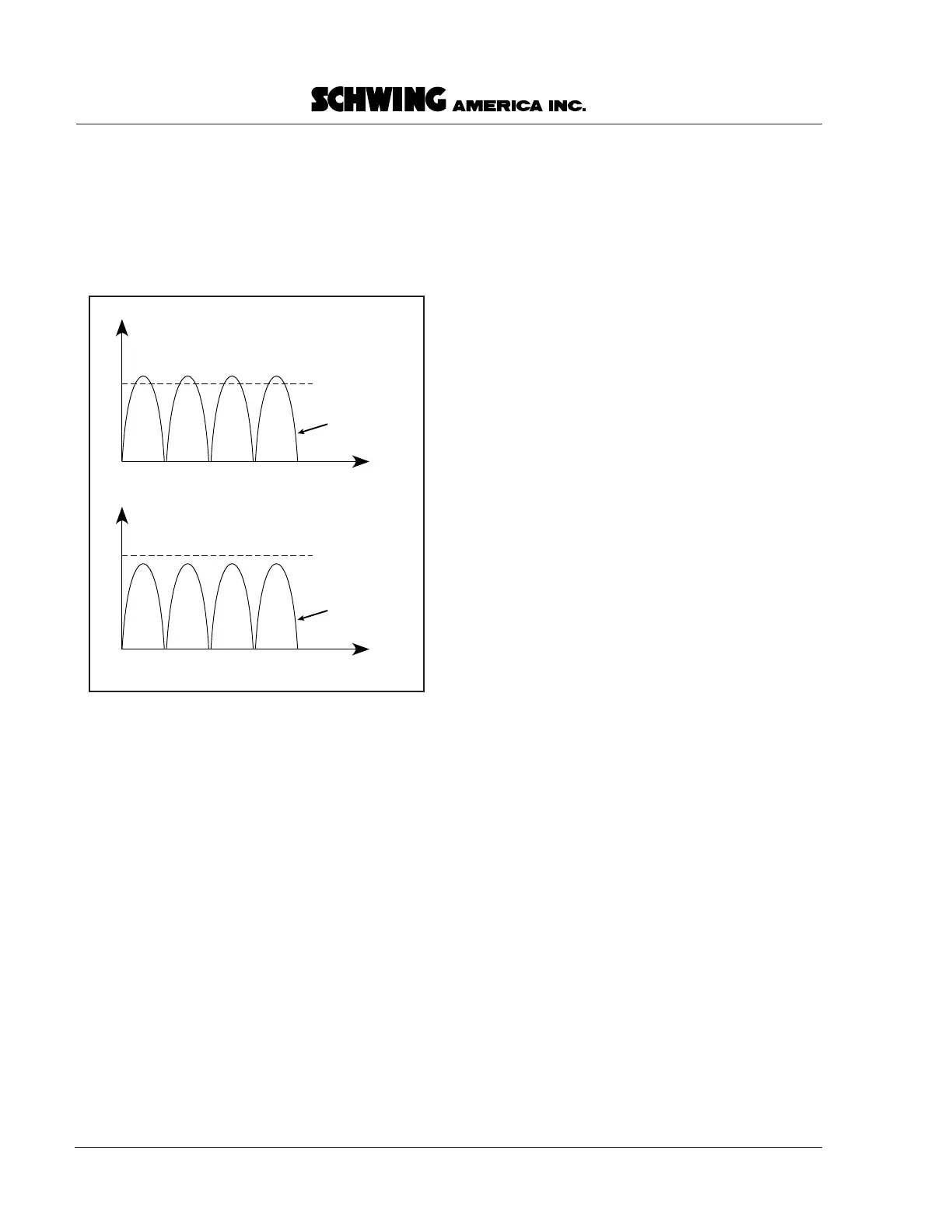
(Figure 30).
The graphs in Figure 30 demonstrate what happens to a
bolt if it is not properly torqued. The dashed line
represents the prestress on the bolt. As the device that
uses the bolt goes through its normal functions, the bolt
in example “A” gets stretched and relaxed with every
duty cycle, because the bolt is prestressed under the
maximum force of the cycle.
In example “B”, the prestress of the bolt has been
raised to more than the maximum force of the duty
cycle, so the bolt doesn’t ever feel the cycle. In this
example, bolt “B” would last MUCH longer than bolt
“A”. The torque specifications for bolts used on
Schwing equipment are found in the Appendix section
of this manual.
Adjusting relief valves
While adjusting a relief valve is not normally a
dangerous procedure, you should remember that it has
the potential to cause trouble. The main thing to watch
out for is this: Sometimes people who don’t know
better will have a problem with a machine and begin
troubleshooting by raising the pressure setting. When
that doesn’t help, they forget to lower it back down.
When you check the pressure by creating a hydraulic
block, the pressure is set too high. In extreme cases,
this can cause hoses or fittings to burst or other
component failure. To be safe, you should begin the
adjustment procedure by turning the adjustment device
to the lowest possible setting, then bring the device
back up to the proper setting.
Removal of safety devices
Sometimes you will have to remove a safety guard or
other safety device in order to perform maintenance.
For these situations, you must take extra care to be sure
of your own safety and that of your co-workers. If you
have to put your hands, feet or any other body part into
a part of the machine that would normally be guarded,
be sure that the machine is turned off and that the key is
in your pocket. If there is more than one key in
existence, you should also put a “DO NOT OPERATE”
sign on the controls or over the start switch.
Before restarting the machine after performing
maintenance, be sure to put away all tools, parts and
supplies, and clear the area of personnel. If your
company has a “lock-out, tag-out” policy in place,
abide by it.
Concrete pumps are big enough to hide a man. Be sure
to yell “clear” before starting the unit at any time, and
allow time for response before proceeding.
Time
Force
A
Time
Force
B
TorqueForce.eps
Prestress
Prestress
duty cycles
duty cycles
Figure 30
Effects of proper prestressing of a bolt


 To Next Page