Operation
34
8/4/11
Operation Manual - SP 305
procedures, see the Maintenance section of this
manual). When the waterbox is clean, replace the
top cover and start the unit. Stroke the machine
twice (two times), which will flush the water from
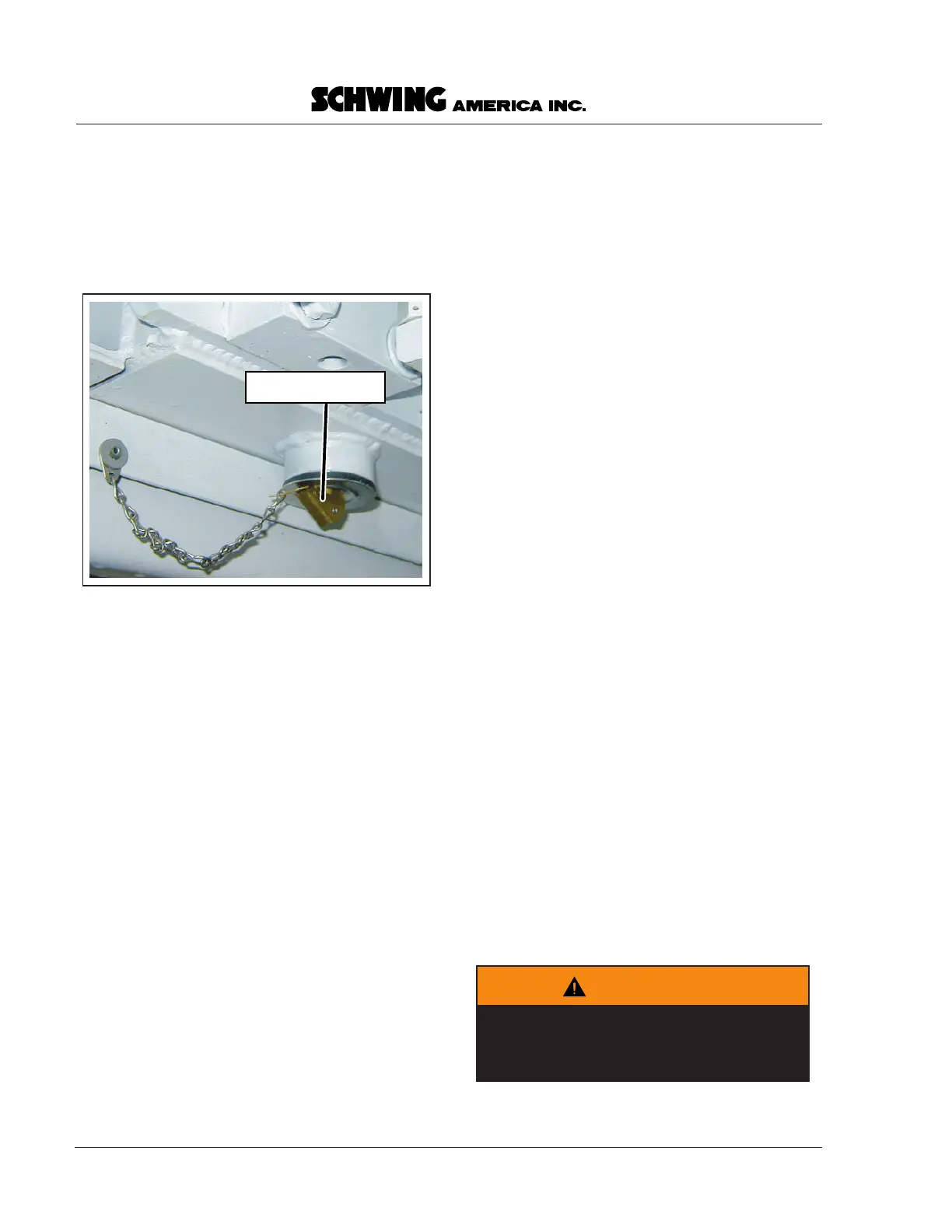
the material cylinders. Stop the unit. Replace the
drain plug in the bottom of the waterbox. Make
sure that it is tight so that it doesn’t fall off on the
road.
• Spray off the rest of the unit to remove dust and
cement particles. If you have time, brush off any
concrete spatters that may have landed on the
machine during the course of the day. If the
spatters are already dry, use a putty knife to scrape
them off. If you let the spatters stick for weeks, you
will need to sandblast the unit or give it an acid
bath to remove them. If you are going to give the
unit an acid bath, please call our service
department for advice on protecting the
machine before proceeding. Acid must NOT
touch chrome or rubber parts.
• Place all of the accessories back on the towing
vehicle. Secure all hoses, clamps, buckets, and
other equipment to be sure that they don’t fly off
the truck while you’re driving. Take a moment to
make a final check of the area to be sure you’re not
forgetting anything.
• Retract the outriggers. Check your brake light
connections, adjust and clean your mirrors, and
make all other necessary adjustments before
driving off the job site.
• Remember to get your paperwork signed before
you leave.
Special Pumping Situations
Plugs
Many plugs can be avoided by simply pumping slowly
until concrete runs steadily from the end of the line.
The difference between a plug that can be rocked out of
the line and a plug that must be manually removed is
generally how hard the plug has been pressed. If you
pump slowly when you first begin to pump, you can
watch the pressure gauge and stop the pump before a
plug has a chance to become jammed with force.
Is the line plugged?
Before taking the corrective action, you must first
determine whether the line is actually plugged. Other
situations can cause symptoms that appear to be plugs
but are not. Hydraulic components can stick in one
position or the other, electric valves can stick open, and
so on.
If you answer “yes” to all of the following questions,
the line is plugged:
• Is the pressure gauge going to the maximum
pressure setting?
• Is the pressure much lower when you stroke the
unit in reverse?
• If the machine stops pumping, reverse it for two
strokes. Put it back into forward. Does the machine
pump in forward for two strokes, and then stop
pumping again?
If the answer to any of the above questions is “no,” the
line is not plugged. Look for the problem elsewhere, or
call the Schwing Service Department for help.
Removing a plug from a pipeline.
If you determine that your delivery line is plugged, you
will need to remove the plug before you can continue
with the pour. Follow these steps:
1. Don’t try to force the plug! If the machine stops
because of a plug, trying to free it with high
pressure just makes the plug worse.
2. Try to rock the plug free.
Waterbox drain
drain.eps
Figure 25
The waterbox drain
WARNING
Clear the discharge area before first
starting, restarting after moving, or anytime
air has been introduced into the line.
000359.eps


 To Next Page