Need help?
Do you have a question about the Sentec LuMon System and is the answer not in the manual?
Overview of the LuMon™ System components and function.
Explains the structure and purpose of the user's guide.
Defines key symbols, terms, and abbreviations used in the manual.
Explains the meaning of safety symbols and messages used in the guide.
Lists essential warnings and cautions for safe system operation and patient care.
Addresses electromagnetic compatibility and potential interferences.
Provides a comprehensive list and explanation of all system symbols.
Specifies the qualified healthcare professionals authorized to use the system.
Outlines the general purpose and application scope of the LuMon™ System.
Lists specific clinical scenarios and patient types for system application.
Identifies conditions under which the system must not be used.
Describes the basic EIT technology and how it works.
Details how EIT is applied for monitoring lung function.
Highlights unique features of the Sentec EIT system.
Lists factors that can affect EIT data accuracy and interpretation.
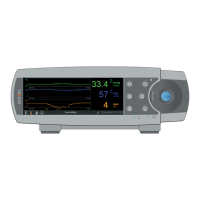
Details the portable, bedside EIT monitor and its configurations.
Explains the function and types of belt connectors.
Describes the different types of EIT belts and their characteristics.
Details the contact media used for impedance coupling.
Explains the use of measuring tapes for belt size selection.
Explains how to navigate and use the monitor's interface screens.
Describes the default screen showing status, patient, and belt information.
Details the Lung Function view, including stretch and silent spaces.
Details the Ventilation view, showing images and respiratory rate.
Describes common elements across EIT images and trend displays.
Explains status icons, messages, and indicators on the monitor.
Lists parameters that the operator can adjust on the monitor.
Explains the use of the equipotentiality terminal for grounding.
Covers connecting to AC power and operating on battery.
Details the monitor startup process and system settings verification.
Outlines essential checks before initiating monitoring for a new patient.
Lists the hardware, network, and security requirements.
Guides SensorBelt application and monitoring setup for adults/children.
Guides LuMon™ Belt Adult application and monitoring setup.
Guides LuMon™ Belt Neo application and monitoring setup for neonates/infants.
Verifies correct belt application, positioning, and data entry.
Ensures the correct analysis mode is selected for patient breathing patterns.
How to select appropriate patient models for accurate EIT.
Explains how patient position influences EIT data and analysis.
Details how the system assesses and displays EIT data quality.
Describes the primary visual outputs of the EIT system.
Explains the process the system uses to identify breaths.
Details the calculation and display of respiratory rate (RRi).
Describes the different modes for analyzing EIT data.
Explains how to interpret trends of key EIT parameters.
Focuses on analyzing regional lung stretch patterns.
Advanced analysis of ventilation distribution and lung spaces.
How to mark events and capture screenshots during monitoring.
Procedures for saving and exporting EIT data.
Steps to temporarily pause monitoring without removing the belt.
How to pause monitoring when changing the belt.
Steps to properly conclude patient monitoring.
Outlines regular checks and maintenance procedures.
Instructions for cleaning and disinfecting the system components.
Procedure for replacing the monitor's fuses.
Guidance on the safe and environmentally sound disposal of system parts.
Procedures for packaging and shipping equipment for service.
Details key performance metrics like accuracy and ranges.
Lists general EIT characteristics, standards, and compatibility.
Covers physical, display, and electrical specifications of the monitor.
Provides physical characteristics of the belt connectors.
Details physical characteristics and sizes of the belts.
Lists the composition of contact agents.
States the regulatory classification of the device and accessories.
Declaration regarding electromagnetic compatibility.
Lists accessories, spare parts, and related documents.
Defines product variants and Sentec EIT related terms.
Provides an alphabetical list of abbreviations.
Lists cited sources and literature.
 General
| Brand | Sentec |
|---|---|
| Model | LuMon System |
| Category | Medical Equipment |
| Language | English |

 To Next Page