Introduction
III
INTRODUCTION
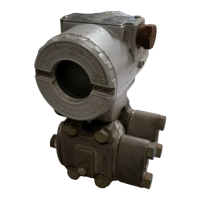
The TT301 is a transmitter mainly intended for measurement of temperature using RTDs or
thermocouples, but can also accept other sensors with resistance or mV output such as:
pyrometers, load cells, resistance position indicators, etc. The digital technology used in the TT301
enables the choice of several output functions, an easy interface between the field and the control
room and several interesting features that reduce considerably the installation, operation and
maintenance costs.
The TT301, besides the normal functions offered by other smart transmitters, offers the following
functions:
SPECIAL SENSOR: the output follows a mV or Ohm input according to a 16-point linearization
table.
PID OUTPUT CHARACTERIZATION: the PID output signal (MV) follows a curve determined by 16
points.
BACKUP SENSOR: the process measurement is realized by two sensors, but only one supplies the
temperature. If it failure the other take its place.
INPUT SELECTOR: the selection between two sensor to obtain the measure is configured by user
based in the conditions of maximum, minimum or average temperature of the sensor.
CONTROLLER: the process variable is compared to a setpoint. The deviation acts on the output
signal according to a PID algorithm (Optional).
BATCH : setpoint generator allowing pre-programmed recipes of up to 2-week duration in 16 points.
LOCAL ADJUST: allow to set lower and upper value, sensor type, operation mode, indication,
setpoint, PID parameters without a configurator.
PASSWORD : three configurable levels for different functions.
CHANGE COUNTER: indicates the number of changes in each functions.
SPECIAL- SENSOR-UNIT: allows the reading to be indicated by one of 100 standard engineering
units or any special unit with up to 5 characters.
Get the best results of the TT301 by carefully reading these instructions.


 To Next Page