Section 5
5.1
MAINTENANCE PROCEDURES
General
SMAR TT301 intelligent temperature transmitters are extensively tested and inspected before delivery
to the end user. Nevertheless, during their design and development, consideration was given to the
possibility of repairs by the end user, if necessary.
In general, it is recommended that the end user do not try to repair printed circuit boards. Instead he
should have spare circuit boards, which may be ordered from SMAR whenever necessary.
Diagnosis with Smar Configurator
Should any problem be noticed related to the transmitter’s output, investigation may be carried out by
the Configurator, as long as power is supplied and communication and the processing unit are
operating normally.
The programmer should be connected to the transmitter in accordance with the wiring diagram shown
on Section 1, Figures 1.4, 1.5 and 1.8.
Error Messages
When communicating using the Configurator the user will be informed about any problem found by the
transmitters self diagnostics.
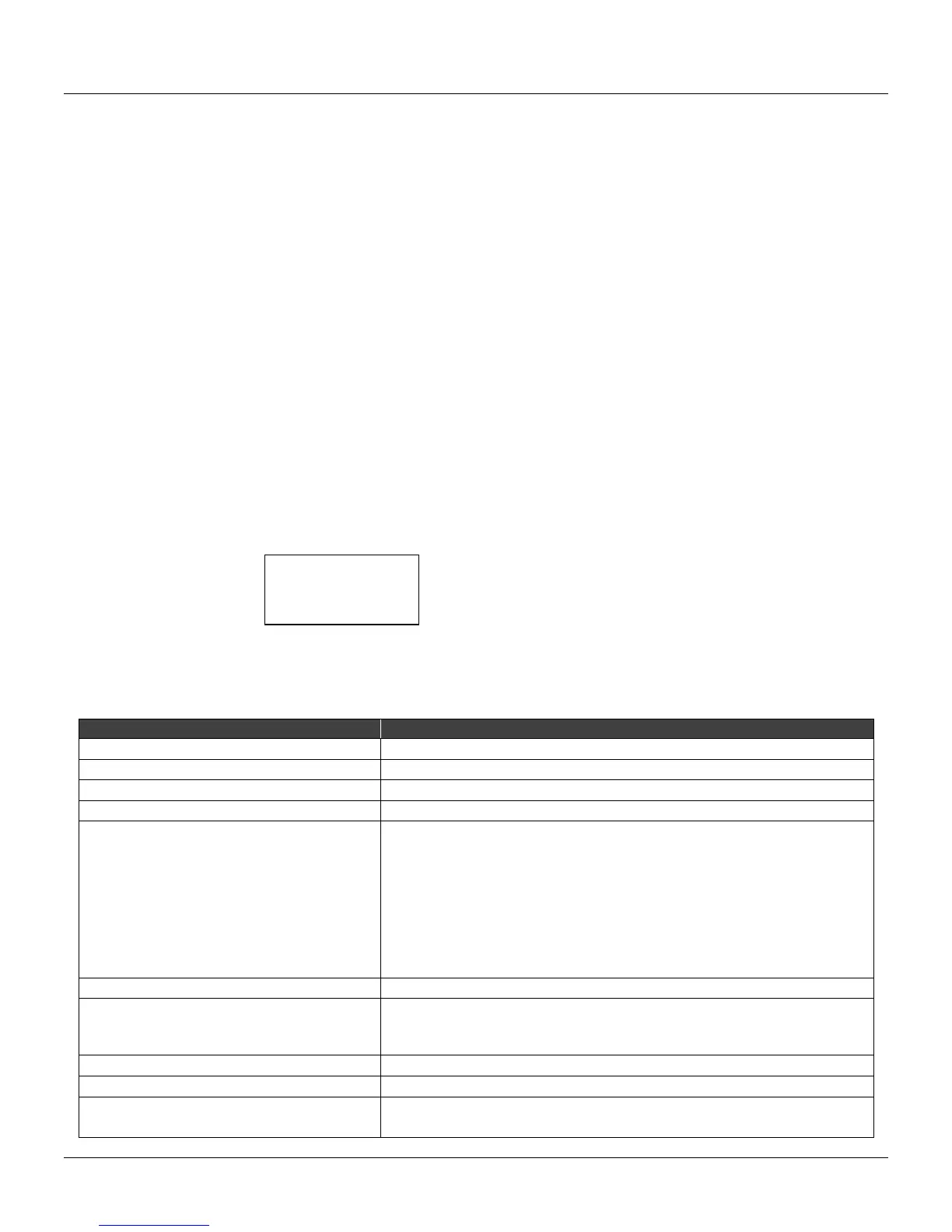
As an example, the Configurator of the display may show:
The messages are always alternated with the information on the top line. The table below lists the error
messages. Refer to trouble shooting for more details on corrective action.
Diagnostics with the Configurator
POTENTIAL SOURCE OF PROBLEM
Excessive noise or ripple.
Excessive noise or ripple.
Excessive noise or ripple.
Excessive noise or ripple.
The line resistance is not in accordance with load curve.
Transmitter not powered.
Interface not connected.
Transmitter configured in Multidrop mode being accessed by ON LINE
SINGLE UNIT.
Transmitter reversely powered (polarity is reversed).
Interface damaged.
Power supply or battery voltage of the Configurator lower than 9 V.
Other device using the line.
Software version not compatible between Configurator and transmitter.
Configurator is trying to carry out a TT301 specific command in a
transmitter from another manufacturer.
Transmitter carrying out on important task. e.g., Local Adjustment.
Start-up or Reset due to power supply failure.
Output in Constant Mode.
Transmitter in Multi-drop mode.


 To Next Page