TT301 - Operation & Maintence Instruction Manual
3.10
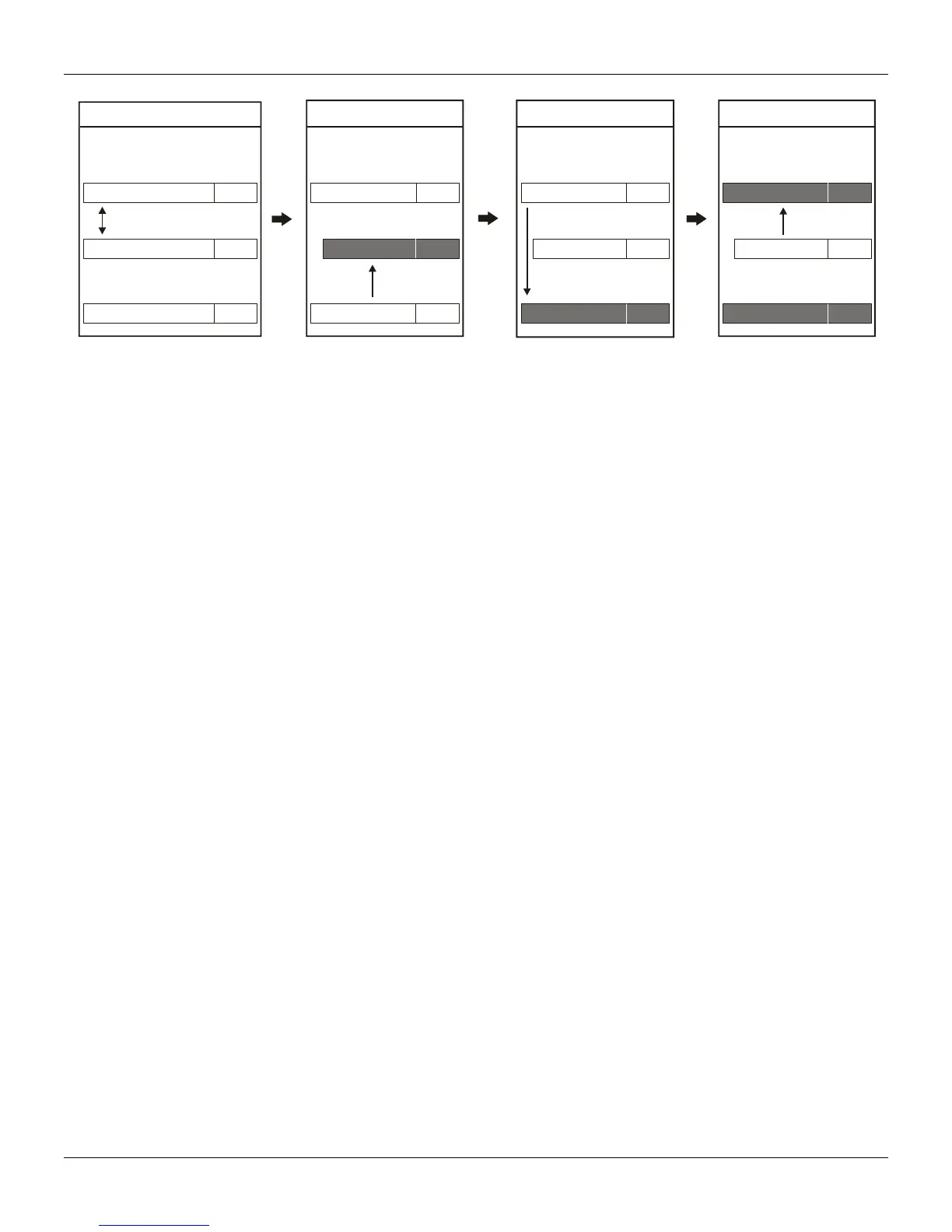
1 Step 2 Step 3 Step 4 Step
Get sensor
minimum span
Do Lower
Value = 90 ºC
Do Upper
Value = 0 ºC
100 ºC
Upper Value
90 ºC
Upper Value - Span
0 ºC
Lower Value
Minimum Span = 10 ºC
100 ºC
90 ºC
100 ºC
90 ºC
100 ºC
90 ºC
0 ºC 0 ºC0 ºC
Do Lower
Value = 100 ºC
Lower Value
Lower Value Lower Value
Lower Value
Lower Value
st sd
rd
th
Upper Value
Upper Value
Upper Value Upper Value
Table – 3.4 – Procedure to Range without Reference
Calibration With Reference
This is the most convenient way to calibrate a transmitter. Apply the signal for adjusting the 4 mA point
(PV=0 %). The Lower Value is altered but the span remains the same.
The same procedure is applied for the Upper Value.
LOWER VALUE = 0 Ohm
UPPER VALUE = 100 Ohm
Example: When measuring resistance the TT301 is calibrated as follows:
After the installation is done, the potentiometer (input sensor) was found to have a 5 Ohm residual
resistance when its indicator was on a zero position.
The Lower Value reference trim quickly corrects this problem, causing the Lower Value to equal 5 Ohm.
The Upper Value may be altered in the same way.
As mentioned before, the Ohm or mV sensor input may differ a little from its plant standard.
The Zero and Gain Trim may be used to adjust the transmitter reading to Engineering Units with its
plant standard, thus eliminating possible differences.
Unit
The Engineering Unit shown on the transmitter and the configurator displays may be altered. The units
are linked to a selected process variable.
The following units are available:
- For mV input: always mV.
- For Ohm input: always Ohm.
- For Thermocouple and RTD: Celsius, Fahrenheit, Rankine and Kelvin degrees.
Damping
The DAMPING option on the RANGE function enables electronic damping adjustment.
The damping may be adjusted between 0 and 32 seconds.
Trim
The TRIM function is used to adjust resistance, voltage and current reading to user standard. To
continue the TRIM adjustment, the control loop must be on MANUAL to avoid disturbances in the
process.
There are two options: Current signal and input reading.


 To Next Page