Chapter 2: Performing a Control Test
Why and When to Perform a Control Test
Solus V2 Control Solution contains a known amount of glucose and is used to confirm that
the meter and test strips are working properly. A control solution test should be performed
every time a new bottle of test strips are opened, or whenever you suspect that the meter or
test strips may not be functioning properly.
About Control Solution Tests
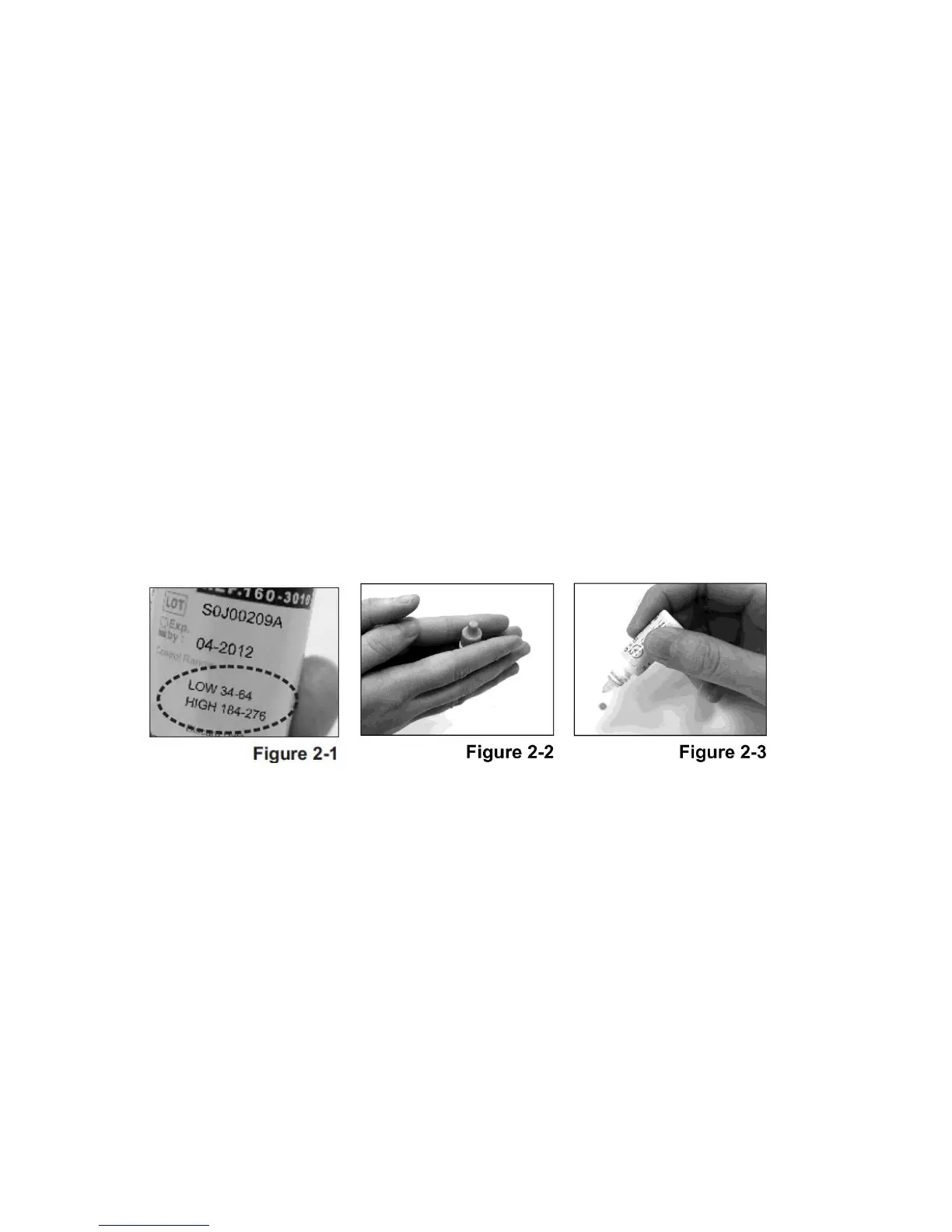
1. The Control Solution range is found on the bottle of the Solus V2 test strips and NOT the
control solution itself (see Figure 2-1).
2. Gently roll the control bottle in the palm of your hands as some particles of the solution
may have settled to the bottom (see Figure 2-2).
3. Discard the first drop as crystallization may occur.
4. Place a drop of the control solution either on a hard surface or the “dimple” of the
control solution cap (see Figure 2-3).
5. Place the meter into “Control” mode when performing a control test so the readings do
NOT get averaged with your other readings.
Performing a Control Test
Important:
Press the “R” right function button in order to set the meter to “Control Test” mode. If you
leave the meter in the standard mode, the control solution test result will be stored in the
memory and affect your average “AVG” results.
1. Insert a strip into the meter and you will hear: “Hello, Solus is ready.” You will then hear:
“Apply blood now.”
2. Press the “R” right function button and you will see a letter “C” in the right-hand corner
of the LCD screen to indicate you are in “Control Test” mode. You will then hear: “Apply
control solution now.” The test result will not be stored in the memory (see Figure 2-4).
3. Squeeze a small amount of control solution onto a flat surface or the “dimple” of the cap



 To Next Page