Page. 17 of 87
To ensure the perfect functionality of these options, the use of the CATs is mandatory.
4.3 QSK (Full Break-In) Operation
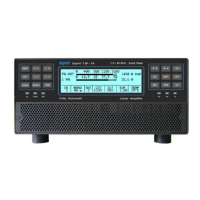
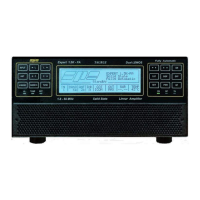
The Expert 1.3K-FA also allows QSK (FULL BREAK-IN) operation. Thanks to the
perfect control carried out on RX / TX switching relays, any possibility of "hot
switching" is avoided.
This feature is compatible with all modern transceivers, in fact the minimum delay
required before a transmission is usually less than 6 msec (check the manual of the
transceiver).
In the case (very remote) of minor delay needed, you can use the link TX - INH (see
"CAT" paragraph).
Special very reliable “noiseless” gold plated relays are used so that the “vacuum relays”
option is no longer needed.
4.4 Tunable Antenna Control
The use of tunable antennas (SteppIR, Ultrabeam) is becoming popular. These
antennas vary the physical dimensions of the elements according to the operating
frequency in order to ensure a perfect resonance.
The Expert 1.3K-FA, through the dedicated "PORT" socket linked to the antenna
controller, allows automatic control by tracking the tuning knob changes.
This dedicated link makes the following advantages possible:
- Simplification of wiring, such as the complication of adding additional wiring to the CAT
connector is not necessary now.
- Compatibility with all types of CAT: The Expert 1.3K-FA converts the CAT protocol, so
two different transceivers (CATs) can be used simultaneously with the same controller.
- Thanks to the frequency counter inside the linear, the antenna can be controlled also
without the use of CAT.
All of the automatic features of the linear are ensured even in the most complex
configurations. Such as, antennas of all kinds can be connected to the connectors
"ANT" and the Expert 1.3K-FA will choose the antennas according to the set-up and will
manage them according to their characteristics.
The CAT is recommended, however if the transceiver does not have the CAT or if it has
only the "Band Data", the Expert 1.3K-FA will continue to drive the antenna with the
frequency measured by the counter (data collected after the first transmission) .


 To Next Page