2. Preparation for Installation
2.1 Technical Requirements for Installation
Relevant personnel shall be familiar with the functions, applications and the overall
composition principle of the product.
Relevant personnel shall understand the electrical circuits and structure of motor
vehicles, and common installation methods of in-vehicle equipment.
2.2 Understanding of Installation Environment
Before equipment installation, relevant personnel shall have a clear understanding
of the vehicle model concerned, the installation positions of the main unit and
auxiliary cameras of the DVR, the type and length of cables required for each
vehicle model, and the list of common auxiliary materials, so as to ensure successful
completion of equipment installation and commissioning.
2.3 Confirmation of Vehicle Conditions and Vehicle-related Electrical
Information
Confirmation of vehicle information is the basic precondition of successful
installation and also the guarantee of division of responsibilities to avoid any
damage to the vehicle. For each component, proceeding to next step is only allowed
after clear confirmation, and each operation shall be confirmed by the person in
charge of the vehicle and the installation personnel.
(1) Check the appearance and interior trims of the vehicle for any damage.
(2) Check whether the vehicle can ignite normally.
(3) Check whether the vehicle power supply system is in good condition.
*Note: Confirmation of the above information is crucial. Installation can only be
carried out after the above information is considered normal through confirmation.
2.4 Power Supply Connection of Vehicle
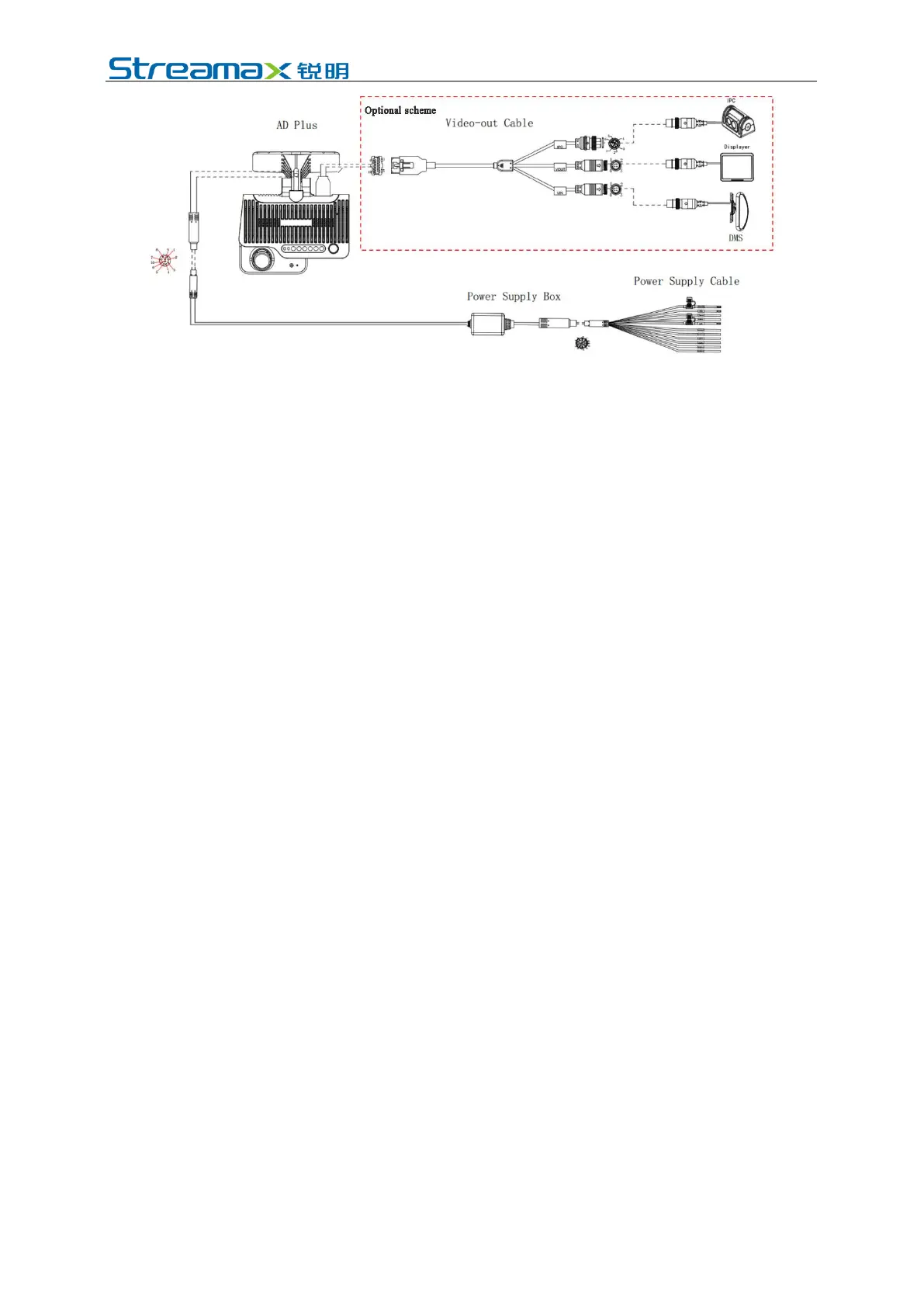
AD Plus has two power supply connection modes:
1. Quick plug-in type power supply connection through OBD interface: This
mode is suitable for quick installation by users themselves. For details of this
power supply mode, please refer to the accompanying AD Plus Product
Manual in the AD Plus packing box. It will not be detailed here.
2. Power supply connection through discrete wire: This mode requires operation
by specialized installation personnel. The following mainly describes the mode


 To Next Page