ElectrolyteD2
Health and Safety
Before mixing, read the MSDS thoroughly for the specific components.
The user must follow the instructions for proper work procedure according to the instruction
manual supplied with the equipment.
Note
The product must be disposed of according to local regulations for dangerous
goods.
Storing perchloric acid or solution
CAUTION
Do not produce anhydrous perchloric acid, either from its salts or from aqueous
solutions, e.g. by heating with high boiling acids or dehydrating agents such as
sulfuric acid or phosphorous pentoxide. In addition to spontaneous explosion, the
anhydrous acid explodes instantaneously on contact with oxidizable organic
materials.
CAUTION
Limit the use or storage of perchloric acid to quantities less than 500 g per fume
hood.
3. Never let perchloric acid crystallize on bottle necks, caps or anywhere else.
4. Store the chemical in a secure, cool, and well-ventilated area with a metal, glass or ceramic
spill catch pan.
5. Store the chemical away from other chemicals or combustible or organic materials.
6. Never let solutions dry out.
For more information, see the Safety Data Sheet for the product.
3 Getting started
3.1 Device description
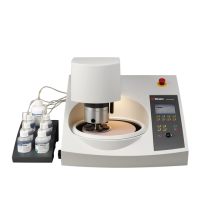
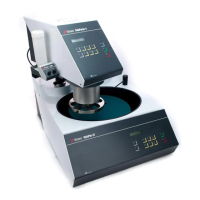
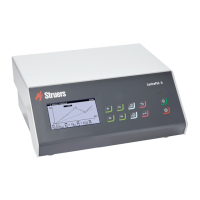
The equipment is used for materialographic preparation which enables further examination of
materials for quality control purposes.
Electrolytic polishing and etching can be performed on most metallic material surfaces. The
electrochemical process is possible on electrically conductive materials by the action of
electrolyte and electricity. During the process, a high, local current, which is applied to the area of
the specimen covered with electrolytes, will have an etching effect on the surface. This process
makes the surface suitable for further materialographic analysis.
3 Getting started
LectroPol-5 15


 To Next Page