Black plate (53,1)
一般Model "A8140GE-A" EDITED: 2007/ 12/ 13
they are not restrained or impro-
perly restrained. Because chil-
dren are lighter and weaker than
adults, their risk of being injured
from deployment is greater. Ac-
cording to accident statistics,
children are safer when properly
restrained in the rear seating
positions than in the front seat-
ing positions.
. NEVER INSTALL A REARWARD
FACING CHILD SEAT IN THE
FRONT PASSENGER’SSEAT.
DOING SO RISKS SERIOUS IN-
JURY OR DEATH TO THE CHILD
BY PLACING THE CHILD’S HEAD
TOO CLOSE TO THE SRS AIR-
BAG.
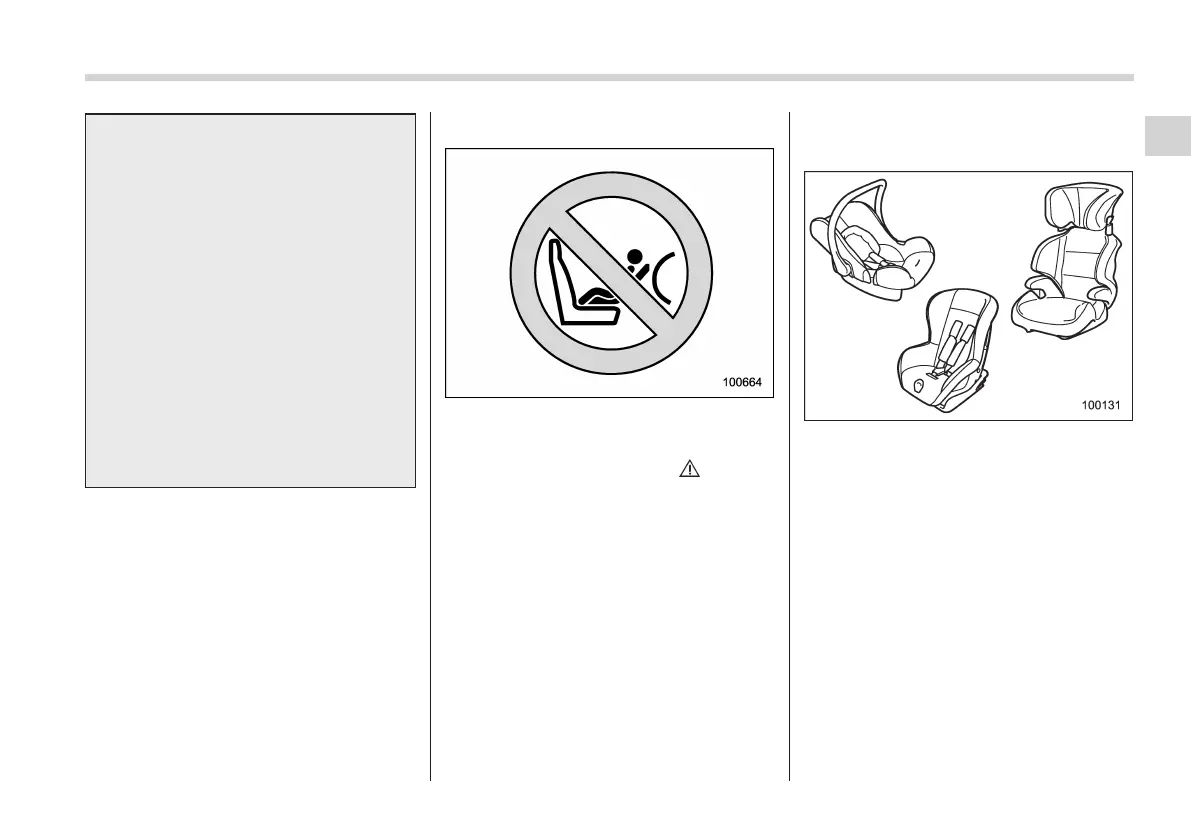
! Warning label
A warning label as shown above is
attached to the sun visor.
This warning label means “
Extreme
Hazard! Do not use a rearward-facing
child restraint on a seat protected by an
airbag in front of it!”.
& Choosing a child restraint
system
Choose a child restraint system that is
appropriate for the child’s size and age to
provide the child with proper protection.
Also it is important that the child restraint
system meets safety standards applicable
to your country.
In most European countries, child restraint
systems must meet the requirement of
ECE regulation No. 44. It can be identified
by looking for the approval label on the
child restraint system or the manufac-
turer’s statement of compliance on the box
and the system.
According to the ECE regulation No. 44,
child restraint systems are classified into
the following five “mass groups”:
Seat, seatbelt and SRS airbags 1-27
– CONTINUED –
1








 To Next Page