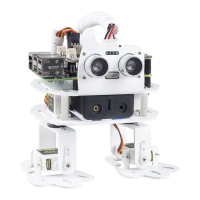
SunFounder PiCar-X Kit
from picarx import Picarx
from time import sleep
from robot_hat import TTS
tts = TTS()
tts.lang("en-US")
px = Picarx()
# px = Picarx(grayscale_pins=['A0', 'A1', 'A2'])
# manual modify reference value
px.set_cliff_reference([200, 200, 200])
current_state = None
px_power = 10
offset = 20
last_state = "safe"
if __name__=='__main__':
try:
while True:
gm_val_list = px.get_grayscale_data()
gm_state = px.get_cliff_status(gm_val_list)
# print("cliff status is: %s"%gm_state)
if gm_state is False:
state = "safe"
px.stop()
else:
state = "danger"
px.backward(80)
if last_state == "safe":
tts.say("danger")
sleep(0.1)
last_state = state
finally:
px.stop()
print("stop and exit")
sleep(0.1)
How it works?
The function to detect the cliff looks like this:
• get_grayscale_data(): This method directly outputs the readings of the three sensors, from right to left. The
brighter the area, the larger the value obtained.
• get_cliff_status(gm_val_list): This method compares the readings from the three probes and outputs a
result. If the result is true, it is detected that there is a cliff in front of the car.
Note: Hello, welcome to the SunFounder Raspberry Pi & Arduino & ESP32 Enthusiasts Community on Facebook!
Dive deeper into Raspberry Pi, Arduino, and ESP32 with fellow enthusiasts.
Why Join?
4.8. 6. Cliff Detection 65



 To Next Page