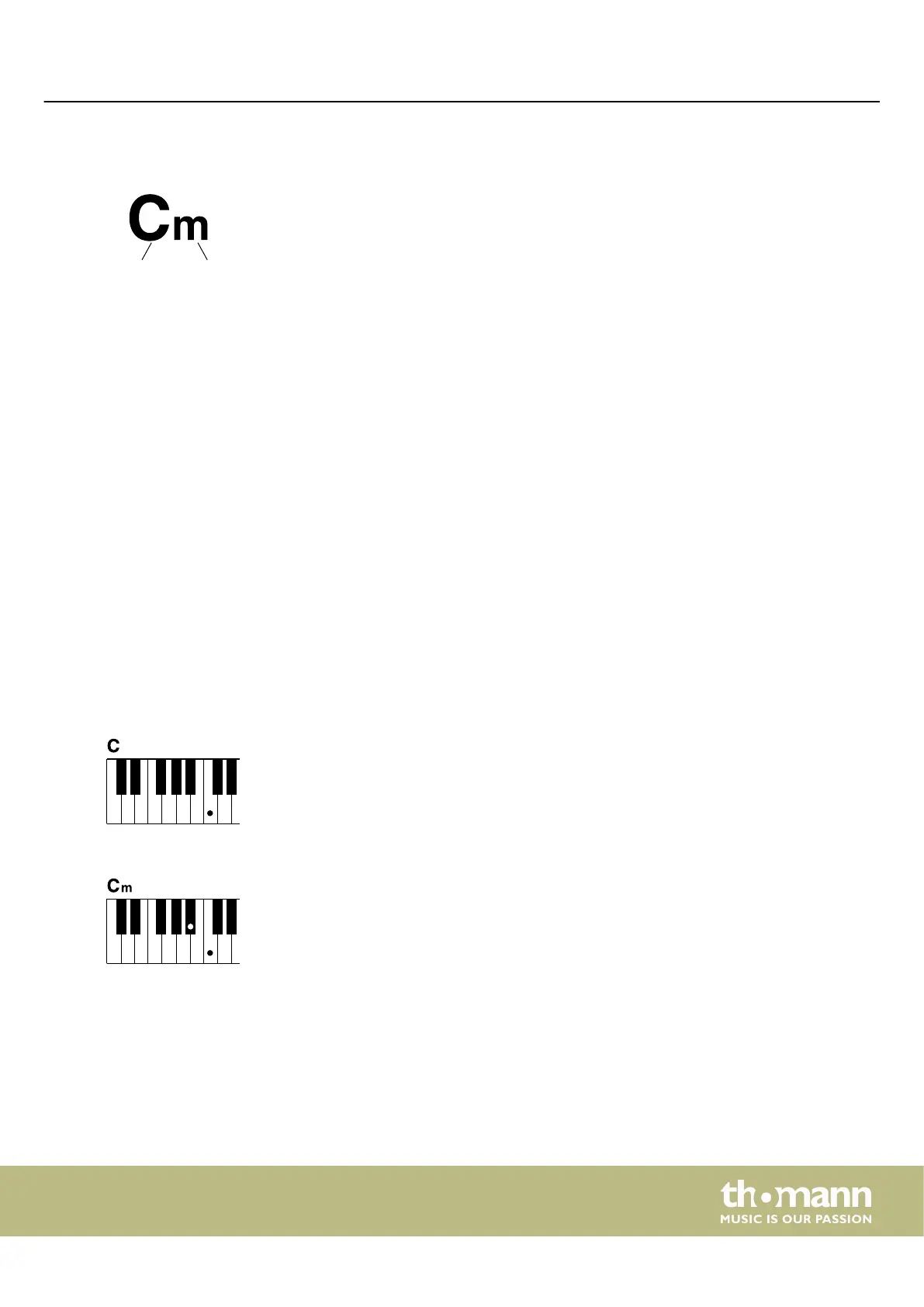
7.14.4 Chord name
The chord name says everything about a chord: The root, gender of the chord (major
or minor), is it an augmented or diminished chord, seventh chord, etc. The illustration
shows that this is a C chord (1). The gender of the chord (2, here minor) is shown next
to it.
7.14.5 Chord inversions
If the root of a chord is not the lowest note in the triad, it is called an inverse chord. If
the root is the lowest note, it's called a root position chord. If the third and fth are
placed in the basic position, it forms an "inversion" and is therefore called an "inverse
chord".
7.14.6 Chord detection modes
With a chord detection mode you can determine how the ngered chords are inter‐
preted within the auto accompaniment. Press [CHORD MODE] to activate the chord
detection. The keyboard then automatically recognizes the single or multiple nger
chords played.
7.14.6.1 Single-ngered
You can play chords with up to three ngers in this mode. The following gures show
the example of four dierent C chords:
Play the root note of the chord.
Play the root note of the chord and the next lower black key at the same time.
Chord detection modes
C major (C)
C minor (Cm)
Operating
MK-400
31


 To Next Page