◇7
1.2 Precautions for Moving
When moving the tester to the installation site or otherwise transporting it, take the following precautions:
Before moving the tester, turn off the power switch.
Transporting the tester with its POWER switch on can lead to electric shock and damage.
When moving the tester, Disconnect all wires from it.
Moving the tester without disconnecting the cables may result in breakage of the wire or injury due to the
tester tipping over.
1.3 Connecting the AC Power Cord
The power cord that is provided varies depending on the destination for the product at the factory-shipment.
Do not use AC power cords that are not standard with this instrument.
Connection procedure:
1. Confirm that the supply voltage is within the line voltage range of the tester.
2. Confirm the nominal value of the fuse and the line power are correctly selcected.
3. Confirm that the POWER switch on the tester is off.
4. Connect the AC power cord to the AC LINE connector on the rear panel.
5. Use the provided power code or power code that is selected by qualified personnel.
6. Plug in the AC power cord.
1.4 Grounding
WARNING: Be sure to connect the tester to an electrical ground (safety ground). If the output to a
conveyer or peripheral device that is connected to an earth ground or a nearby commercial power line is
short-circuited without grounding, the tester chassis is charged to an excessively high voltage, resulting in
extreme danger.
This tester is designed as a ClassⅡequipment (equipment protected against electric shock with protective
grounding in addition to basic insulation). Therefore, electric shock may occur without proper grounding.
To ensure safety, be sure to ground the tester.
Choose either of the following two available methods of doing so:
1. Connect the AC power cord to a three-contact grounded electrical outlet.
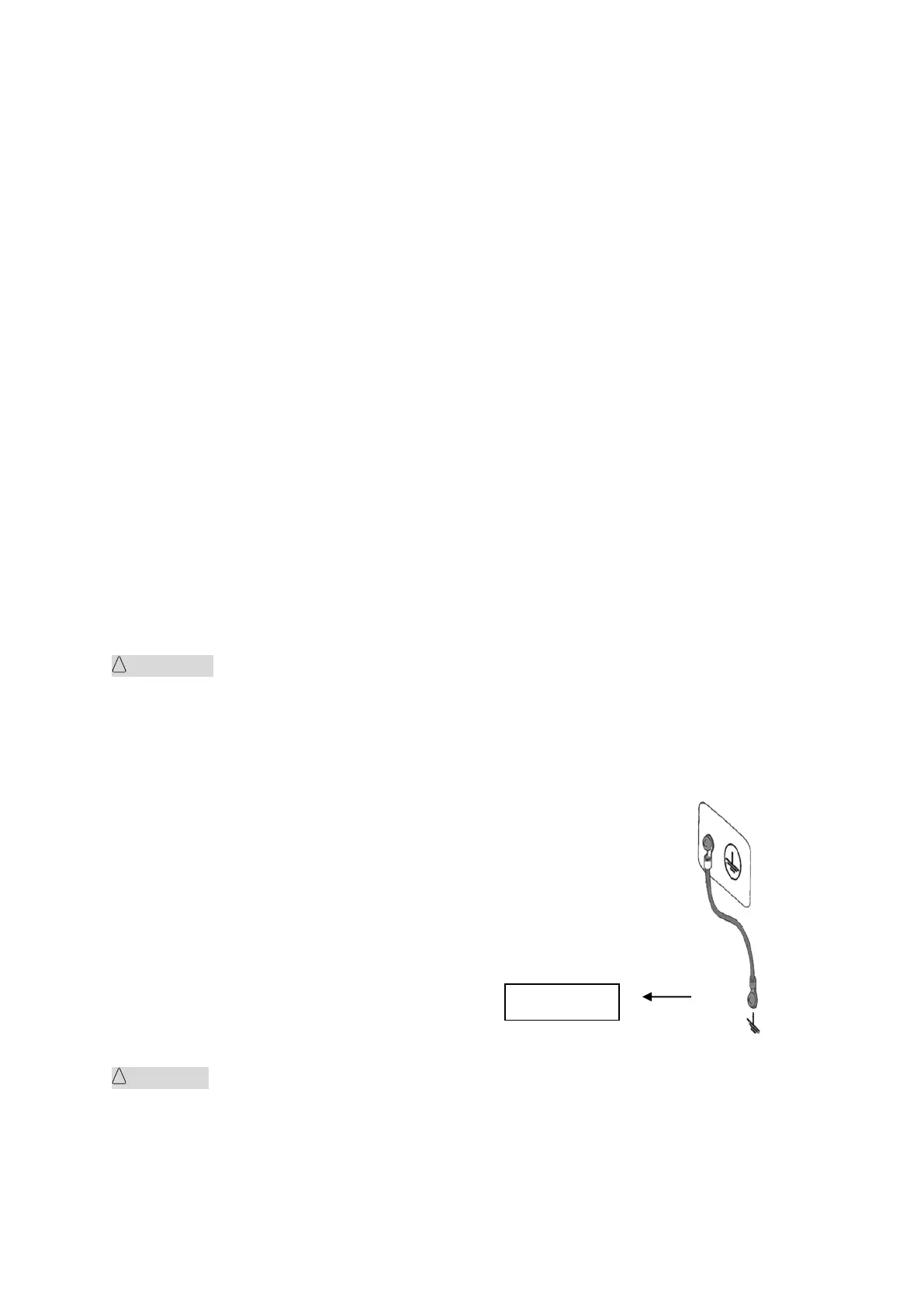
2. Connect the protective conductor terminal on the rear panel to the earth ground.
Have specialized engineers select, manufacture, and install cables.
To ensure secure connection, use proper tools.
1.5 Checking Operations
WARNING: Use the interlock jumper only to quickly cancel the protection status.
When using this tester in a cramped working space, make a box-like structure for the DUT; when testing a
complicated large-scale DUT, provide a cover or other means for the DUT to prevent electric shock by
cutting off the output when the cover is opened. It is also recommended that an enclosure be provided
around the operating area and that output be cut off every time the door is opened.
Before turning on the power, confirm that the allowable voltage range indicated on the power supply is the


 To Next Page