A-2 Model 3321 Aerodynamic Particle Sizer
Spectrometer
Cleanin g the Inne r N ozzle
Clean the nozzles according to the maintenance schedule and also under
the following circumstances:
The flows in the instrument are too low or erratic
The APS™ spectrometer has been exposed to extremely high aerosol
concentrations or fibers
There is a constant level of particle noise even when the APS™
spectrometer samples filtered air
To clean the nozzles, proceed as follows:
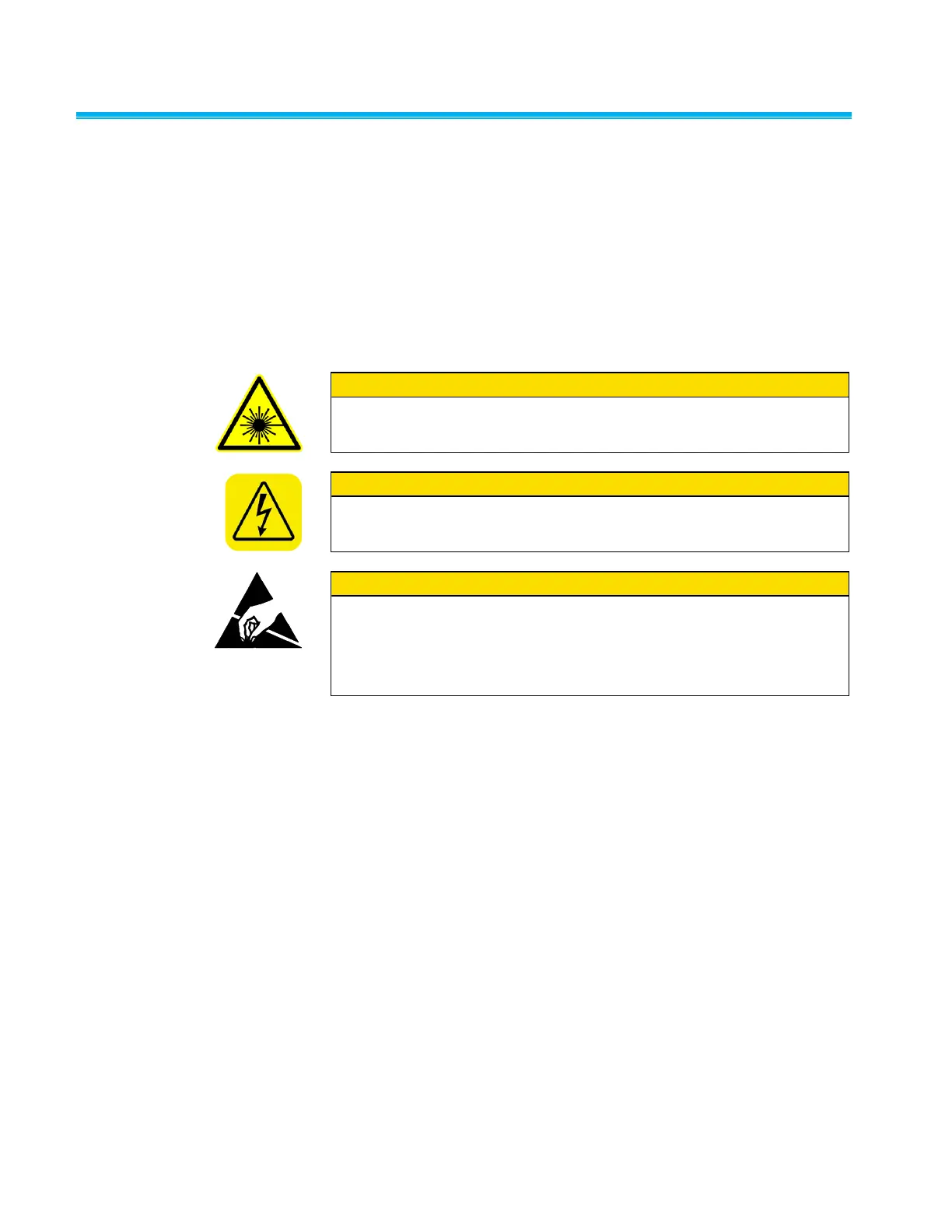
W A R N I N G
Make sure power is switched off and power cord is disconnected to
avoid any exposure to hazardous laser radiation.
W A R N I N G
High voltage is accessible in several locations within this instrument.
Make sure you unplug the power source before removing the cover or
performing maintenance procedures.
C a u t i o n
The electronic circuits within this instrument are susceptible to electro-
static discharge (ESD) damage. Use ESD precautions to avoid
damage.
Use only a table top with a grounded conducting surface
Wear a grounded, static-discharging wrist strap
1. Switch the power off using the switch on the back of the cabinet and
unplug the power cord from the APS™ spectrometer.
2. Remove the knurled retaining ring from the outer inlet nozzle.
3. Loosen the six screws on both sides of the cabinet (two turns is
sufficient) and remove the cover straight upward.
4. Remove the outer inlet nozzle by gripping it and lifting straight up.
5. Grip the inner nozzle and lift straight up.
6. Clean the nozzle blowing backward through the nozzle with clean,
compressed air [maximum pressure 35 psi (240 kPa)].
7. Check the nozzle by holding the tube up to a light and checking for a
clear view of the nozzle orifice.
8. If the nozzle is still blocked, try rinsing the inner nozzle in soapy water
and then cleaning with clean water. Dry thoroughly with clean
compressed air.
9. If the nozzle is still blocked, try using isopropyl alcohol.





 To Next Page