Prevent excessive scale build-up (calcium carbonate) on the heating
surfaces. For heating systems with operating temperatures up to
100 °C, the VDI Directive 2035 sheet 1 "Prevention of heating system
damage in hot water heating systems - scaling in DHW and hot water
heating systems" applies [in Germany; check local regulations] with
the following guide values. For more detailed information, see the
annotations to VDI Directive 2035.
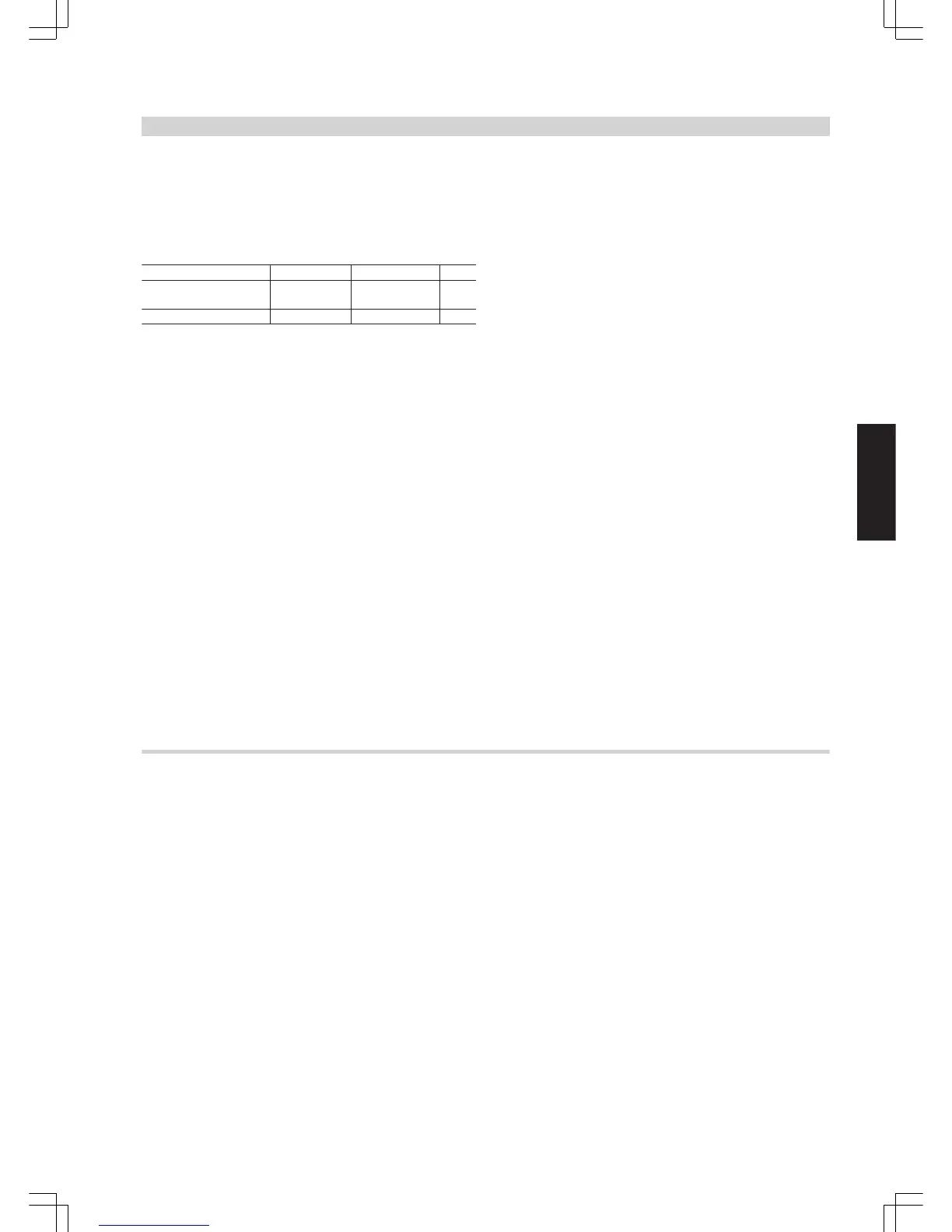
Total output in kW
> 50 to ≤ 200 > 200 to ≤ 600
> 600
Total alkaline
earths in mol/m
3
≤ 2.0 ≤ 1.5
< 0.02
Total hardness in °dH
≤ 11.2 ≤ 8.4
< 0.11
The standard values assume the following:
■ The volume of fill and top-up water of the heating system during its
service life will not exceed three times the water content of the heat-
ing system.
■ The specific system volume is less than 20 l/kW output. In multi-
boiler systems, apply the output of the smallest boiler.
■ All measures to prevent corrosion on the water side in accordance
with VDI 2035 Sheet 2 have been implemented.
Soften the fill & top-up water in heating systems operating under the
following conditions:
■ The total of alkaline earths in the fill & top-up water exceeds the
standard value.
■ Higher fill & top-up water volumes are expected.
■ The specific system volume is higher than 20 l/kW output. In multi-
boiler systems, apply the output of the smallest boiler.
When engineering the system, observe the following:
■ Install shut-off valves in different sections. This prevents the need
for draining the entire heating water in case of repairs or system
expansion.
■ Install a water meter to record the amount of the fill & top-up water.
Enter the volume of water and the water hardness into the boiler
service instructions.
■ For systems with a specific system volume in excess of 20 l/kW out-
put (for multi-boiler systems, apply the output of the smallest boiler),
apply the requirements of the next highest category of total output
(in accordance with the table). In case of severe excess (> 50 l/kW),
soften down to the total of alkaline earths
≤
0.02 mol/m
3
.
Operating information:
■ Bring the system into use step by step, starting with the lowest boiler
output and at a high heating water flow rate. This prevents a localised
concentration of lime deposits on the boiler heating surfaces.
■ In multi-boiler systems, start all boilers simultaneously to prevent the
entire lime deposit settling in the heat transfer area of just one boiler.
■ During expansion or repair work, only drain the necessary sections.
■ Where water treatment is required, treat even the first fill of the heat-
ing systems prior to commissioning. This also applies to any subse-
quent filling, e.g. when adding top-up water or after a repair or after
system expansion.
■ Filters, dirt traps and other blow-down or separating facilities in the
heating water circuit must be checked, cleaned and activated more
frequently after commissioning or recommissioning, and later on as
required, subject to the water treatment applied (e.g. water soften-
ing).
The build-up of lime deposits on the heating surfaces will be minimised
if these instructions are observed.
Any lime deposits that have formed because the requirements to VDI
Guideline 2035 have not been observed will in most cases already
have caused a reduction in the service life of the installed heating
equipment. Removing the lime deposits is one option to restore the
operational viability. This measure must be carried out by the
Viessmann industrial services or a specialist company. Inspect the
heating system for possible damage prior to returning it into use. It is
essential that the faulty operating parameters are corrected to prevent
renewed formation of excessive scale deposits.
Heating systems with permissible flow temperatures in excess of 100 ºC (VdTÜV DS 1466)
Operation with circulating water with low salt content
Only use water with a low salt content as fill or top-up water, such as
desalinated water, permeate or condensate.
Systems using mixed condensate generally create water with low salt
content if no boiler water is fed into the system for putrefaction by
alkalis.
Operation with saline water
Where possible, use water with a low salt content that is at least free
from alkaline earths (softened) as fill or top-up water.
Design information
(cont.)
OIL/GAS BOILERS
VIESMANN
45
5822 426 GB
10






 To Next Page