16
W&T System Overview
2.1 Introduction to the W&T USB-Server
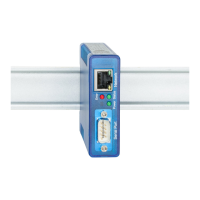
The W&T USB-Server in conjunction with the computer-side
in W&T USB Port Redirector enables the addition of remote USB
devices located in the network. With respect to the device-
specific drivers and applications these behave as if they were
connected to a local USB port on the computer.
2.1.1 Supported USB modes
The W&T USB-Server conforms with USB 1.0, 1.1 and 2.0 with
transmission speeds of 1.5 Mbit/s (Low), 12 Mbit/s (Full) and
480 Mbit/s (High). This means most USB devices using the
transfer modes Control, Interrupt and Bulk are supported.
Isochronal mode, which is used mainly in audio and video
applications, is in development.
Due to the complex interaction between operating system,
often multiple driver instances and the respective hardware, USB
applications are in practice not always plug&play. W&T
therefore offers the service of a compatibility check of your USB
device together with the W&T USB-Server. For additional
information, see our Web site at http://www.wut.de/53641.
2.1.2 Maximum number of USB devices
Although the W&T USB-Server is designed for direct connection
of two USB devices, connection of an external USB hub per USB
port is also supported. This allows max. 8 USB devices to be
connected and incorporated through the W&T USB Port
Redirector into Windows systems. It should be noted however
that multi-function devices do often already have internal hubs.



 To Next Page