EasyManua.ls Logo

Waters HPLC - User Manual

Default Icon
198 pages
Print Icon
To Next Page IconTo Next Page
Loading...
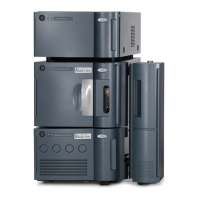
Waters Prep Series
Installation and Maintenance Guide
71500045204/Revision B
Copyright © Waters Corporation 2010
All rights reserved

Table of Contents

Questions and Answers

  • J
    James SanchezAug 16, 2025
    Why is there increased system backpressure during injection using Rheodyne injector in Waters HPLC?
    • M
      michaela50Aug 16, 2025
      Increased system backpressure during injection with a Rheodyne injector in Waters Laboratory Equipment is normal. When the injector is in the Inject position, the sample loop generates additional system backpressure. To decrease the system backpressure, return the injector to the LOAD position after loading the sample.
  • X
    xrodriguezAug 18, 2025
    What to do if the Waters HPLC Laboratory Equipment system controller screen is blank?
    • D
      Darrell SanchezAug 18, 2025
      If the screen on your Waters Laboratory Equipment system controller is blank, the screen saver feature may be active. Press any function key to display the screen.
  • J
    Joyce HullAug 21, 2025
    What to do if my Waters Laboratory Equipment pump keeps shutting down due to exceeding the high-pressure limit?
    • L
      Linda GordonAug 22, 2025
      If your Waters Laboratory Equipment pump shuts down because the high-pressure limit is exceeded, there are several potential causes. It could be due to a high flow rate during injection valve actuation, causing a pressure spike; in this case, decrease the flow rate during injection. Another cause may be a blockage in the system after the transducer; try removing components between the pump and the end of the system to locate and eliminate the blockage. Finally, the column might be plugged, so try cleaning or replacing it.
  • S
    Scott WalkerAug 25, 2025
    Why is my Waters HPLC Laboratory Equipment pump cavitating?
    • A
      Amy AdamsAug 26, 2025
      Pump cavitation in your Waters Laboratory Equipment can occur for several reasons. First, check the solvent reservoirs' position; if they are below the solvent proportioning valve, place them on the bench beside the fluid handling unit. Second, inspect tubing connections and fittings for leaks prior to the inlet check valve, as these can cause air aspiration; eliminate any leaks by tightening the fittings or replacing the ferrules. Lastly, the solvent inlet filter might be restricting flow, so clean or replace the filters.
  • E
    Eric HarperAug 27, 2025
    What to do if Waters HPLC pump shuts down because the low-pressure limit is exceeded?
    • S
      stewartsandraAug 28, 2025
      If your Waters Laboratory Equipment pump shuts down because the low-pressure limit has been exceeded, the issue is likely due to leaks, empty reservoirs, or bubbles in the pump head. Eliminate any leaks, fill the reservoirs, and prime the pump to resolve this.
  • D
    Denise RandallAug 30, 2025
    How to fix a grinding or shuddering noise from Waters HPLC Laboratory Equipment pump?
    • M
      Marcus GutierrezAug 31, 2025
      If you notice a grinding or shuddering noise from your Waters Laboratory Equipment pump, and the high-pressure shutdown has not been exceeded, it could be due to a blockage in the system before the transducer. Clean the pump head outlet tubing, outlet check valve, and the tubing leading to the transducer. If the problem persists, it may be a mechanical issue.
  • A
    Andrew BassSep 2, 2025
    Why is there a pulsing flow from the waste line of my Waters HPLC Laboratory Equipment?
    • E
      eric66Sep 2, 2025
      A pulsing flow from the waste line in your Waters Laboratory Equipment is often caused by dirty check valve(s). Clean the check valve(s) to resolve this issue.
  • T
    Thomas ByrdSep 5, 2025
    What to do if Waters HPLC RI detector is leaking internally?
    • V
      Victoria MillerSep 5, 2025
      If your Waters Laboratory Equipment RI detector is leaking internally or from the purge port, the cell may be damaged because the maximum flow rate or pressure of the RI cell has been exceeded. Ensure you do not exceed 5 mL/min for 2414, 2410, and 410 Detectors, and do not exceed 100 psi for any Waters RI detector.
  • G
    gomezstevenSep 9, 2025
    Why are peak retention times halved in Waters HPLC Laboratory Equipment?
    • J
      Joseph MontoyaSep 9, 2025
      Halved peak retention times in Waters Laboratory Equipment are caused by an incorrect pump head volume entered on the PUMP CONFIGURATION screen. For PrepLC operation with 1000-µL pump heads, enter 1000 for the pump head volume on the PUMP CONFIGURATION screen.
  • J
    Joshua LunaSep 12, 2025
    Why can't I enter a flow rate above 150 mL/min on my Waters HPLC?
    • J
      jennifervalenzuelaSep 12, 2025
      If you are unable to enter a flow rate above 150 mL/min on your Waters Laboratory Equipment, it is because an incorrect pump head volume was entered on the PUMP CONFIGURATION screen. For operation with 1000-µL pump heads, enter 1000 for the pump head volume on the PUMP CONFIGURATION screen.

Summary

1 Overview

Waters Prep series

Details the features and configurations of the Waters Prep Series HPLC systems.

Getting started

Provides initial steps for setting up and operating the system.

2 Installing the System

Setting up and inspecting

Covers unpacking, inspecting components, and selecting installation site.

Electrical requirements

Details voltage, frequency, and fuse specifications for system operation.

Assembling the system

Explains how to connect components like injectors, modules, and fluid handling unit.

3 Troubleshooting, Testing, and Maintenance

Troubleshooting

Provides guidance for identifying and resolving system problems.

Performance tests

Outlines tests to isolate problem causes and verify functionality.

A Safety Advisories

Warning symbols

Explains hazard symbols and their associated risks for safe operation.

Caution symbol

Describes caution symbols indicating potential damage or sample compromise.

B Specifications

Operational specifications

Lists operational parameters such as solvent number, flow range, and pressure limits.

Electrical specifications

Details power requirements, consumption, frequency, and fuse types.

C Spare Parts

Common parts

Lists commonly used spare parts with part numbers.

3725 injector

Lists spare parts specific to the 3725 injector.

D Solvent Considerations

Clean solvent

Emphasizes the importance of clean, particle-free solvents for reproducible results.

Solvent miscibility

Provides guidance on solvent miscibility and properties for solvent changes.

Waters HPLC Specifications

General IconGeneral
BrandWaters
Flow Rate Range0.001-10 mL/min
Pressure RangeUp to 15, 000 psi
Detector TypesUV/Vis, PDA, Fluorescence, Refractive Index, ELSD
Wavelength Range (UV/Vis)190-800 nm
Data ManagementEmpower Software
Compliance21 CFR Part 11, GMP/GLP
TypeHigh-Performance Liquid Chromatography (HPLC)

Related product manuals