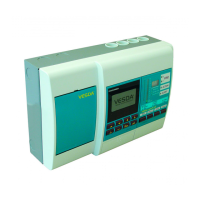
VESDA ECO Detector by Xtralis
17898_05 Principles of Operation
Calibration
It is important to bump test and re-
calibrate the ECO detector on a periodic basis
typically every 6 months, to ensure that it
accuracy. It is recommended that a re-
calibration be performed at least at each
service interval, refer to the Service and Maintenance
details on the service periods. Regular bump testing will
confidence in the functionality of the system.
To perform a calibration of the ECO unit, the user will need to have access to the
configuration interface on the device, either using Xtralis
Refer to the Calibration section on page 51
for instructions on using
perform a calibration.
Supplies of the necessary calibration and test
gas can be obtained from a number
of sources. Xtralis does not
supply calibration gas directly, but your local Xtralis
sales contact or distributor will be able to provide you with a list of local suppliers.
The recommended test gas concentrations for each sensor type/range are given in
Appendix A – Gas Types, Ranges & Defaults on page 82.
should be supplied in an appropriate
cylinder with provision to supply the gas at a
controlled flow rate (2 Litres/minute)
via a sufficiently rugged flow
outside diameter pipe for connection to the ECO calibration port.
of flammable gas sensors the zero calibration gas should be
“clean” Air, i.e. ambient atmospheric air without any combustible components
present. For Zero Calibration operations
of Toxic and Oxygen Sensors,
recommended that an inert gas such as Nitrogen is used, especially in
the gas being measured can be expected to be normally
present in the ambient Air, for example O
It is recommended that a Zero calibration is performed before a Span calibration
and that the unit is flushed with Zero gas upon completion of the Span calibration.
test gas, ensure that there is sufficient venti
the area to prevent ingestion of potentially harmful levels of the test gas
or build up of potentially explosive concentrations. Review the
chemical hazard and safety recommendations for each gas type before
use. Ensure particularly that ceilin
g spaces and voids are ventilated
when using gases that are lighter than air. Also ensure that low lying
areas (inspection pits, cellars) are sufficiently ventilated when using
gases that are heavier than air.
HAZARDOUS GASES.
Product Guide
31
calibrate the ECO detector on a periodic basis
calibration be performed at least at each
To perform a calibration of the ECO unit, the user will need to have access to the
for instructions on using
gas can be obtained from a number
supply calibration gas directly, but your local Xtralis
sales contact or distributor will be able to provide you with a list of local suppliers.
The recommended test gas concentrations for each sensor type/range are given in
cylinder with provision to supply the gas at a
via a sufficiently rugged flow
outside diameter pipe for connection to the ECO calibration port.
of flammable gas sensors the zero calibration gas should be
“clean” Air, i.e. ambient atmospheric air without any combustible components
of Toxic and Oxygen Sensors,
recommended that an inert gas such as Nitrogen is used, especially in
the gas being measured can be expected to be normally
It is recommended that a Zero calibration is performed before a Span calibration
and that the unit is flushed with Zero gas upon completion of the Span calibration.
test gas, ensure that there is sufficient venti
the area to prevent ingestion of potentially harmful levels of the test gas
or build up of potentially explosive concentrations. Review the
chemical hazard and safety recommendations for each gas type before
g spaces and voids are ventilated
when using gases that are lighter than air. Also ensure that low lying
areas (inspection pits, cellars) are sufficiently ventilated when using


 To Next Page