
 Need help?
Do you have a question about the Zentron 6300 and is the answer not in the manual?
Information regarding compliance with FCC Class A digital device limits.
List of electromagnetic compatibility standards the product meets.
Displays product certification markings for different regions.
Essential safety warnings and precautions for installation and servicing.
Lists revisions and changes made to the document or product.
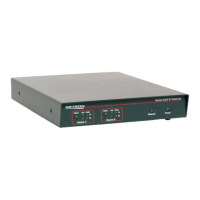
Provides a high-level description of the Model 6300 IP Gateway and its function.
Details the physical size and mounting requirements for rack-mounted units.
Specifies physical dimensions for the IP Gateway when used as a stand-alone unit.
Describes the various input and output ports and their specifications.
Details CAT5 cable requirements and limitations.
Outlines the necessary power input and operating temperature range.
Provides MTBF data for the Model 6300 IP Gateway.
Lists compatible Zetron consoles and desktop remotes.
Discusses limitations and compatibility with non-Zetron consoles and interfaces.
Details compatibility with various radio signaling methods like RS-232 and TTL.
Lists specific network parameter requirements for optimal performance.
General warnings about potential hazards during installation, maintenance, and operation.
Emphasizes the importance of reading and following all safety and operational instructions.
Stresses adherence to all equipment and operating instruction warnings.
Guidelines for proper equipment placement away from heat sources.
Instructions for connecting power and ensuring proper grounding.
Introduces the chapter covering IP Gateway installation and initial configuration.
Lists tools necessary for the installation process.
Step-by-step guide for mounting the IP Gateway in a rack-mount configuration.
Explains the purpose and settings of the four DIP switches for configuration.
Details the function and placement of various jumpers on the circuit board.
Information on connecting power to the IP Gateway.
Describes the pinout and cable usage for the balanced audio port.
Details the pinout for Link 1 and Link 2 ports, including serial data.
Information about the RJ45 network port for IP connectivity.
Explains the status LED indications during the IP Gateway's startup process.
Describes the function of each LED on the front panel of the IP Gateway.
Guides through the initial setup and connection of the IP Gateway to a network.
Outlines the process for configuring the IP Gateway via HTTP.
Details how to configure essential system parameters like IP address and gateway.
Describes each system parameter and its purpose for configuration.
Introduces common radio applications and configuration settings.
Configuration for 4-wire circuits with in-band tone remote control.
Configuration for 6-wire circuits with external PTT signal.
Configuration for bridging radios using E&M control signals.
Describes connecting two IP Gateways over a Local Area Network.
Configuration settings for the first Model 6300 IP Gateway in a LAN setup.
Link-specific settings for the first Model 6300 IP Gateway in a LAN setup.
Configuration settings for the second Model 6300 IP Gateway in a LAN setup.
Link-specific settings for the second Model 6300 IP Gateway in a LAN setup.
Summarizes the system and link parameters for a LAN configuration.
Describes connecting two IP Gateways over a Wide Area Network.
System parameters for Model 6300 #1 in a WAN setup.
Link 1 parameters for Model 6300 #1 in a WAN setup.
System parameters for Model 6300 #2 in a WAN setup.
Link 1 parameters for Model 6300 #2 in a WAN setup.
Guidelines for configuring routers and firewalls for WAN traffic.
Explains how the gateway handles dynamic IP addresses and URLs.
Describes parameters specific to each link (channel) on the IP Gateway.
Details settings for establishing peer IP connections, including SIP and RTP ports.
Configuration options for audio line types, impedance, and vocoder selection.
Parameters for controlling Push-to-Talk (PTT) and Voice Operated eXchange (VOX) activation.
Configuration for Input/Output control and serial data communication.
Procedures for downloading and uploading IP Gateway configuration settings.
Describes how to view the status of IP Gateway links.
Information on installing optional features and licenses for the IP Gateway.
Displays firmware versions and allows reverting to previous configurations.
Steps to adjust the audio receive gain for optimal signal input.
Steps to adjust the audio transmit gain for optimal output level.
Key elements for successful VoIP installations: knowledge and network.
Discusses the nature of IP networks for data and voice traffic.
Compares bandwidth characteristics of Local Area Networks and Wide Area Networks.
Explains the differences in how data and voice traffic are managed on networks.
Discusses the pros and cons of using private versus public networks for VoIP.
Strategies for prioritizing VoIP traffic on shared networks.
Emphasizes the need for skilled staff in planning and installing VoIP systems.
Discusses the limitations and suitability of using the internet for voice traffic.

 To Next Page
 General