STARTING AND DRIVING
162
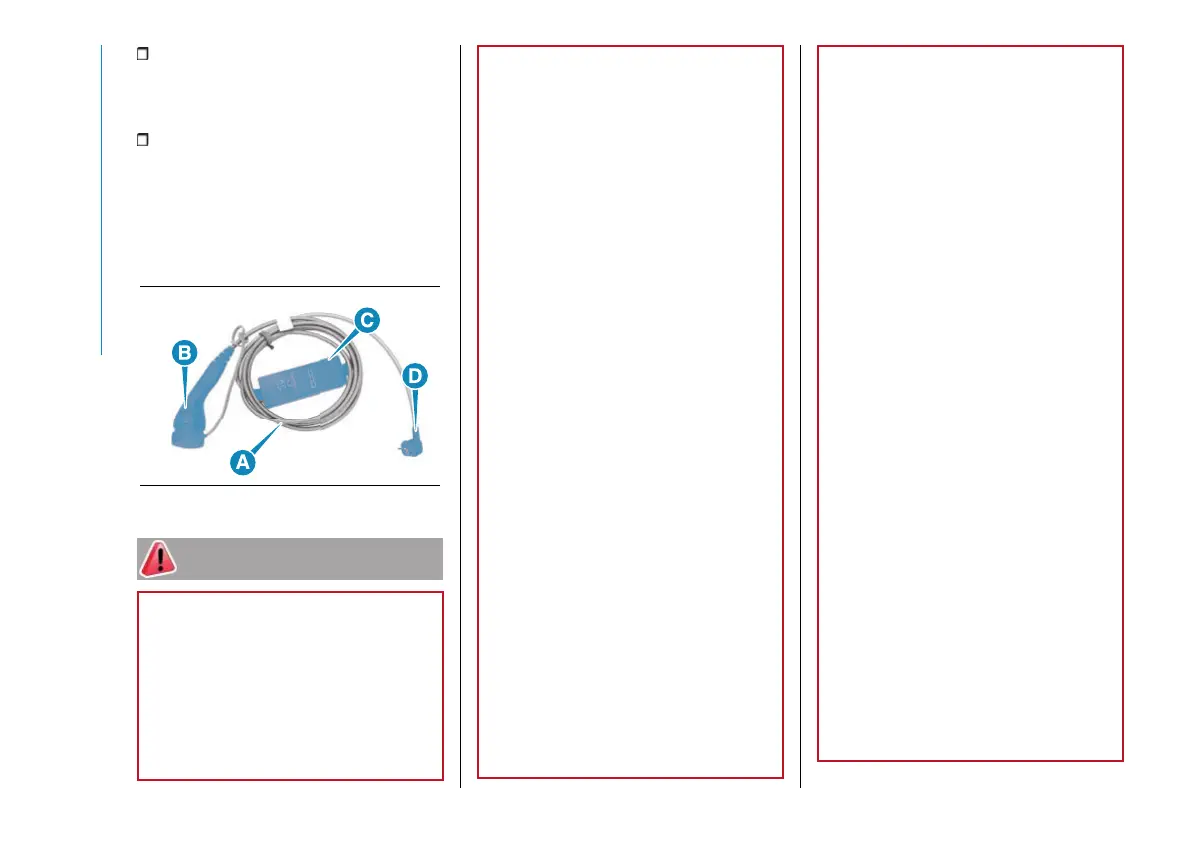
a state of charge control unit (C)
equipped with LEDs, able to provide
indications on any anomalies present
during the charging phase;
a connection plug (D) to connect to
the domestic power socket.
NOTE After use, remember to correctly
replace the protective cover (where
provided) on the specific charging
connector (B) to prevent moisture
and/or dust from getting inside.
159 F0S1277
WARNING
151)
Always stop the electric motor by
moving the ignition device to the STOP
position before charging the high-voltage
battery. Even with the engine switched
off, the cooling fan inside the engine
compartment can start automatically
during charging. Do not approach the
cooling fan while charging.
152)
The safety and suitability of the
domestic system for charging through the
domestic mains are primary and are under
the Customer’s responsibility.
153)
Do not connect the charging cable
connector if there is dust and/or water on
the charging port. Making the connection
in the presence of water or dust on the
connector cable and the plug may cause
a fire or electric shock. Use of worn-out
electrical sockets may result in fire and
injury.
154)
If you use electrical medical devices
(e.g., cardiac pacemakers), make sure in
advance that charging the high-voltage
battery does not affect the operation
of these devices. In some cases,
electromagnetic waves generated by the
charger may affect the operation of such
medical devices.
155)
Stop the charge immediately if you
notice any abnormal symptoms (e.g. smell,
smoke, etc.).
156)
Replace the charging cable if the
cable jacket is damaged to prevent risk of
electrocution.
157)
When connecting or removing the
charging cable, be sure to grasp the
handle of the charging connector and the
charging plug. If you pull the cable directly
(without using the handle) the internal
conductors may disconnect or damage:
this may cause a shock or fire.
158)
The charging cable is a high-voltage
conductor. Contact with high-voltage can
cause serious personal injury or death.
Similarly, do not touch the orange high-
voltage cables.
159)
It is strictly forbidden to use any plug
adapter or similar devices when charging.
Never use the charging cable together with
an extension cable.
160)
Never connect the charging cable
to an extension cable or multiple socket.
Multiple sockets, extension cables,
overvoltage protection or similar units
cannot be used together with the charging
cable as they may present a risk of fire,
electrocution, etc.
161)
The Mode 2 charge cable is
watertight and is guaranteed by the
Manufacturer: do not use other cables not
supplied by FCA.
162)
Be sure not to touch the charging
connector and charging plug with wet
hands.
163)
Do not charge when the connector
and charging plug are wet.
164)
Do not charge in adverse weather
conditions (e.g. during thunderstorms) at
charging stations.
165)
Always keep charging connector
and charging plug clean and dry. Take
care to keep the charging cable away from
water or moisture. Do not use chemicals
or solvents.
166)
Be sure to use the designated
charging cable to charge the car. Using
any other charger may cause personal
injury or damage to the car.
167)
How to use the charging cables.
Treat the charging cable with care: avoid
folding and/or bending it on sharp
surfaces. After using the charging cable,
replace the protective covers (if present)
on both sides of the cable correctly. Avoid
prolonged exposure of the charging cable
to sunlight. Avoid dropping the charging
cable from above: violent shocks could
damage the cable. Do not immerse the
charging cables in liquids.



 To Next Page