3
Sherlock 3CG™ Tip Confirmation System
1 Overview
1.1 Indications for Use
The Sherlock 3CG™ Tip Confirmation System (TCS) is indicated for guidance and positioning of Peripherally Inserted Central Catheters (PICCs). The
Sherlock 3CG™ TCS provides real-time PICC tip location information by using passive magnet tracking and the patient's cardiac electrical activity (ECG).
When relying on the patient’s ECG signal, the Sherlock 3CG™ TCS is indicated for use as an alternative method to chest X-ray and fluoroscopy for PICC tip
placement confirmation in adult patients.
Limiting but not contraindicated situations for this technique are in patients where alterations of cardiac rhythm change the presentation of the P wave as in
atrial f brillation, atrial flutter, severe tachycardia, and pacemaker driven rhythm. In such patients, who are easily identifiable prior to catheter insertion, the
use of an additional method is required to confirm PICC tip location.
1.2 Post Market Clinical Trial
The Sherlock 3CG™ Tip Confirmation Ststem (TCS) is the next generation of tip confirmation technology, incorporating both Sherlock™ II Tip Location
System (TLS) magnetic tip tracking and Sapiens TCS ECG tip confirmation into a single integrated unit. The Sapiens TCS Post-Market Clinical trial was
a prospective, single arm, single center study designed to assess the efficacy of the ECG method for correctly positioning the tip of central venous catheters in
adult patients. The primary endpoints were to assess the performance of the Sapiens technology with respect to: (1) compatibility with peripherally inserted
central catheters (PICCs), tunneled catheters, and ports (2) safety of using an invasive intracardiac electrode, and (3) the accuracy of the Sapiens technology
withregard to correct positioning of the catheter tip when compared to postoperative chest x-ray. Three hundred thirty two (332) subjects received a vascular
access device in the form of a PICC, port, or tunneled catheter. of the 332 subjects,114 subjects (34%) received a PICC. Placement of the PICC was deemed
acceptable in 99.1% (113/114) of the subjects. No adverse events occurred.
1.3 Sherlock 3CG™ TCS Description
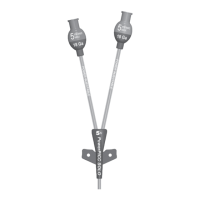
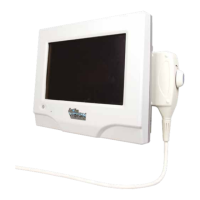
The Sherlock 3CG™ TCS is designed to aid in PICC tip positioning through magnet tracking and ECG technology. It is designed to operate with
Bard Access Systems’ catheter kits labeled [
] and “Sherlock 3CG™ TPS Stylet”.
Note: When used in conjunction with catheter kits labeled [
] the device provides magnetic navigation information but does not allow positioning
through ECG technology.
ECG Positioning
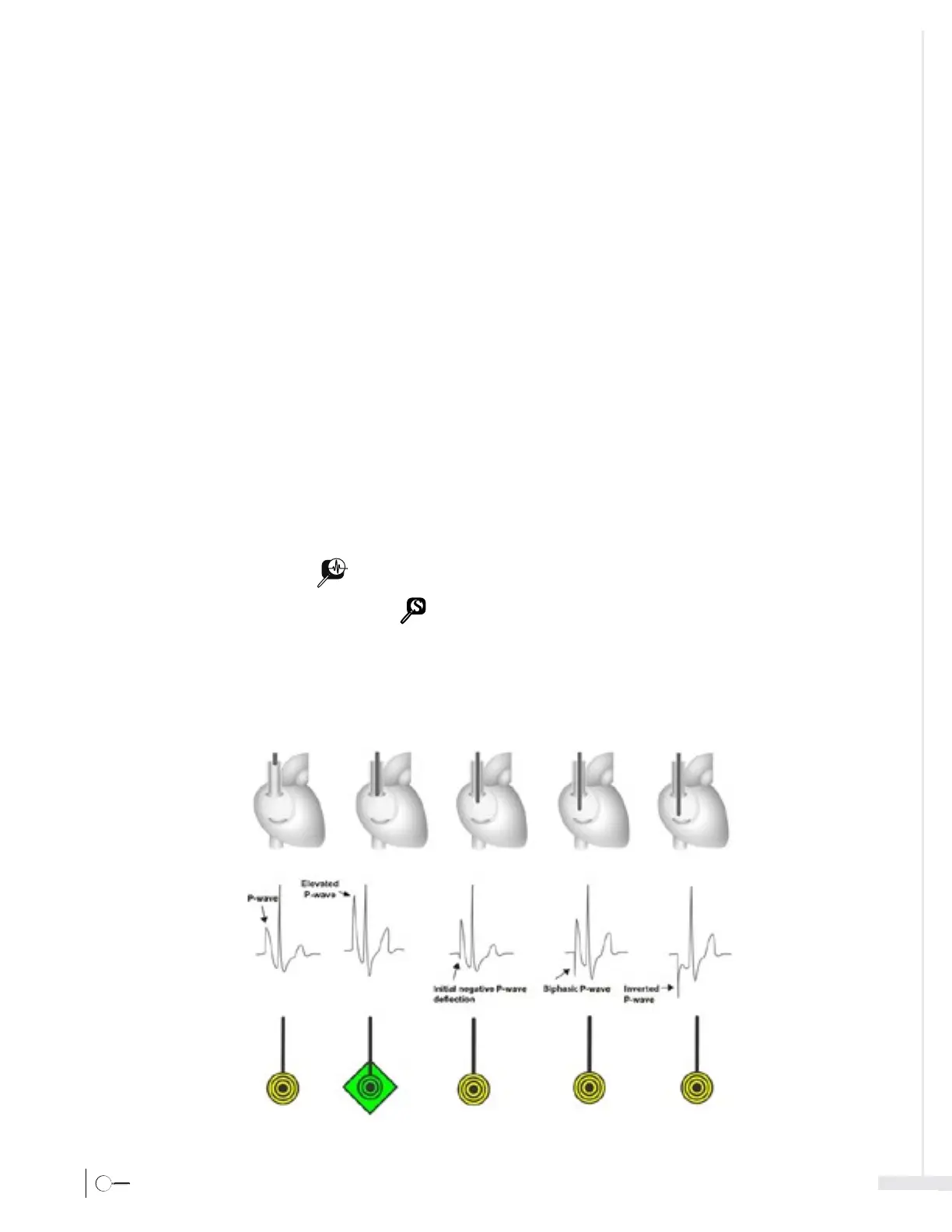
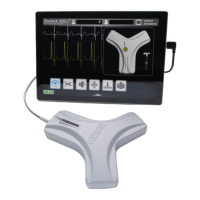
The Sherlock 3CG™ TCS displays an ECG signal detected by the intravascular and body electrodes, which can be used for catheter tip positioning.
In patients with a distinct P-wave, the P-wave will increase in amplitude as the catheter approaches the top of the cavo-atrial junction. As the catheter advances
into the right atrium, the P-wave will decrease in amplitude and may be biphasic or invert. In addition to the ECG signal, the magnet tracking stylet icon is
augmented with the shape and color changes shown below.
Note: In instances where the P-wave is not present, not identifiable, or intermittent the stylet icon will remain a yellow circle.



 To Next Page