4
Instructions For Use
Magnetic Navigation
Permanent magnets are encapsulated within the tip of the Sherlock 3CG™ TPS Stylet. No magnetic energy is generated by the display or the sensor.
The Sherlock 3CG™ TCS displays the relative position of the magnet-tipped stylet to the sensor. It does this in two steps:
1. Sherlock 3CG™ TCS takes a background measurement of the ambient magnetic field during the cal bration cycle.
2. Sherlock 3CG™ TCS senses changes in the magnetic field. When the Sherlock 3CG™ TCS detects the stylet, it displays the stylet tip location
and orientation.
1.4 System Components
The Sherlock 3CG™ TCS Standalone and authorized accessories include:
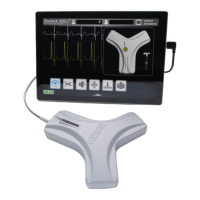
- Sherlock 3CG™ TCS Sensor
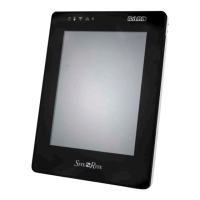
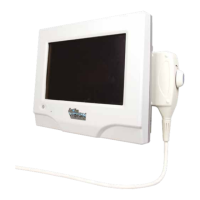
- Sherlock 3CG™ TCS Display
- Remote Control
- Medical Grade Power Supply
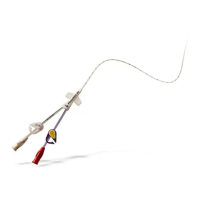
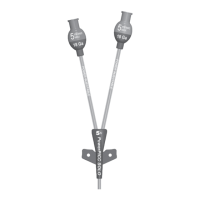
- Sherlock 3CG™ TPS Stylet (included with specially marked central venous catheter kits [
]
- Sherlock™ TLS Stylet (included with specially marked central venous catheter kits [
]
- Fin Assembly (included with specially marked central venous catheter kits)[
]
- Sherlock™ Sensor Holder (ordered separately or with specially marked central venous catheter kits) [
] or [ ]
- Sherlock 3CG™ TCS Sensor Holster
- Remote Control Holder
- Bard Access Systems' supplied printer
- USB Extension
1.5 Warnings and Precautions
This section specifies warnings and precautions specific to the functionality of the Sherlock 3CG™ TCS.
- See the Bard Access Systems' catheter Instructions for Use (IFU) for possible complications associated with peripherally inserted central catheter (PICC)
placements and ECG positioning.
Warnings
Warning: This product should only be operated by qualified medical personnel.
Warning: Do not power the Sherlock 3CG™ TCS in the presence of flammable anesthetic gases. Explosion may result.
Warning: Do not attempt to sterilize the sensor. Damage to the equipment may occur.
Warning: The following actions void the warranty of the Sherlock 3CG™ TCS and may result in injury or equipment damage.
- Opening or servicing the Sherlock 3CG™ TCS by anyone other than Bard Access Systems’ authorized service personnel.
- Removing system labels by anyone other than Bard Access Systems’ authorized service personnel.
- Connecting the sensor or applied patient components to any unauthorized system or accessory. Refer to Section 1.4 for complete components.
- Installation of unauthorized software.
- Modification of system settings without authorization by Bard Access Systems.
Warning: If the Sherlock 3CG™ TCS is visibly damaged, discontinue use immediately. Use of the damaged system may result in injury or equipment damage.
Warning: Do not submerge the sensor in liquid or allow fluid to enter the connectors. Damage to the equipment may occur.
Warning: Sherlock 3CG™ TCS is not intended to diagnose or treat disease.
Warning: Only Bard Access Systems’ authorized service personnel should attempt to service this equipment. The Sherlock 3CG™ TCS contains static sensitive
components and circuits. Failure to observe proper static control procedures may result in damage to the system.
Warning: Do not rely on ECG signal detection for catheter tip positioning when interpretation of the external or intravascular ECG P-wave is difficult.
For example, when:
- P-wave is not present
- P-wave is not identifiable
- P-wave is intermittent
These conditions may be a result of heart rhythm abnormalities, atrial fibrillation, atrial flutter, severe tachycardia or presence of cardiac rhythm
devices. In these cases, rely on magnetic navigation and external measurement for tip positioning and use chest x-ray or fluoroscopy to confirm
catheter tip location, as indicated by institutional guidelines and clinical judgment.



 To Next Page