Overview
SMART CLEARER - 1.1 -
1
1 1
1 -
--
- OVERVIEW
OVERVIEW OVERVIEW
OVERVIEW
System components
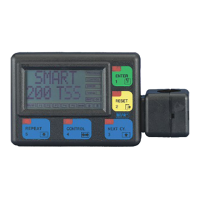
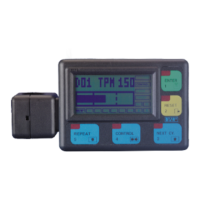
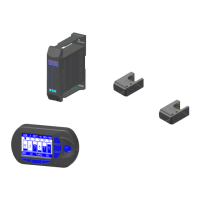
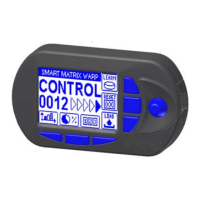
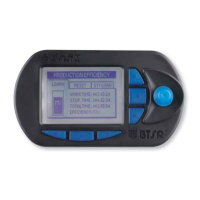
The SMART CLEARER system consists of a control/programming terminal and
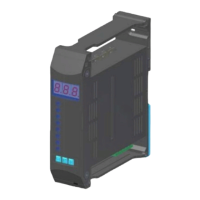
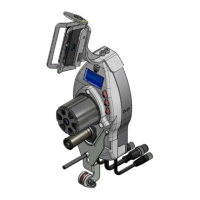
a variable number of ISSC.. type sensors (up to 200) connected to the terminal
using specific interface cables.
System’s Operation Principles
The sensors’ detection features: Nep (NEP), yarn reduction (SLUB-), Yarn
Slub/Tangle (SLUB-), Missing ply (YARN -), Added ply (YARN +), Yarn broken
(NOYARN), Yarn running speed (SPEED), Control Activation delay (D-CONTR)
depend on the type of yarn (article) being processed.
These features must be programmed on each sensor and can be changed according
to the article which is being processed.
The terminal has in fact the function of programming and, as conditions change, it
can vary the sensors’ features, according to the quality control requirements, as
well as the function of displaying either globally or selectively the counters that
record the different types of defects by the sensors.
Special Features of SMART CLEARER system
The SMART CLEARER system has a set of unique features which make it a true
microcomputer dedicated to the yarn quality control.
SMART CLEARER is a fully parametric system; this means that for each type of
defect the use can freely define the desired parametric values. When these values
are exceeded, the system signals a fault condition.
The programming (and reprogramming) phase of the sensors is limited to an
extremely quick and easy operation. It consists of communicating the name of the
article to the sensor or to a specific set of sensors on the machine, which the
sensor(s) will have to detect.
The main advantages of this solution can be summarised as follows:
Absolute flexibility:
thanks to the possibility of quickly changing the sensors’ program, according
to the article to be processed.
Maximum simplicity:
concerning the installation as well as system programming and administration.
Maximum accuracy:
the possibility of programming the detection capability of the sensors
according to the type of yarn to be processed guarantees a perfect symbiosis
between sensor and yarn.
Furthermore, the possibility to print a report containing the summary of failures
detected by the sensors (Production Report) offers a valuable support for
keeping and improving the quality level of production.



 To Next Page