
 Need help?
Do you have a question about the Check Point 730 and is the answer not in the manual?
Information on safe power supply usage and adapter types.
Review essential documents before starting setup procedures.
Lists the items included in the product packaging.
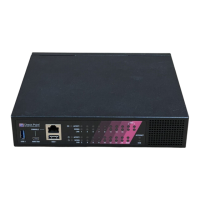
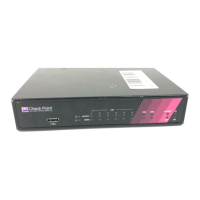
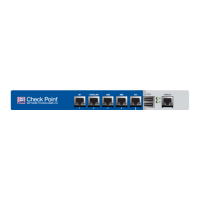
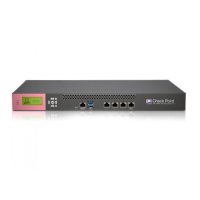
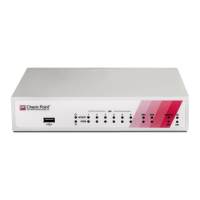
Details different models and panel layouts of the appliance.
Describes the LEDs and ports on the front of the appliance.
Describes the ports and buttons on the back of the appliance.
Details features of access control policies like Firewall and URL Filtering.
Details features for defending against malware, viruses, and other threats.
Explains VPN capabilities for secure remote and site-to-site connections.
How to connect the appliance to cloud-based management services.
Outlines the recommended sequence for appliance configuration.
Initial physical setup and identification of network interfaces.
Instructions for connecting power, network, and other necessary cables.
Step-by-step guide for initial appliance setup using the wizard.
Automating initial deployment and configuration via the cloud.
Deploying configuration files from external media for quick setup.
Assigning a unique name and optional domain to the appliance.
Configuring the appliance's connection to the internet using various protocols.
Setting up the appliance's Wi-Fi network name, security, and access.
Defining where administrators can access the appliance for management.
Selecting and activating specific software blades to enable features.
Reviewing configured settings before completing the initial setup wizard.
Configuring automatic updates for enhanced security protection.
Managing and applying firmware updates to the appliance.
Checking and managing the appliance's connection status to the internet.
Registering and activating the appliance's software license.
Instructions for backing up and restoring the system configuration.
Defining firewall rules, security levels, and access controls.
Configuring which outgoing network services are permitted.
Controlling access to specific applications and websites based on categories.
Customizing access policy to block particular applications or web addresses.
Defining exceptions to default access policies for specific users or groups.
Restricting internet access for specific users or groups based on time or other criteria.
Overview of malware, worms, Trojans, and other cyber threats.
Activating or deactivating IPS, Anti-Bot, and Anti-Virus blades.
Selecting the intensity of Intrusion Prevention System protection (Typical, Strict, Custom).
Configuring policies for malware detection, botnet protection, and threat emulation.
Enabling or disabling the Anti-Spam functionality to manage email threats.
Customizing how spam emails are identified by source address or content.
Defining senders, domains, or IP addresses that are not considered spam.
Setting Anti-Spam to log threats without blocking them, useful for analysis.
Creating and configuring administrator accounts with specific network access privileges.
Creating and managing user profiles for network access, defining timeframes and remote access.
Assigning permissions for remote access to users or user groups.
Modifying the settings for existing users or groups.
Removing user or group accounts from the system.
Step-by-step guide to establishing a connection between the appliance and cloud services.
Setting up a separate Wi-Fi network for guest internet access with hotspot capabilities.
Displaying statistics for security events and network analysis from the Monitoring page.
Generating and viewing detailed reports on security events like high-risk applications and malware.
Accessing and analyzing system and security logs for troubleshooting and auditing.
Contact information for technical assistance, support phone numbers, and web resources.
Guidance on finding additional information, advanced documentation, and related resources.
 General
| Brand | Check Point |
|---|---|
| Model | 730 |
| Category | Network Hardware |
| Language | English |

 To Next Page