EasyManua.ls Logo

Chino DB670 - User Manual

Default Icon
150 pages
Print Icon
To Next Page IconTo Next Page
Loading...
INST.No.INE-868B
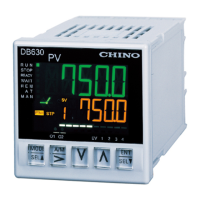
Digital Indicating
Controller
DB600
General PID control
Instruction Manual
Thank you for purchasing Digital Indicating Controller [DB 600 series]. Understand the instrument properly
and read this instruction manual beforehand in order to avoid any troubles.
- For the persons doing instrumentation, installation and sales -
Be sure to handover this instruction manual to the persons using the
instrument.
- For the users of the instrument -
Preserve this instruction manual until you scrap the instrument and
write down the setting details.

Table of Contents

Questions and Answers

Summary

Before Use

Safe Use Precautions

Describes correct usage to prevent safety hazards to people and property.

Important Safety Warnings

Highlights crucial safety warnings and precautions to avoid severe accidents.

Mounting Conditions

Mounting and Wiring

Instrument Mounting Procedure

Details the procedure for physically mounting the instrument into a panel.

Wiring Precautions

Outlines critical safety precautions to observe when performing wiring operations.

Terminal Functions and Layouts

Lists terminal numbers and their corresponding functions for DB630.

Basic Wiring Procedures

Explains proper terminal connection methods and power supply wiring.

Trial Operation

Pre-Operation Confirmations

Lists essential checks to perform before initiating trial operation.

Trial Operation Procedure

Provides a step-by-step guide for performing trial operation of the instrument.

Initial Settings

Input Type and Measuring Range Setting

Sets the input type and measuring range according to the sensor.

Control Action and Parameter Setup

Sets heating/cooling control, group, and program parameters.

Parameter Initialization

Explains how to reset parameter settings to factory defaults.

Operation

Power-On Cautions

Provides essential cautions and considerations before turning on the instrument.

Constant Value Operation

Introduces the constant value operation screen for monitoring and operation.

Program Operation

Introduces the program operation screen for monitoring and operation.

AUTO;MANUAL Output Operation

Explains how to switch between AUTO and MANUAL output operations.

Operation Cautions

Warns about potential control impacts and provides cautions for SV slope operation.

Setting Operations

Basic Setting Screen Operations

Outlines the fundamental steps for setting and registering parameter values.

Parameter Setting Example

Demonstrates how to set a value for an event parameter through a step-by-step example.

Setting Precautions

Emphasizes observing ranges, parameter interactions, and program time settings.

MODE0: Executing Parameter

MODE0 Setting Screens and Functions

Explains MODE0 initial screen, SV, and step time settings.

Executing Event and PID Settings

Details settings for executing event values and PID constants (P, I, D).

Output Limiter and Guaranty Soak

Explains settings for executing output limiters and guaranty soak.

Changing Executing Step and Output Limiter

Describes step changes and output limiter function.

MODE1: Constant Value Operation Parameter

MODE1 Setting Screens and Functions

Explains MODE1 initial screen and SV rate of change settings.

SV Rate of Change Functionality

Details the function of gradually changing SV using rise/fall settings and time units.

Constant Value Operation PV Start

Explains how operation starts with PV or SV, and conditions for PV start.

MODE2: Program Parameter

MODE2 Setting Screens and Functions

Explains MODE2 initial screen and pattern/step No. selection.

Program Operation Mode Settings

Details program/constant value switch, time unit, and SV in RESET settings.

Pattern Management Functions

Explains pattern repeat, time display, clear, and copy.

Step and Execution Number Settings

Details start step, number of steps, and execution number selections.

Program Pattern Linking and End Outputs

Details output settings at program end and linked pattern numbers.

Program Pattern Setting Procedure

Provides an example and procedure for setting up a program pattern.

Program Operation Start Methods

Explains how to select between SV start and PV start for program operation.

Program Pattern Linking

Explains how to link multiple patterns to create a single program.

Program End Output Settings

Details how to set output at the end of a program.

MODE3: Group Parameter

MODE3 Setting Screens and Functions

Explains MODE3 initial screen and group number settings.

MODE4: Event Parameter

MODE5: Input Parameter

MODE6: Control Parameter

MODE7: Output 2 Parameter

MODEa: Communication Parameter

MODEb: Transmission Output Parameter

MODEc: Remote Input Parameter

MODE d: External Input Parameter

MODEt: System Parameter

Detailed Description of Main Functions

Alarm Event Types

Describes various types of alarm events, including absolute value and deviation alarms.

Auto Tuning Function

Explains the auto tuning function for automatically calculating PID constants.

PID Control Overview

Describes PID control components: P, I, and D.

Actuator Adjustment for ON-OFF Servo Output

Explains automatic and manual adjustment for ON-OFF servo output.

Communication Interface Options

Describes the engineering port for PC connection and software usage.

Maintenance and Inspection

Troubleshooting Guide

Provides a table of common symptoms and their corresponding check items.

Summary

Before Use

Safe Use Precautions

Describes correct usage to prevent safety hazards to people and property.

Important Safety Warnings

Highlights crucial safety warnings and precautions to avoid severe accidents.

Mounting Conditions

Mounting and Wiring

Instrument Mounting Procedure

Details the procedure for physically mounting the instrument into a panel.

Wiring Precautions

Outlines critical safety precautions to observe when performing wiring operations.

Terminal Functions and Layouts

Lists terminal numbers and their corresponding functions for DB630.

Basic Wiring Procedures

Explains proper terminal connection methods and power supply wiring.

Trial Operation

Pre-Operation Confirmations

Lists essential checks to perform before initiating trial operation.

Trial Operation Procedure

Provides a step-by-step guide for performing trial operation of the instrument.

Initial Settings

Input Type and Measuring Range Setting

Sets the input type and measuring range according to the sensor.

Control Action and Parameter Setup

Sets heating/cooling control, group, and program parameters.

Parameter Initialization

Explains how to reset parameter settings to factory defaults.

Operation

Power-On Cautions

Provides essential cautions and considerations before turning on the instrument.

Constant Value Operation

Introduces the constant value operation screen for monitoring and operation.

Program Operation

Introduces the program operation screen for monitoring and operation.

AUTO;MANUAL Output Operation

Explains how to switch between AUTO and MANUAL output operations.

Operation Cautions

Warns about potential control impacts and provides cautions for SV slope operation.

Setting Operations

Basic Setting Screen Operations

Outlines the fundamental steps for setting and registering parameter values.

Parameter Setting Example

Demonstrates how to set a value for an event parameter through a step-by-step example.

Setting Precautions

Emphasizes observing ranges, parameter interactions, and program time settings.

MODE0: Executing Parameter

MODE0 Setting Screens and Functions

Explains MODE0 initial screen, SV, and step time settings.

Executing Event and PID Settings

Details settings for executing event values and PID constants (P, I, D).

Output Limiter and Guaranty Soak

Explains settings for executing output limiters and guaranty soak.

Changing Executing Step and Output Limiter

Describes step changes and output limiter function.

MODE1: Constant Value Operation Parameter

MODE1 Setting Screens and Functions

Explains MODE1 initial screen and SV rate of change settings.

SV Rate of Change Functionality

Details the function of gradually changing SV using rise/fall settings and time units.

Constant Value Operation PV Start

Explains how operation starts with PV or SV, and conditions for PV start.

MODE2: Program Parameter

MODE2 Setting Screens and Functions

Explains MODE2 initial screen and pattern/step No. selection.

Program Operation Mode Settings

Details program/constant value switch, time unit, and SV in RESET settings.

Pattern Management Functions

Explains pattern repeat, time display, clear, and copy.

Step and Execution Number Settings

Details start step, number of steps, and execution number selections.

Program Pattern Linking and End Outputs

Details output settings at program end and linked pattern numbers.

Program Pattern Setting Procedure

Provides an example and procedure for setting up a program pattern.

Program Operation Start Methods

Explains how to select between SV start and PV start for program operation.

Program Pattern Linking

Explains how to link multiple patterns to create a single program.

Program End Output Settings

Details how to set output at the end of a program.

MODE3: Group Parameter

MODE3 Setting Screens and Functions

Explains MODE3 initial screen and group number settings.

MODE4: Event Parameter

MODE5: Input Parameter

MODE6: Control Parameter

MODE7: Output 2 Parameter

MODEa: Communication Parameter

MODEb: Transmission Output Parameter

MODEc: Remote Input Parameter

MODE d: External Input Parameter

MODEt: System Parameter

Detailed Description of Main Functions

Alarm Event Types

Describes various types of alarm events, including absolute value and deviation alarms.

Auto Tuning Function

Explains the auto tuning function for automatically calculating PID constants.

PID Control Overview

Describes PID control components: P, I, and D.

Actuator Adjustment for ON-OFF Servo Output

Explains automatic and manual adjustment for ON-OFF servo output.

Communication Interface Options

Describes the engineering port for PC connection and software usage.

Maintenance and Inspection

Troubleshooting Guide

Provides a table of common symptoms and their corresponding check items.

Chino DB670 Specifications

General IconGeneral
Input TypeThermocouple, RTD, DC Voltage, DC Current
Control OutputRelay, Voltage Pulse, Current
Alarm OutputRelay
DisplayLED
Power Supply100-240 VAC, 50/60 Hz

Related product manuals