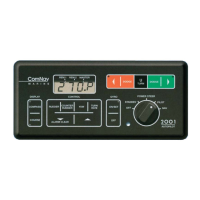
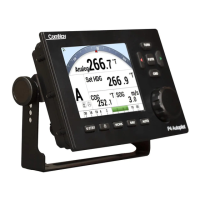
ComNav Marine 1420 Autopilot System
Document PN 29010012 V1.3
26
Notes & Cautions
Before beginning to connect the pump to the steering system, review the following points:
• Cap or cover the ends of hoses with a clean rag before pushing them between
bulkheads.
• Wipe copper filings off freshly cut and reamed copper tube. Do not blow the filings off.
Caution
CLEANLINESS must be maintained while making hydraulic connections!
Contamination introduced into the steering system fluid can cause steering components
to malfunction, possibly resulting in a loss of steering.
• Teflon based thread sealer must be used on all male pipe threads.
⇒ Do not place thread sealer on the first two threads.
⇒ Do not use a tape-type thread sealer. These can shred and enter the steering
system fluid.
⇒ Do not place thread sealer on female pipe threads.
• When tightening fittings into the pump lock valve, hold the lock valve, not the motor.
That way, the lock valve will not twist out of alignment with the rest of the pump.
• Connection of the pump lines is most easily made at existing breaks in the steering
system lines. For example: at valves, Tee-joints and other fittings.
Caution
Opening your hydraulic steering system will introduce air to your steering system!
However, this air will be expelled if the steering system is bled properly.
After you refill the system and during the Autopilot Setup Routine, your autopilot can be
used for bleeding any trapped air.
Ensure that you follow the Compensating Line installation instructions given below
(pages 28 & 29) very carefully, as all air is expelled through this line when bleeding your
system. If the Compensating Line does not prime properly and allows fluid to get to the
autopilot pump, the pump will not perform properly. The Compensating Line does not
have to be a high pressure hose. In fact, even a clear hose can be used, allowing for
easy visual confirmation of proper Compensating Line operation.


 To Next Page