TB-1022
13
Troubleshooting Possible Problems in Operation
CONDITION CAUSE CORRECTION
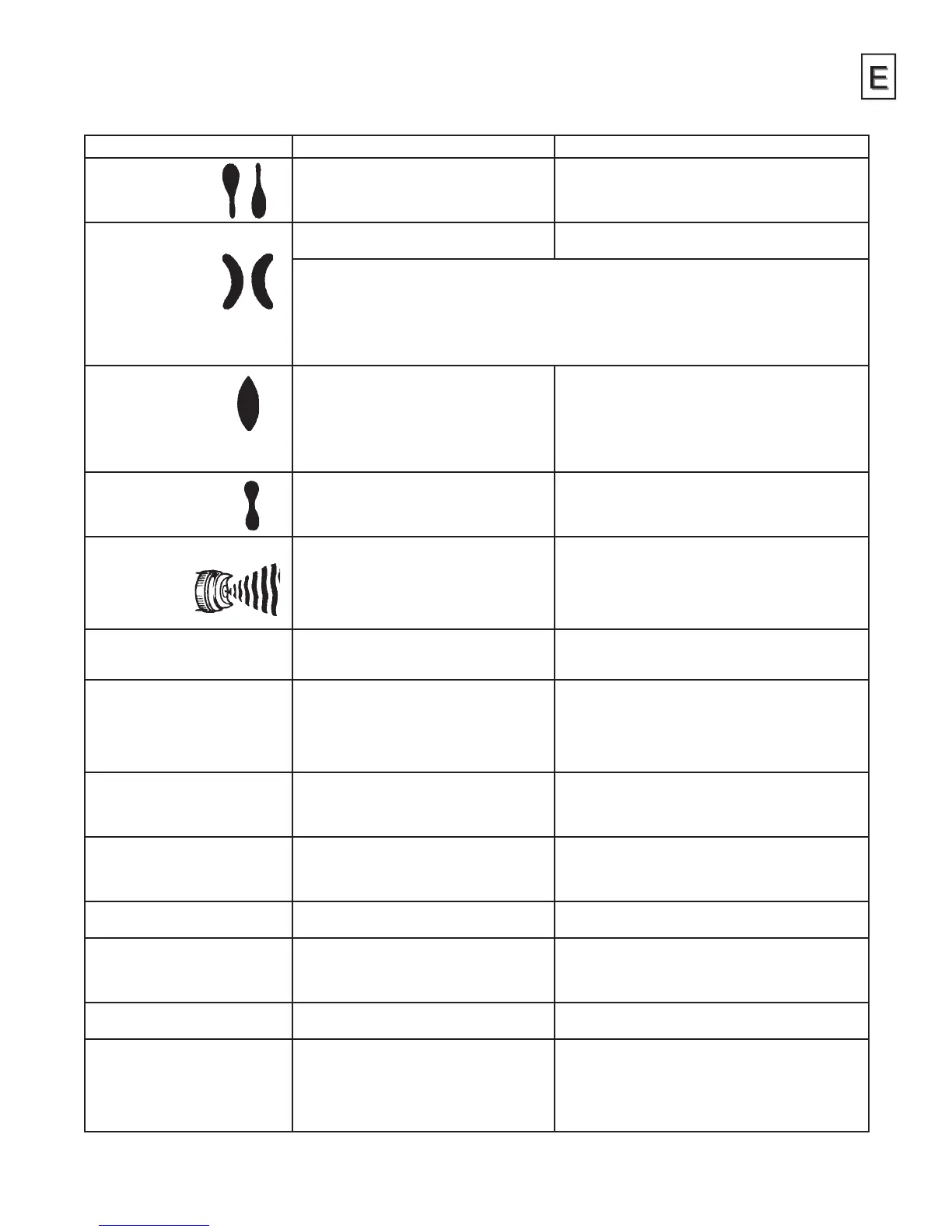
Heavy top or
bottom pattern
Horn holes plugged.
Obstruction on top or bottom of fluid tip.
Cap and/or tip seat dirty.
Clean. Ream with non-metallic point.
Clean.
Clean.
Heavy right or left
side pattern
Left or right side horn holes plugged.
Dirt on left or right side of fluid tip.
Clean. Ream with non-metallic point.
Clean.
Remedies for the top-heavy, bottom-heavy, right-heavy, and left-heavy patterns:
1. Determine if the obstruction is on the air cap or the fluid tip. Do this by making a test spray
pattern. Then, rotate the cap one-half turn and spray another pattern. If the defect is inverted,
obstruction is on the air cap. Clean the air cap as previously instructed.
2. If the defect is not inverted, it is on the fluid tip. Check for a fine burr on the edge of the fluid tip.
Remove with #600 wet or dry sand paper.
3. Check for dried paint just inside the opening; remove by washing with solvent.
Heavy center pattern
Fluid flow too high for atomization air.
Material flow exceeds air cap's capacity.
Spreader adjustment valve set too low.
Atomizing pressure too low.
Material too thick.
Balance air pressure and fluid flow. Increase spray
pattern width with spreader adjustment valve.
Thin or lower fluid flow.
Adjust.
Increase pressure.
Thin to proper consistency.
Split spray pattern
Atomization air pressure too high.
Fluid flow too low.
Spreader adjusting valve set too high.
Reduce at transformer or gun.
Increase fluid flow (increases gun handling speed).
Adjust.
Jerky or fluttering spray
*Loose or damaged fluid tip/seat.
Baffle seal not installed correctly.
Material level too low.
Container tipped too far.
Obstruction in fluid passage.
Dry or loose fluid needle packing nut.
Tighten or replace.
Install per directions.
Refill.
Hold more upright.
Backflush with solvent.
Lubricate or tighten.
Unable to get round spray
Spreader adjustment screw not seating
properly.
Air cap retaining ring loose.
Clean or replace.
Tighten.
Will not spray
No air pressure at gun.
Fluid needle adjusting screw not open enough.
Fluid too heavy for suction feed.
Fluid pressure too low.
Check air supply and air lines, blow out gun air
passages.
Open fluid needle adjusting screw.
Thin material and/or change to larger tip size, or
pressure feed.
Increase fluid pressure at tank.
Starved spray pattern
Inadequate material flow.
Low atomization air pressure.
Back fluid adjusting screw out to first thread,
or change to larger tip size, or increase fluid
pressure at tank.
Increase air pressure and rebalance gun.
Excessive overspray
Too much atomization air pressure.
Gun too far from work surface.
Improper stroking (arcing, gun motion
too fast).
Reduce pressure.
Adjust to proper distance.
Move at moderate pace, parallel to work surface.
Excessive fog
Too much or too fast-drying thinner.
Too much atomization air pressure.
Remix properly.
Reduce pressure
Dry spray
Air pressure too high.
Gun tip too far from work surface.
Gun motion too fast.
Gun out of adjustment.
Reduce air pressure.
Adjust to proper distance.
Slow down.
Adjust.
Fluid leaking from packing nut
Packing nut loose.
Packing worn or dry.
Tighten, do not bind needle.
Replace or lubricate.
Fluid leaking or dripping from
front of gun
Packing nut too tight.
Dry packing.
Fluid tip or needle worn or damaged.
Foreign matter in tip.
Fluid needle spring broken.
Wrong size needle or tip.
Adjust.
Lubricate.
Replace tip and needle.
Clean.
Replace.
Replace.
*Most common problem.



 To Next Page