Satellite Receiver
15
Remote Control
Switching Between Dual and Single Mode
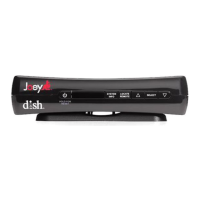
Put the satellite receiver in Single or Dual Mode by pressing the front panel MODE button.
Keep the following items in mind when switching the satellite receiver between Dual and
Single Mode:
Note: If you press the MODE button on the front panel and someone is viewing the remote
TV(s) while the receiver is in Dual Mode, you will see a popup on the nearby TV warning
you that you are about to disrupt the use of the TV2 output(s).
REMOTE CONTROL
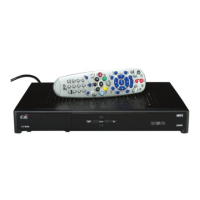
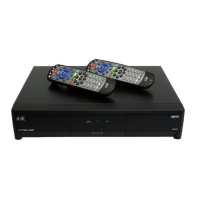
The two included remote controls give you access to all the features of your satellite TV
receiver. You can set up each remote to control the satellite receiver and as many as three
other devices (see page 78). These devices can be a TV, a DVD player (VCR or Blu-ray
disc player), and a third auxiliary device (such as an audio component or even a second
TV receiver).
This section describes how to use the various features on the two types of remote controls
included with your satellite TV system.
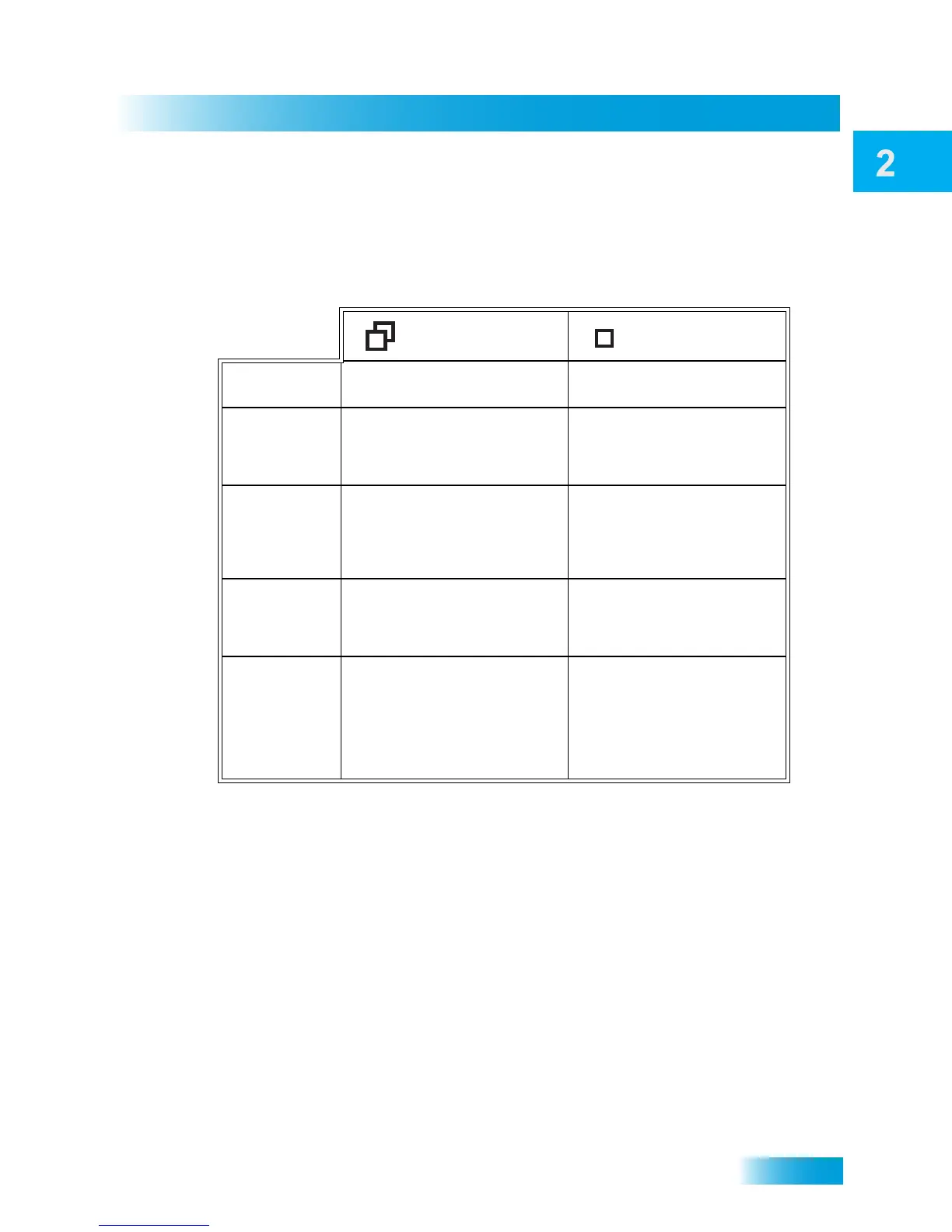
Dual Mode Single Mode
Indications
Dual Mode front panel
indicator lights.
Single Mode front panel
indicator lights.
Recording
The Recording front panel
indicator lights to show
whether TV1, TV2, or both
are currently recording.
The TV1 Recording front
panel indicator lights when
you are recording from one
or both tuners.
Favorites
Lists
Favorites Lists set up for
both sets of outputs (TV1
and TV2) are available at
their respective TV
locations.
Only Favorites Lists set up
for TV1 are available. The
lists for TV2 are not lost,
but simply unavailable
while in Single Mode.
Locks
Locks set up for both outputs
(TV1 and TV2) are available
at their respective locations.
Locks set up only for TV1
are available. The locks for
TV2 are not lost, but simply
unavailable in Single Mode.
Closed
Captioning
Closed Captioning (CC) for
HD and SD programming is
available on TV1. CC from
only SD programming is
available on TV2 (CC also
must be enabled on the TV
itself).
Closed Captioning from the
receiver is available on
both sets of outputs (TV1
and TV2).


 To Next Page