18
Safety Equipment
1.7 First Aid
It is the operator’s responsibility to be familiar
with the proper rst-aid procedures and be able
to care for minor injuries or illnesses of your pas-
sengers. In an emergency, you could be far from
professional medical assistance. We strongly
recommend that you be prepared by receiving
training in basic rst aid and CPR. This can be
done through classes given by the Red Cross or
your local hospital.
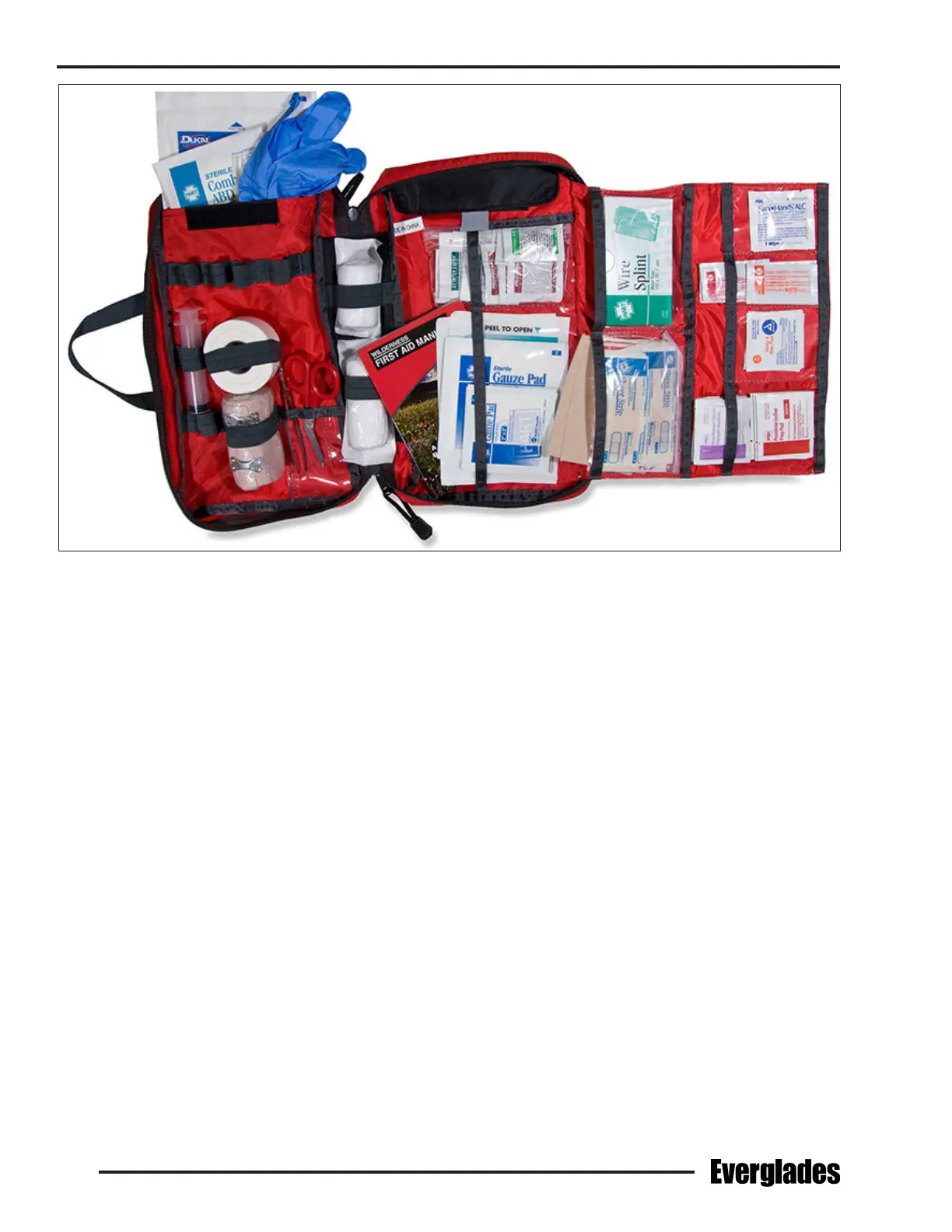
Your boat should also be equipped with at least a
simple marine rst-aid kit and a rst-aid manual.
The marine rst-aid kit should be designed for
the marine environment and be well supplied. It
should be accessible and each person on board
should be aware of its location. As supplies are
used, replace them promptly. Some common
drugs and antiseptics may lose their strength or
become unstable as they age. Ask a medical pro-
fessional about the supplies you should carry and
the safe shelf life of prescription drugs or other
medical supplies that may be in your rst-aid kit.
Replace questionably old supplies whether they
have been used or not.
In many emergency situations, the Coast Guard
can provide assistance in obtaining medical advice
for treatment of serious injuries or illness. If you
are within VHF range of a Coast Guard Station,
make the initial contact on channel 16 and follow
their instructions.
1.8 Additional Safety Equipment
Besides meeting the legal requirements, prudent
boaters carry additional safety equipment. This
is particularly important if you operate your boat
oshore. You should consider the following items,
depending on how you use your boat.
Satellite EPIRBS
EPIRBs (Emergency Position Indicating Radio
Beacon) operate as part of a worldwide distress
system. When activated, EPIRBs will send distress
code homing beacons that allow Coast Guard
aircraft to identify and nd them quickly. The
Typical First Aid Kit


 To Next Page