33
Operation
2.12 Water Skiing & Wakeboarding
Your boat could be equipped for water skiing and
wakeboarding. If you have never driven skiers be-
fore, you should spend some hours as an observer
and learning from an experienced driver. If you
are an experienced driver, you should take some
time to become familiar with the boat and the way
it handles before pulling a skier. The driver should
also know the skier’s ability and drive accordingly.
The following safety precautions should be
observed while towing water skiers.
• Water ski only in safe areas, away from other
boats and swimmers, out of channels and in
water free of underwater obstructions. The
area should be at least 5 feet deep, 3000 feet
long and have at least 100 feet between each
side of the boat and any obstructions.
• Make sure that anyone who skis can swim. Do
not allow people who cannot swim to water ski.
• Be sure that the skier is wearing a proper life
jacket. A water skier is considered onboard the
boat and a Coast Guard approved life jacket
is required. It is advisable and recommended
for a skier to wear a otation device designed
to withstand the impact of hitting the water at
high speed.
• Make sure to inspect the ski equipment and tow
rope before each ski session. Never use equip-
ment that is damaged or with loose screws, torn
boots, severe corrosion or tears in the fabric.
You should also inspect the ski tow rope and
replace if it is frayed, has unnecessary knots
or is damaged. Never use a ski tow line that
is questionable.
• Secure the ski tow rope to an appropriate de-
vice intended for ski tow ropes.
• Always carry a second person on board to
observe the skier or wakeboarder so that your
full attention can be given to the safe operation
of the boat. The operator should pay atten-
tion to driving the boat and have the observer
keep him updated on the skier. Never ski after
dark. It is hazardous and illegal. Neither the
boat operator or skier can see well enough to
navigate at skiing or wakeboarding speeds
safely at night.
• Never spray swimmers, boats, rafts or other
skiers. The risk for a collision makes this dan-
gerous for the skier and people being sprayed.
• Never follow directly behind another boat while
pulling skiers. Always stay a safe distance
behind or o the side of other boat trac. If
the boat you are following stops unexpectedly,
you may not be able to respond quick enough
endangering your skier and occupants of both
boats.
• Never follow behind another boat pulling a skier
for any reason, even if you are not pulling a
skier. If the skier you are following falls, you
may not be able to respond quick enough and
could run over the skier.
• When pulling multiple skiers, make sure the
ropes are the same length. Never pull multiple
skiers with tow ropes of dierent lengths.
• Always make sure to slowly pull the slack out of
the ski rope and wait for the OK from the skier
before advancing the throttle to ensure the rope
is not wrapped around the skier and that the
skier is ready. Never advance the throttle until
the skier provides the ready signal.
• When turning around to pick up a fallen skier,
make sure to look for other boat trac in the
direction of the turn before you turn the boat.
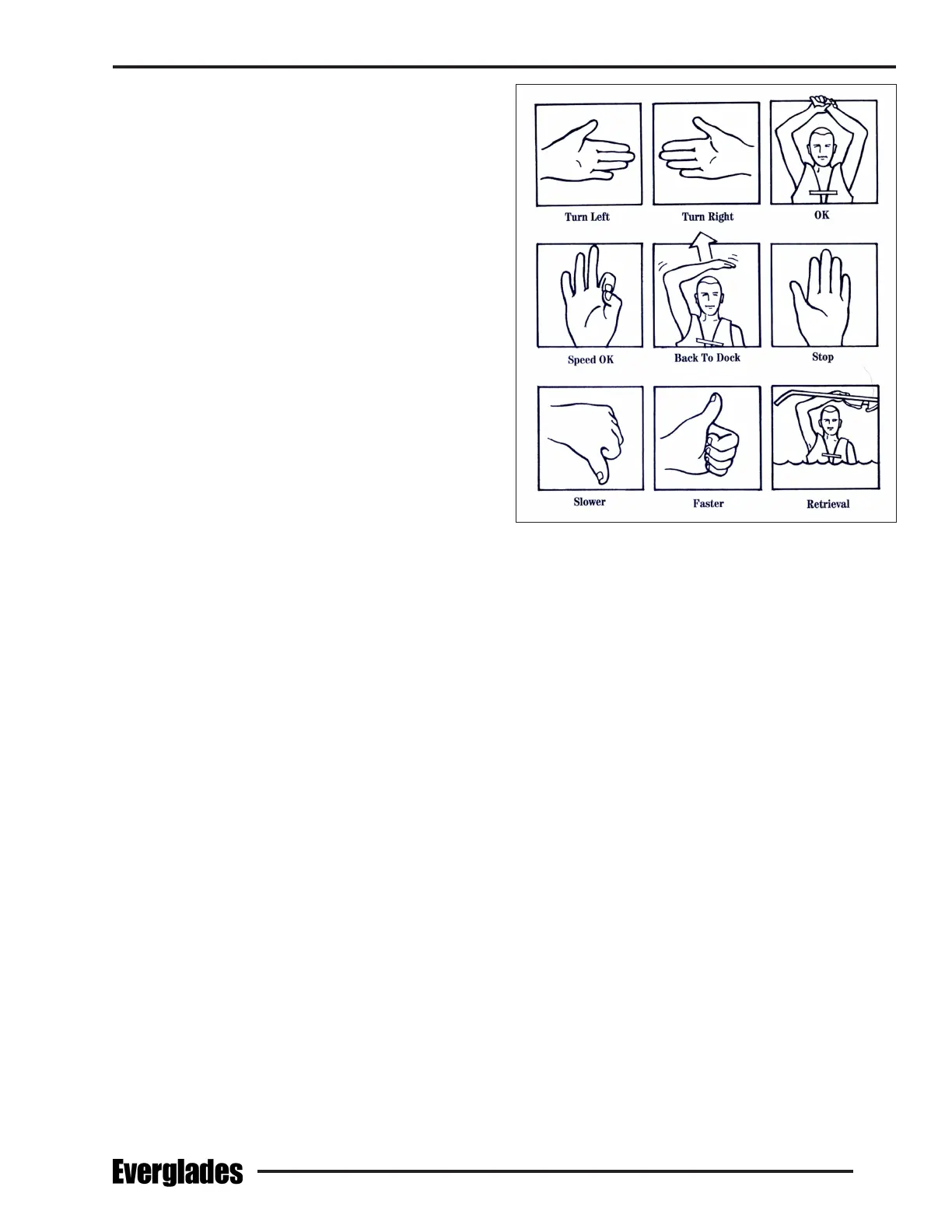
Common Hand Signals for Water Sports Activities


 To Next Page