54
Fuel System
in the vent and ll hoses close and activate the
automatic shuto valve on the marina fuel pump
nozzle to prevent the tank from being overlled
and/or fuel from being ejected from the fuel ll/
vent tting. You should never attempt to “top o”
the tank after the nozzle shuto has activated.
The shuto valves will not allow additional fuel to
be added after they close and could be damaged
by attempts to force additional fuel into the tank.
After fueling, close and latch the ll cap. Then
wash spilled fuel from the areas around the fuel
ll if necessary. Residual fuel left on the deck and
hull sides can be dangerous and will yellow the
berglass or damage the striping.
5.2 Outboard Engine Fuel System
The gasoline fuel system has one fuel tank that
lls from the port gunnel. Each engine is supplied
by an independent withdrawal tube and fuel line.
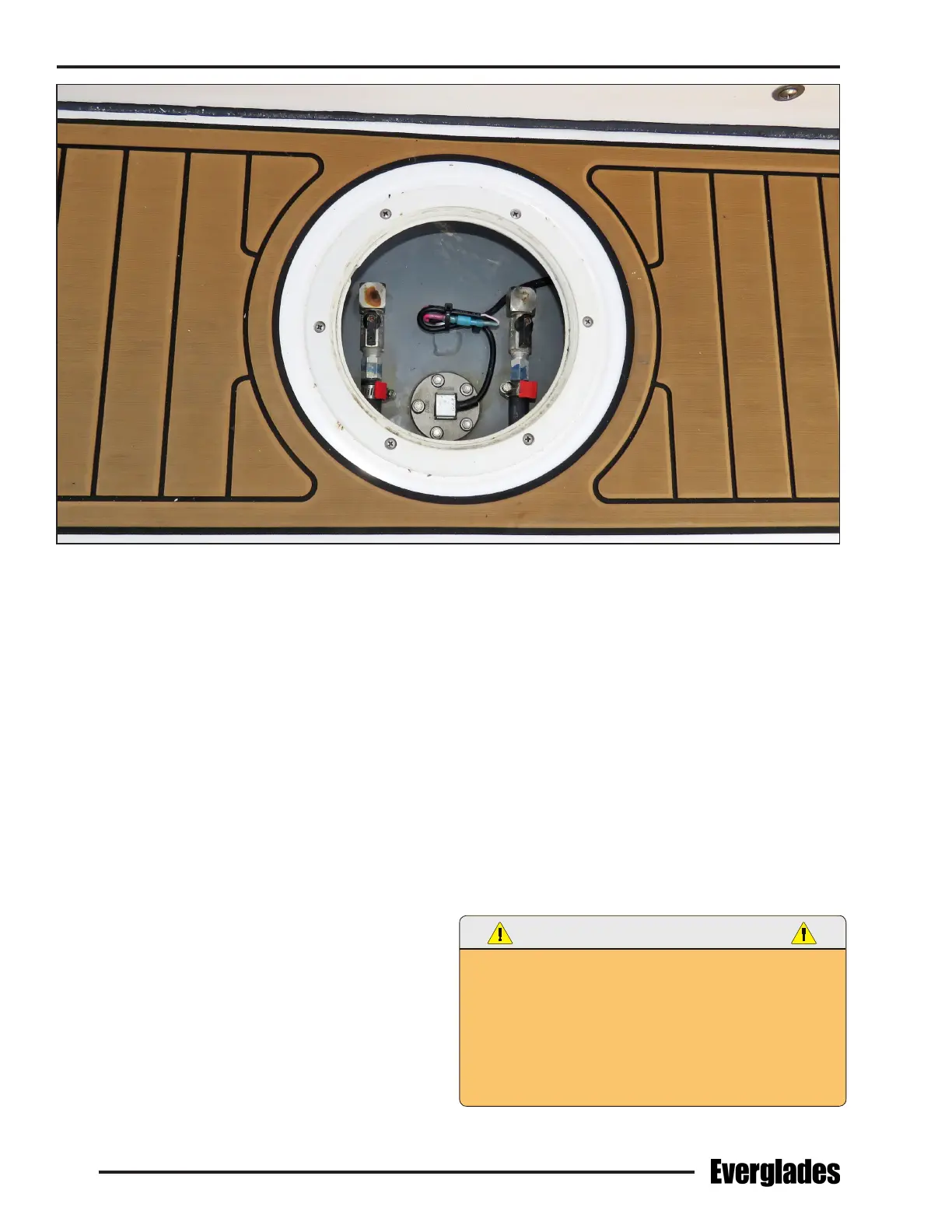
Fuel Valves & Fuel Gauge Sender Below Access Plate in Aft Cockpit Sole
Twin engine fuel tanks have two withdrawal tubes
and fuel lines. There is an on/o valve for each
supply line located on the fuel tank near each
withdrawal tube. The valves provide a means to
turn o the fuel supply to service the fuel system.
Fuel withdrawal lines are equipped with anti-
siphon valves where the lines attach to the fuel
tanks. These valves prevent gasoline from siphon-
ing out of the fuel tank should a line rupture.
DO NOT REMOVE THE ANTI-SIPHON VALVES FROM THE
SYSTEM. SHOULD AN ANTI-SIPHON VALVE BECOME
CLOGGED, CLEAN AND REINSTALL OR REPLACE. IF A
FUEL LINE SHOULD LEAK, ANTI-SIPHON VALVES PREVENT
A SUBSTANTIAL AMOUNT OF FUEL FROM FLOWING INTO
THE BILGE. ANTI-SIPHON VALVES ARE REQUIRED TO BE
INSTALLED IN ALL BOATS EQUIPPED WITH GASOLINE
ENGINES BY THE U.S. COAST GUARD


 To Next Page