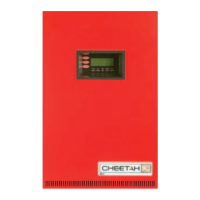
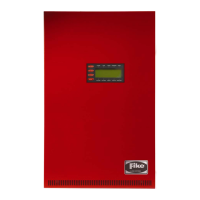
EPACO USER’S MANUAL
Release Date: January, 2010 P/N: E06-091 (Rev 0) Page: 17
3.0 MAINTENANCE
Routine system inspections shall be conducted in accordance with the requirements of the appropriate local
authority having jurisdiction and National Fire Protection Association Standard Number 69, Explosion
Prevention System, current edition.
The inspection schedule and procedure set forth below are provided as a minimum requirement for Fike
Explosion Protection System Controllers, which operate in moderate environments. These control panel
instructions are to be implemented in conjunction with complete system inspection instructions.
During initial system checkout or start-up, the Fike Factory Field Personnel, due to process operational
characteristics and/or historical inspection data on the specific process, may determine that an additional
inspection is required. If this occurs, it will be in addition to the following maintenance schedule.
It is extremely important to closely monitor the operational characteristics of your system during the first few
days and weeks after the initial start-up.
3.1 ROUTINE INSPECTIONS
L Important Note: These inspections are to be performed by Fike
Field Personnel or personnel trained and certified by Fike.
To perform an inspection, it is important to first obtain all pertinent data that relates to the specific system
being inspected. The required information includes:
System Engineered Drawings
Component Location Drawing No._________
Field Wiring Drawing No.____________
Copy of Manuals, Specifications or Documents Referenced on Fike System Engineered Drawings
Inspection Equipment
Operating Specifications on Each Component Being Inspected
Three-Year Replacement – Replace all system batteries.
Ten-Year Replacement – Replace all GCA actuators and suppressant agents, following all safe handling
practices and recommendations.
L Note: The ten-year replacement is based upon a 20°C to 30°C (70°F
to 80°F) actuator temperature. The replacement frequency may be
more frequent when exposure to higher temperature or harsh
environments is experienced.



 To Next Page