EPACO USER’S MANUAL
Page: 4 P/N E06-091 (Rev 0) Release Date: January, 2010
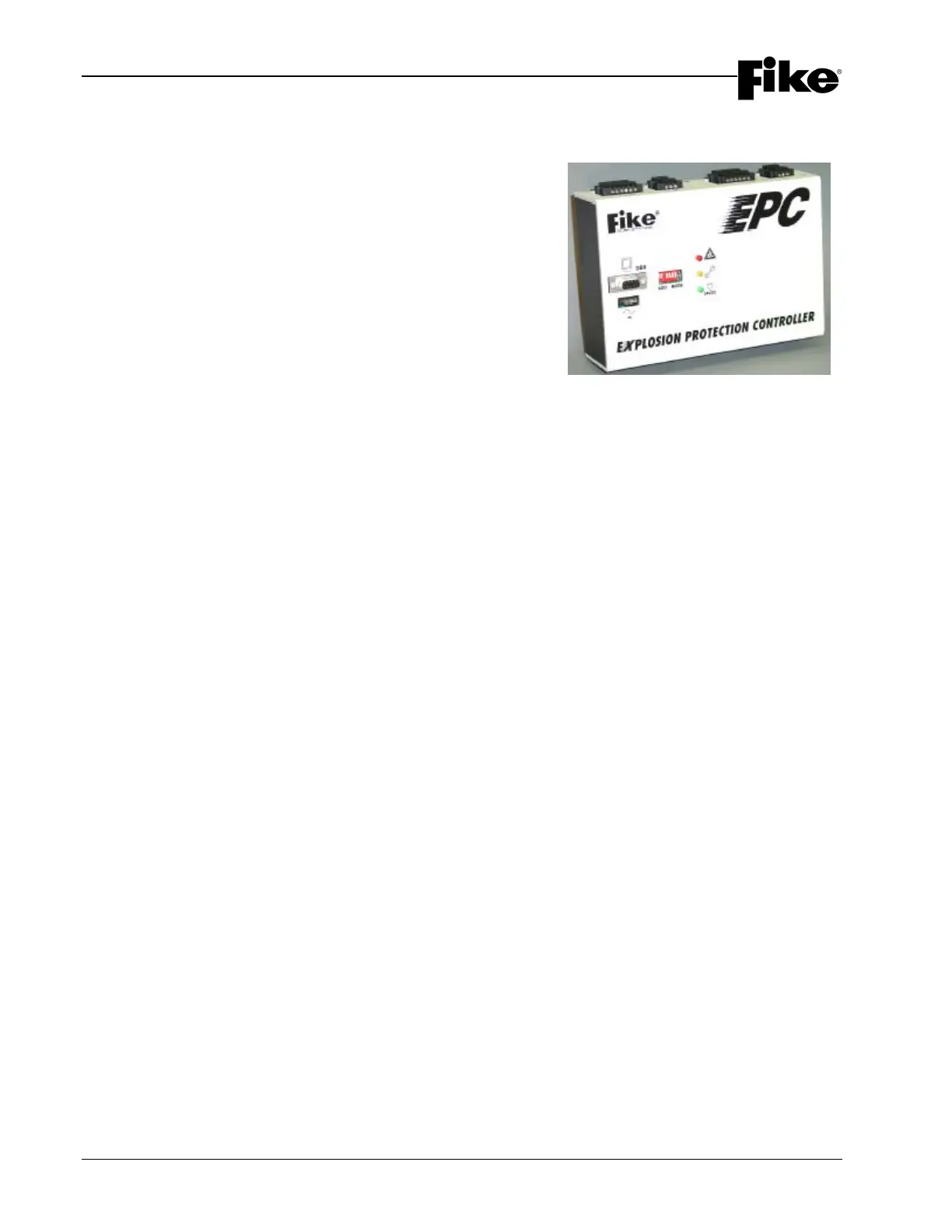
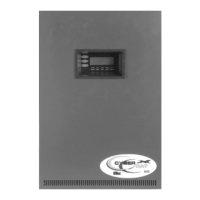
2.1 EXPLOSION PROTECTION CONTROLLER
The Explosion Protection Controller (EPC) is the cornerstone of
the EPACO system. The EPC is an addressable panel that has
the ability to retain an event history for enhanced system
diagnostics. The EPC is DIN rail mounted which allows mounting
of the controller in close proximity to the protected environment,
thereby minimizing field wiring. Shorter wire runs greatly reduce
the interference from electrical and radio frequency sources,
allowing for a much more reliable protection system.
The EPC’s detection inputs can be programmed for pressure
warning, threshold detection, and rate of rise detection. It also
has a contact closure detection circuit to support thermal, infrared,
or other switch-closure type detection devices. A supervisory
input circuit is provided to monitor suppression container pressure
or other similar system status safeguards. The EPC has a remote
disable input contact to allow for disabling the EPC from a
customer PLC or other remote device during product loading,
cleaning, or maintenance. An RS232 connection is available at
each module for connection to a PC. Using the EP Works
TM
software, an authorized user can access system diagnostics and
perform complex programming by PC.
The following tasks are accomplished by the EPC:
Monitors all supervised circuits for wiring faults (Open, Short, or Activation)
Two detection circuits are monitored on a 250 micro second (0.25 msec) rate and examined for rate
of rise and threshold levels
When activation requirements are met by the detection circuit, it activates the series firing output
within 2 milli-seconds
Communicates system status to other EPC’s connected locally so that they can respond within 4 milli-
seconds
Communicates system status to Annunciators and Relay Control Modules for user interface



 To Next Page