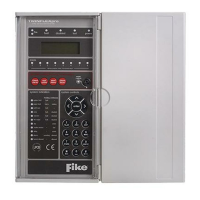
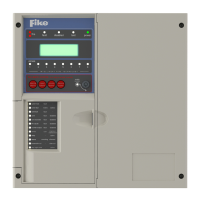
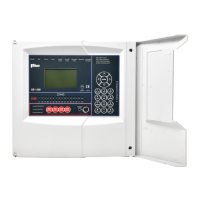
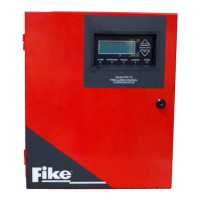
Quadnet Control Panel Engineering and Commissioning Manual
The Quadnet System
The Quadnet system is an addressable intelligent detector system, with many advantages over traditional
addressable analogue detector systems. In order to understand the benefits, let us look more closely at the
terms Fire Detector and Fire Sensor. These terms are often used interchangeably but actually have quite
different meanings. A fire detector is the device (component as defined in EN54) which automatically
detects a fire. In the majority of addressable fire detection systems, the fire devices are in fact fire sensors
which only transfer data relating to smoke and heat levels to the control panel, and the fire decision is made
by the panel.
Nearly all current addressable systems are Addressable Analogue Detector Systems where the control
panel continually scans the fire sensors, processes the returned data, and makes decisions about fires and
faults.
The Quadnet system is defined as an Addressable Intelligent Detector System or an Addressable Fire
Detection and Alarm System with Independent Distributed Intelligence. Distributed intelligence
signifies that the signal processing is spread throughout the system, in order that the decisions about fires
and faults are taken within the detector itself. The detector is capable of being remotely programmed for
different modes of detection.
Thus the Quadnet system is an analogue addressable system, but with the processing power distributed
across the entire system. This dramatically reduces the complexity of the control panel and the data traffic,
and improves the efficiency of the system.
The system addressing is carried automatically upon initialisation from the control panel, and does not need
to be programmed manually at each device.
Advantages of Addressable Systems
The nature of a microprocessor control system with individually identified devices means that the precise
location of fires and faults may be indicated, more complex actions may be implemented, system flexibility
is improved and installation and cabling costs are reduced.
In the Quadnet system, very efficient communications mean that very low quiescent power consumption
maximises the standby capacity, high power transfer capabilities allow more sounders to be connected to
the loop, and a very fast response to events is achieved as the control panel does not have to poll every
device for status data.
IMPORTANT NOTE:
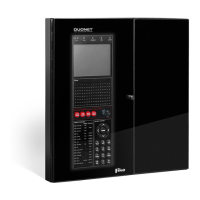
The Quadnet Panel is a 2 box solution comprising a Control Panel (as per this manual) and a matching
Power Supply Unit. This manual describes the Quadnet Control Panel. Please refer to the Quadnet Power
Supply Unit Installation Instructions for details of how to install the Power Supply Unit and connect it to the
Quadnet Control Panel.


 To Next Page