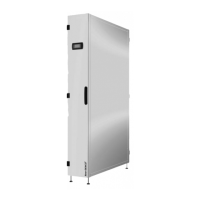
Technical Description Multi-DENCO
28 FläktGroup DC-2013-0101-GB • Subject to modifications • R5-08/2020
Sensor averaging Sensor averaging can be calculated on temperature, humidity or both, when
Multi-DENCO units are connected in a network. Each unit sends their sensor readings
to every unit in the network. Each unit then takes all the values and calculates the aver-
age independent of the network units.
This gives the advantage of balancing the cooling requirements across all of the units
within a room, rather than on individual airflows. The software has features to allow for
sensor, communication or unit failure, so that the values do no distort the average
value and the unit can change back to 'stand-alone' if necessary.
Automatic Pressurisation
System (APS)
APS ensures a constant pressure in the floor plenum by the Multi-DENCO unit. This
can help reduce hot spots and allows for fast reaction to changes in airflow.
This also saves energy as the Multi-DENCO fans only supply the same amount of air
to the floor void, as the amount of air being removed by servers.
For datacentres, this feature can be especially efficient when combined with cold-aisle
containment.


 To Next Page