Section 5 Troubleshooting
5-3
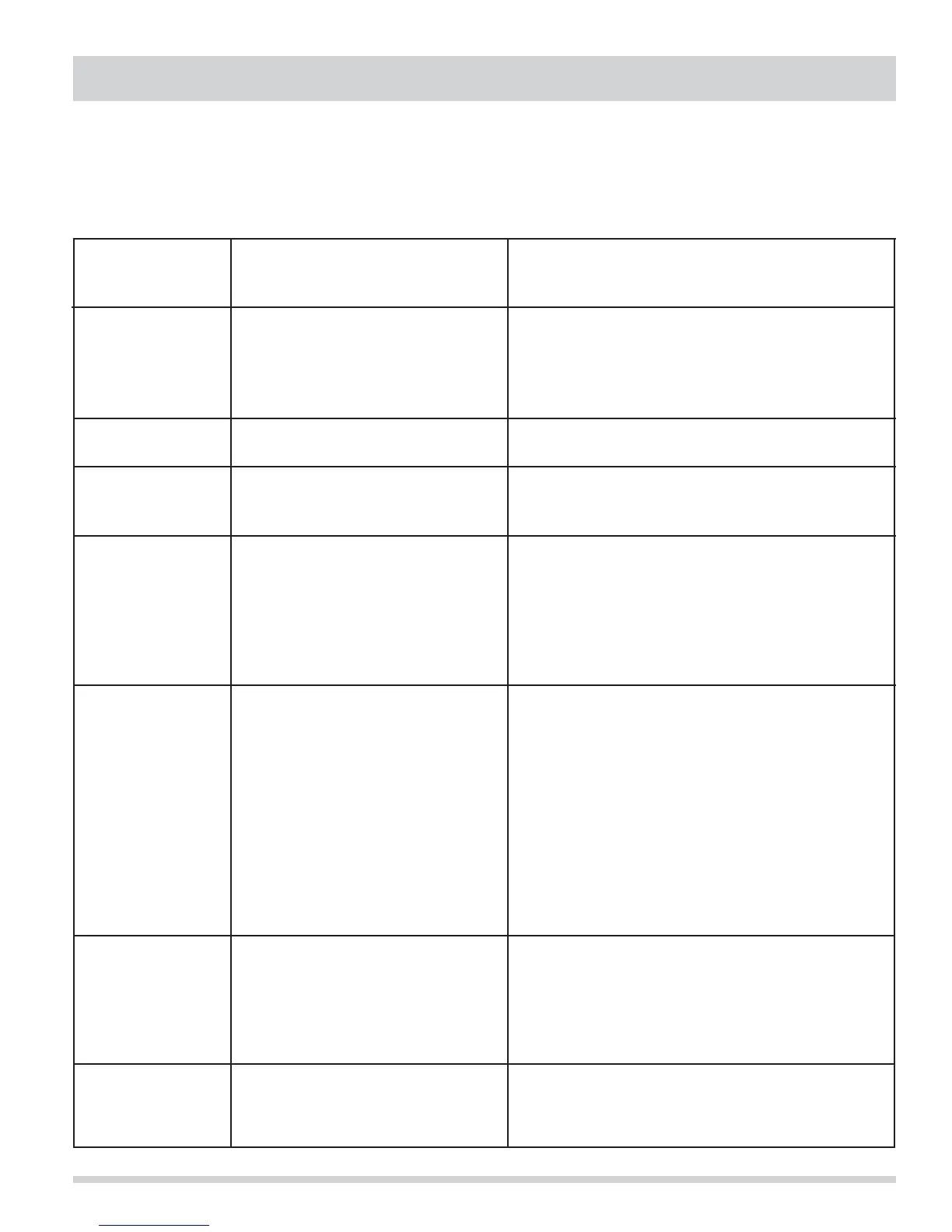
High pitch “jet
engine” noise.
Rattling and
clanking noise.
Squealing sound or
hot rubber odor.
Thumping sound.
Vibrating noise.
Washer does not
start.
Washer won’t spin.
Incorrect wash and
rinse temperatures.
1. This is normal operation of the unit.
1. Stop washer and check drum. If noise continues
after washer is restarted, objects may be in pump
2. To prevent unnecessary noise and damage to
drum, fasten fasteners and turn items inside out.
1. Stop washer and reduce load.
1. This is usually normal.
2. Stop washer and redistribute wash load.
1. Adjust leveling legs. See Installation Section
2. See Installation Section for removing shipping
bolts and foam blocks.
3. Stop washer and redistribute wash load.
1. Make sure plug fits tightly in wall outlet.
2. Reset circuit breaker or replace fuse. Do not
increase fuse capacity. If problem is a circuit
overload, have it corrected by a qualified
electrician. If problem is a power outage, call local
electric company.
3. Turn on water supply faucets.
4. Washer motor will stop if it becomes over heated.
It will automatically restart after a cool down
period of up to 30minutes (if washer has not been
manually turned off).
5. Close dispenser drawer.
1. Close door completely.
2. Close dispenser drawer.
3. Add 1 or 2 similar items to help balance the
load.
1. Connect hot water hose to hot water faucet
and cold water hose to cold water faucet.
Problem
Correction
1. A certain amount of motor
whine is normal during the
spin cycle.
1. Foreign objects such as coins
or safety pins maybe in drum or
pump.
2. Belt buckles and metal fasteners
are hitting wash drum.
1. Washer is overloaded.
1. Heavy wash loads may
produce a thumping sound.
2. Washer is out of balance.
1. Washer is not resting firmly
on floor.
2. Shipping bolts and foam blocks
have not been removed during
installation.
3. Wash load unevenly
distributed in drum.
1. Electrical power cord may not
be plugged in or connection
may be loose.
2. House fuse blown, circuit breaker
tripped, or a power outage has
occurred.
3. Water supply faucets are not
turned on.
4. Motor is overheated.
5. Dispenser drawer is not
completely closed.
1. Washer door is not
completely closed.
2. Dispenser drawer is not
completely closed.
3. Load is too small.
1. Hot and cold water hoses are
connected to wrong supply
faucets.
Cause
The following troubleshooting chart involves common concerns that are not the result of defective workmanship or
materials in this washer. Some problems below involve improper installation and issues arising from the users
household water supply. See the Use and Care guide for the unit in question and the Installation Section in this
manual.




 To Next Page