DRIVE LINE
3-36
4. The level is satisfactory if the fluid position is
within the “HOT” level range.
5. When the fluid level is low, add more transmis-
sion fluid through the fluid level gauge port.
6. Make a final check of the fluid level when the
fluid is hot after the vehicle has been driven.
CAUTION
•
As the temperature of the fluid increases, so
does the fluid level, so do not add transmis-
sion fluid above the specified level gauge
range.
• When checking the fluid level, first remove
the debris and muck from around the level
gauge.
• Use a clean funnel, etc., when adding more
transmission fluid. Do not use a funnel, etc.,
that has been used for another type of oil,
such as gear oil. If foreign matter gets into the
transmission fluid it could cause problems.
Note:
• The automatic transmission oil cannot checked if
it is not at a high temperature. Be sure to drive
the vehicle before performing this check.
• Conduct the fluid level inspection while the
engine is idling. The fluid level cannot be cor-
rectly read if the engine is stopped or if the
engine speed is increased.
REPLACEMENT
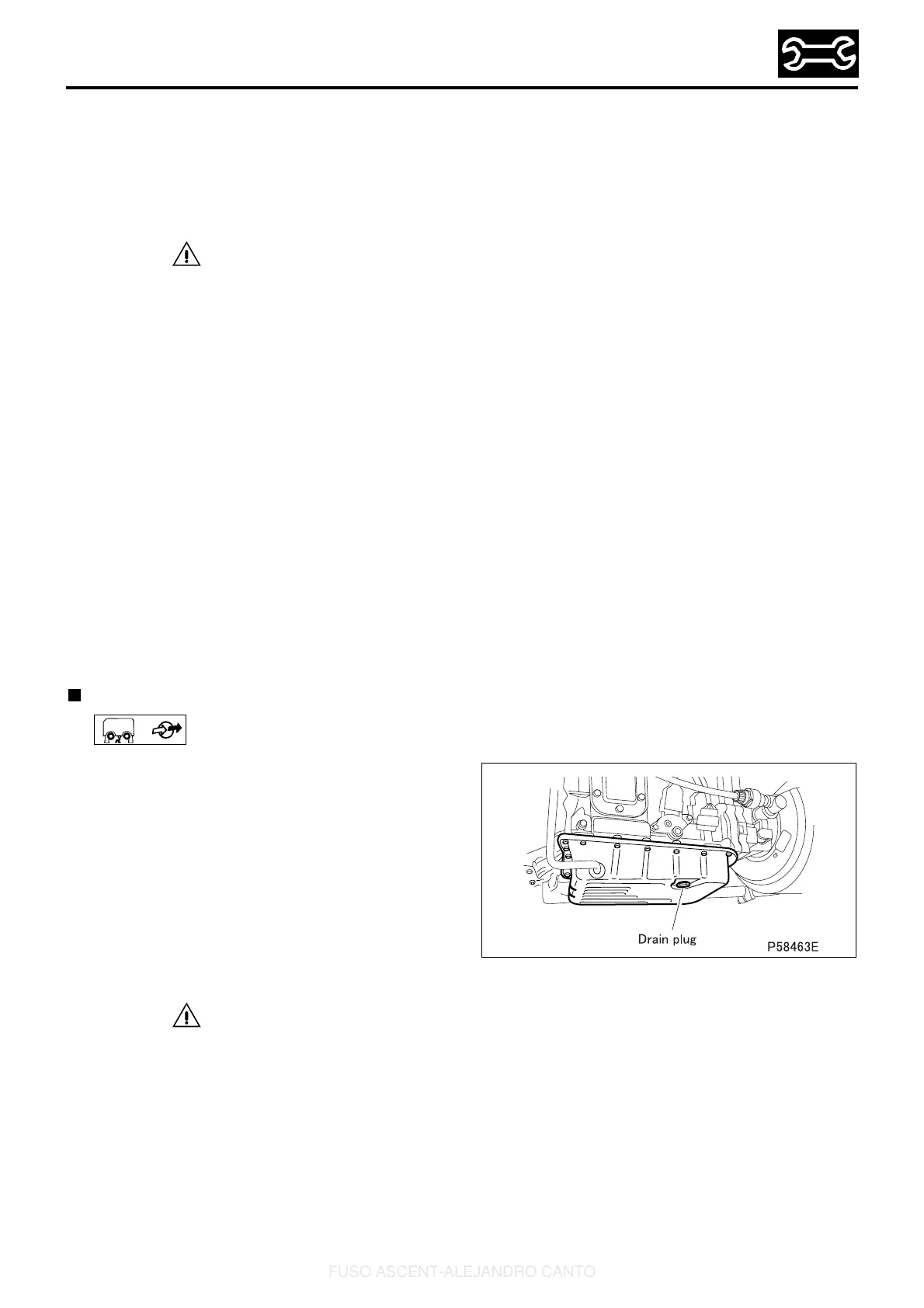
1. Place a container under the transmission oil pan.
Remove the drain plug near the front of the oil
pan and allow the automatic transmission fluid to
drain out. It is not possible to drain out the auto-
matic transmission fluid that is in the hydraulic
circuit, torque converter, and oil cooler. At the
same time, check whether the drained automatic
transmission fluid is dirty and whether it contains
metallic particles.
Note that the automatic transmission fluid will
drain out more quickly if you warm it by allowing
the engine to warm up.
CAUTION
The automatic transmission fluid is extremely
hot immediately after driving. To avoid the risk
of being scalded, wait for the automatic trans-
mission fluid to cool to a safe temperature
before starting work.
FUSO ASCENT-ALEJANDRO CANTO



 To Next Page