DRIVE LINE
3-46
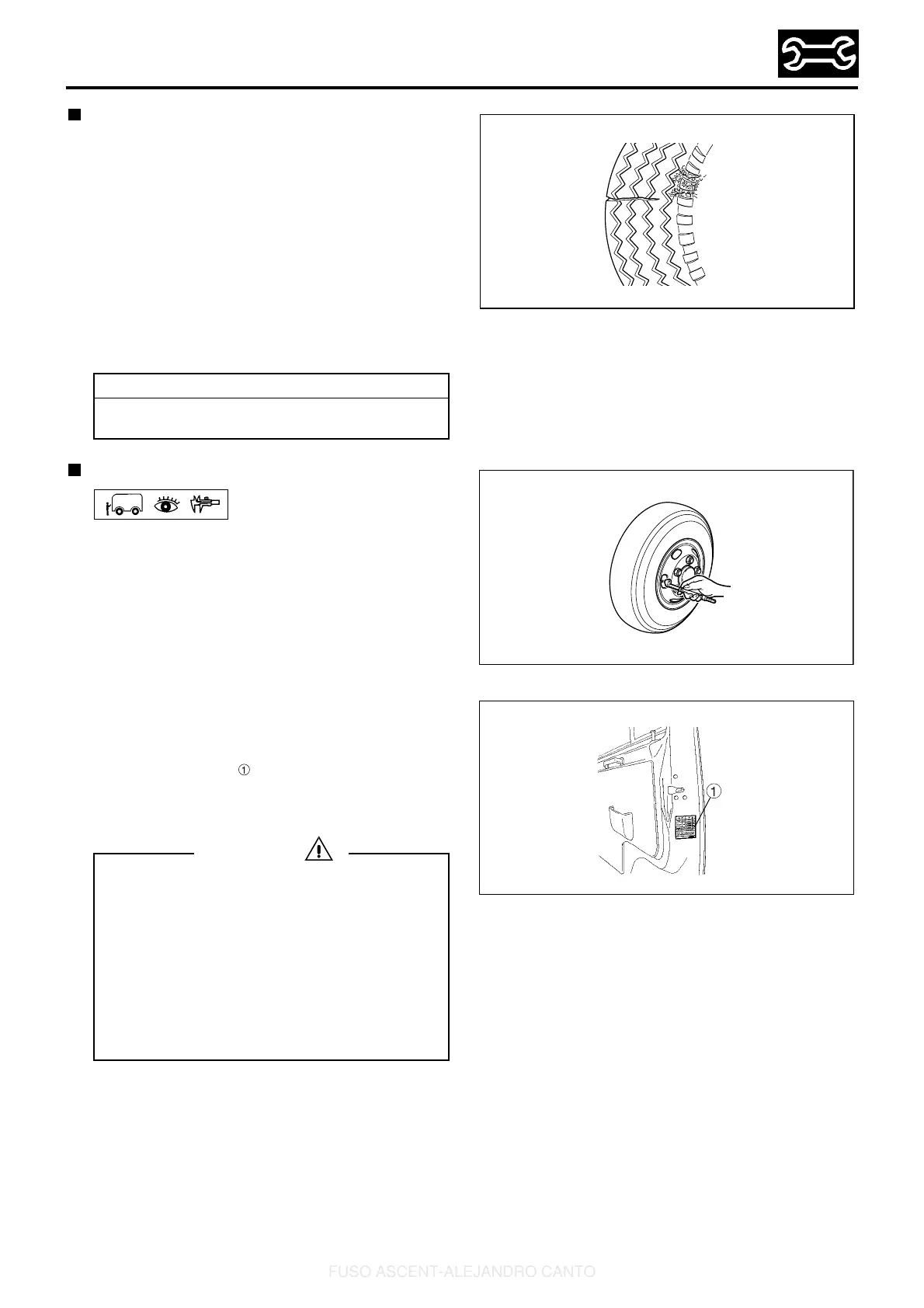
CHECKING FOR CRACKS, DAMAGE, AND
OBJECTS EMBEDDED IN TREAD
Check both the tread and the sides of each tire for
cracks, damage, and excessive or unusual wear.
Check also for metal pieces, nails, and stones that
might be embedded in the tread or caught between
the tires of dual wheels.
34. TIRE INFLATION PRESSURE
INFLATION PRESSURE CHECK
1. Use an air pressure gauge to check for proper
tire inflation pressure.
If the pressure is incorrect, adjust it to the indi-
cated standard pressure.
2. Tire pressure should be checked and adjusted
before driving when the tires are still cool.
3. The air in the spare tire will gradually leak out by
itself. Once a year, use an air gauge to check
whether the spare tire’s inflation pressure is
slightly higher than the standard pressure. If you
use the spare tire, reduce the inflation pressure
to the standard level.
4. There is a label affixed to the driver’s door
indicating the standard inflation pressure. Keep
the tires inflated to the pressures shown on the
label.
Inspection intervals
At the time of pre-operational check and every 5,000 km
(3,000 miles)
WARNING
• Excessively low or high tire pressures not
only give a poor ride but also could cause
cargo to be damaged. Moreover, if the pres-
sure is too low, tires could overheat and
burst.
• Both the inner and outer tires on dual
wheels should be inflated to the same pres-
sure.
• You need not increase tire pressure before
high-speed driving.
Z10805
Z21588
T75454
FUSO ASCENT-ALEJANDRO CANTO


 To Next Page