AWT35‐500349|June2009 Page23
3.11 Absolute Checkweigh
This program is commonly used for check-weigh applications where the accepted tolerance will be an
absolute value between and upper and lower limit.
After a target weight is entered, upper and lower tolerances are entered as absolute values. The desired
target may be based on gross weight, net weight, or quantity (if counting is enabled). Only the annunciators
will light to indicator the setpoint status. Be sure to enter both the upper and limits. Failure to enter one of
these values will cause a setpoint error. This feature must be enabled before attempting to use.
3.11.1 Enter a Target Value
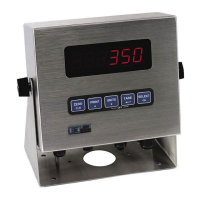
3.11.1.1 Model 350
1. Press ! until tArGL is displayed. The low target value will need to be entered. Go to step 2.
2. Press
until the first digit of the new target is displayed. Press 2 to accept the number displayed.
Continue this step until the desired number is entered.
Example: Target of 20
Press
four times
DISPLAY READS X 2
Press
2 to accept the 2 that is displayed
DISPLAY READS X 2 .
Press
once
DISPLAY READS X 20
Press
1 to accept the target weight as 20
DISPLAY READS X 20
3. Press
1. Once the tare key is pressed, tArGH will be displayed. This is where the high target value
will be entered. Enter this value in the same manner as the target weight was entered above. If the
displayed value is correct, press
1. The display will return to the gross mode.
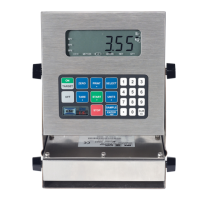
3.11.1.2 Model 355
1. Press ! until tArGL is displayed.
2. Key in the low target weight with the numeric keys and press
(.
3. The tArGH value will be displayed. Key the in value with the numeric keys and press
(.
4. Press
! to select the desired weigh mode parameter.
3.11.2 Start Checkweighing
The checkweigh applications do not have a start function. Simply put the item to be weighed onto the scale
platter. An annunciator will illuminate to indicate whether the item is within tolerance.



 To Next Page